Winter tyres are not mandatory in Portugal. Only on mountain stretches with the D9 sign must you drive with snow chains. Even so, they pay off if you live in or often drive to the cold interior, where average temperatures drop below 7 °C and ice or snow are common. If you drive on the coast, summer tyres in good condition remain the most suitable choice.
This guide explains what the law says, how to recognise a winter tyre, when it makes sense to fit them, whether all-season tyres are an alternative and what they cost in our tyre search.
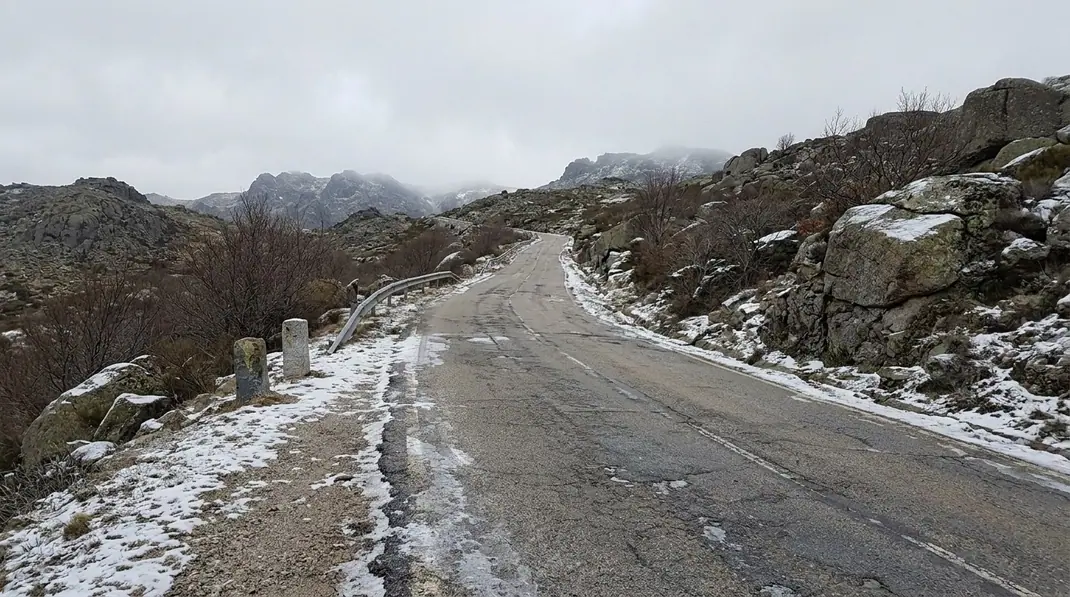
Are winter tyres mandatory in Portugal?
No. Continental, the tyre maker, states that in Portugal the use of winter tyres is not mandatory, although they can be a good option depending on where you drive. Unlike other European countries, there is no season in which the law requires them.
What does exist is a snow chain obligation on some stretches. The Road Signs Regulation (Regulamento de Sinalização do Trânsito) provides for the D9 sign, which requires driving with chains on two drive wheels. Outside those stretches there is no general duty to use them. See how to fit and choose them in our guide to snow chains.
A practical note: not having winter tyres does not excuse you from adapting your driving. The Highway Code requires speed to be regulated according to road and weather conditions.
When to use winter tyres: the 7 °C rule
Continental's general recommendation is to fit them when the average daily temperature falls below 7 °C. In most European countries that happens between October and April. In Portugal it depends a lot on the region.
- Coast and Algarve: mild winter and rain; summer tyres in good condition usually do the job;
- Northern and central interior: morning frost and ice are common; a winter or all-season tyre can make a difference;
- Mountains (Estrela, Gerês, Marão): snow and ice from November to March; carry chains or use winter tyres;
- Trips to Spain, France or central Europe: several countries have their own winter rules; check them before you leave.
Before setting off, check the IPMA warnings for cold, snow and ice in your area.
How to recognise a winter tyre
Look on the sidewall for the 3PMSF symbol (Three Peak Mountain Snowflake): a three-peak mountain with a snowflake inside. According to Continental, since 1 January 2018 winter and all-season tyres manufactured must carry this marking.
The M+S marking (Mud and Snow) alone no longer sufficed for other countries' winter laws after the transition period that ended on 30 September 2024, according to the same source. So when buying, look for the snowflake.
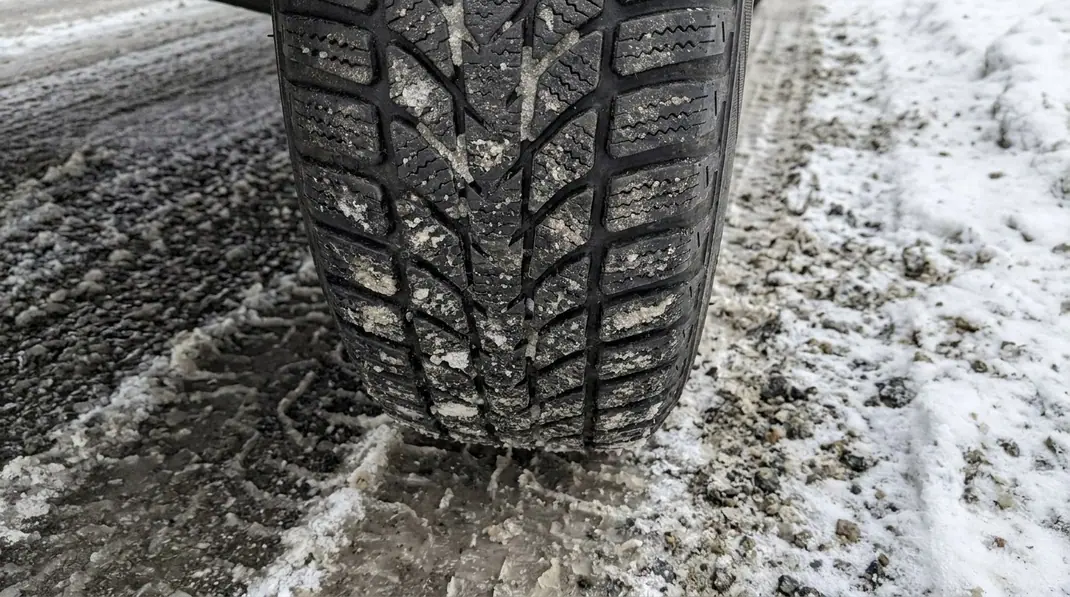
A winter tyre uses a rubber compound that stays flexible in the cold and a tread with many sipes that help it grip on snow and ice. The size and the load and speed ratings must still be those of your car, as shown in the registration document.
Winter or all-season tyres?
For most Portuguese drivers, all-season tyres are the middle ground. Continental says they suit people who drive in a region where the temperature regularly falls below 7 °C but without extreme conditions, or who pass through different climates.
They are not meant for harsh winters with deep snow. On the other hand, they stay on all year and save you changing twice a year. To be sure a tyre is fit for winter, check for the 3PMSF symbol.
How much do winter tyres cost
In our tyre search, on 19 November 2026 there were 19,762 car tyres from online shops: 5,728 winter, 3,359 all-season and 10,675 summer. Prices per tyre, fitting not included:
- 205/55 R16: winter from €67.31 (median €106.66, 173 offers); all-season from €69.99 (median €92.69); summer from €55.98 (median €89.58);
- 195/65 R15: winter from €56.69 (median €84.72, 118 offers); all-season from €68.58 (median €83.97); summer from €51.86 (median €80.29).
If you keep both summer and winter sets, add fitting twice a year and somewhere to store the set you are not using. Compare by size in the tyre search.
Winter tyre care
- All four wheels: fit a full set so the car behaves in a balanced way;
- Pressure: it drops in the cold; check it with cold tyres, as explained in our guide to tyre pressure;
- Wear: manufacturers advise replacing winter tyres at around 4 mm of tread, and the legal minimum is 1.6 mm (see our guide to bald tyres);
- Heat: outside winter, a winter tyre wears faster and performs worse than a summer one, so swap them when temperatures rise;
- Age: check the DOT code on the sidewall before buying tyres that have been in storage.
To choose a brand and range, read how to choose the right tyres for your car.
Used car: what to check on the tyres before winter
If you are buying a used car and live in a cold area, check the condition of all four tyres, the manufacture date and whether they are summer, winter or all-season: the information is on the sidewall. Find a car on the site or in the AUTO.MOTO app, and negotiate the price if the tyres need replacing.
Figures taken from our database and from manufacturer and State pages at the time of publication; rules may change.
Frequently asked questions about winter tyres
Are winter tyres mandatory in Portugal?
No. Only snow chains are mandatory, on stretches marked with the D9 sign.
Can I use winter tyres all year?
You can, but it is not ideal. In warm weather they wear faster and perform worse than summer tyres. Swap them when temperatures rise.
At what temperature should I fit winter tyres?
Continental's general recommendation is below an average daily temperature of 7 °C. In Portugal that only happens regularly in the interior and the mountains.
What does the snowflake symbol on a tyre mean?
It is the 3PMSF: a three-peak mountain with a snowflake. It shows the tyre is certified for winter conditions.
Do I need chains if I have winter tyres?
If there is a D9 sign, the obligation refers to chains. The rule refers to chains, not to the type of tyre, so carry them to the mountains. See our snow chains guide.
How much does a winter tyre cost?
In our search, on 19 November 2026, in size 205/55 R16 winter tyres started at €67.31, with a median of €106.66 per tyre, fitting not included.