
Wiper blades should generally be replaced once a year, preferably after summer and before the rains. Replace them as soon as they leave streaks, skip across the glass, squeak or have a cut rubber edge, even if they are less than a year old.
This guide explains the signs of wear, a two-minute test for your blades, how to change them yourself and how to make them last longer.

When to replace wiper blades
According to the ACP (Automóvel Club de Portugal), blades should be replaced annually, generally after summer. The interval depends on several factors: the rubber sits outside the car, exposed to sun, rain and frost, and eventually degrades.
So the calendar is only a guide. If signs of wear appear before a year, replace them sooner. And a car that sleeps on the street under the sun of the Algarve or the Alentejo tends to wear its rubber faster than one kept in a garage.
Signs of wear: how to tell they are worn
The ACP lists four simple signs that blades are at the end of their life:
- Rough or cut edge: running a finger along the rubber edge, you feel roughness or cuts.
- Poorly cleaned glass: streaks, wet areas or areas left unwiped.
- Skipping: the blade jumps instead of gliding smoothly.
- Noise: they squeak or creak while working.
One sign is enough. Do not wait for all four.
A two-minute test before winter
On a dry day, with the car stopped, do this quick test:
- Carefully run a finger along the rubber of each blade and look for roughness, cuts or stiff spots.
- Spray the washer fluid and run the wipers once or twice.
- Look at the glass from the side: if streaks, wet areas or a film of water remain, the blade no longer sits well.
- Repeat for the rear blade, if the car has one, and also check the washer fluid level.
If it fails at any point, it is time to replace.
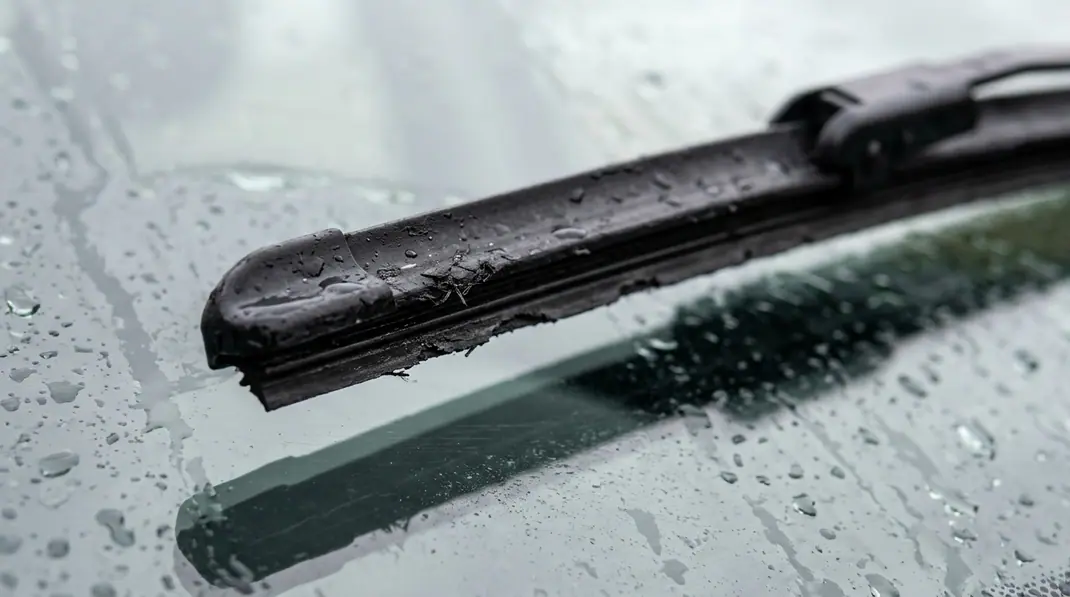
Worn blades and the periodic inspection
A blade in poor condition can appear on the inspection sheet. DECO Proteste, the consumer association, gives a wiper blade in poor condition as an example of a type 1 deficiency, which is the least serious. It does not mean an automatic fail, but it is a defect that gets recorded.
To avoid surprises, look at your blades before booking the inspection. See our guide to car inspection: price, deadlines and what fails for what else to check.
How to change the blades yourself
Changing them is not difficult and you can do it at home. The ACP describes the process for the front blades:
- Switch the ignition on and run the wipers without starting the engine; switch the ignition off when the blades are upright.
- Lift the arm and press the lock button to remove the blade.
- Fit the new blade until it clicks into the lock.
- Repeat on the other blade and switch the ignition on again to confirm they work.
Be careful: if the arm, without its blade, falls on the glass, the spring force can break it. Always hold it with one hand and, if in doubt, ask a workshop for help.
Which blades to buy: type and size
There are two main types: universal or traditional ones, for older cars, and flat ones, used on newer cars. Also count on length, which is often different on the driver and passenger sides, and on the rear blade, which is a separate part.
Instead of guessing, check the size on the pack of the blades you have or in the car manual. We have no official price table to publish; ask for a quote and compare the full pair, with or without fitting.
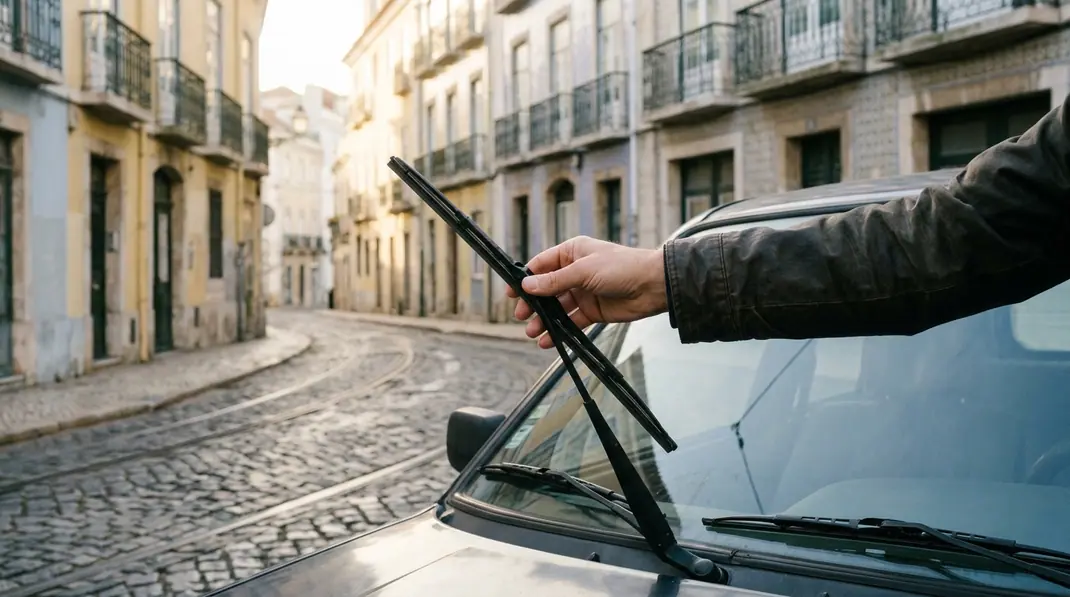
How to make blades last longer
These are general good practices, not a rule. Do not run the wipers on dry glass, because the rubber scrapes along it. Clean the windscreen regularly, since dirt wears the rubber. On frosty days, free the blades from the glass before switching them on. See what to do when the glass fogs or freezes in our guide to the car windscreen.
And follow the weather: the warnings from IPMA, the national weather service, help you see whether the week brings heavy rain.
Heavy rain: what else to check
New blades help, but they do not solve everything. On a wet road, tyres and the gap to the car ahead matter as much as visibility. Review the guide to aquaplaning, the safe following distance and the choice of winter tyres.
Rain sensor: what the adverts say
Many newer cars have a rain sensor that switches the wipers on by itself. On 20 November 2026 there were 9,520 active cars on AUTO.MOTO.pt and 564 listed a rain sensor. The sensor does not replace the blades: if they are worn, the result on the glass is the same. See the used cars for sale and use the filters to compare equipment.
Frequently asked questions
How often should wiper blades be replaced?
Generally once a year, preferably after summer, according to the ACP. Replace sooner if streaks, skipping, noise or cuts in the rubber appear.
How do I know the blades are worn?
If the rubber is rough or cut, if the glass is left with streaks or unwiped areas, or if the blade skips or squeaks.
Can I change the blades myself?
Yes. The process is simple, but always hold the arm: without a blade, the spring can break the windscreen if it falls.
Can worn blades be a problem at the inspection?
DECO Proteste gives a wiper blade in poor condition as an example of a type 1 deficiency, the least serious. It is best to replace them before the inspection.
Do I need a new rear blade?
The rear blade is a separate part with its own size. If the one on the rear glass is worn, replace it too.
What is the difference between flat and traditional blades?
Traditional, or universal, ones fit older cars; flat ones are used on newer cars. The choice depends on what your car takes.