Aquaplaning is when a layer of water separates the tyres from the tarmac and the car stops responding to the wheel and brakes. If it happens: lift off the accelerator, keep the wheel straight, do not brake hard and wait for the wheels to grip again. To avoid it, slow down in the rain, use tyres above the legal minimum of 1.6 mm and keep the right pressure.
This guide explains what aquaplaning is, what to do step by step, how to avoid it and what the Portuguese Highway Code says about driving too fast in the rain.
What is aquaplaning?
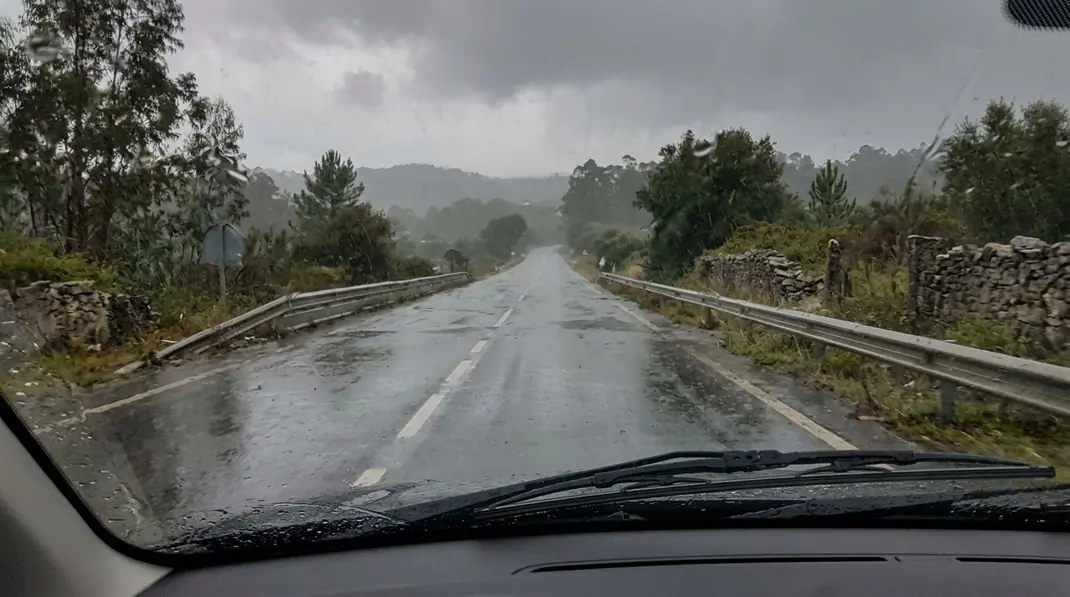
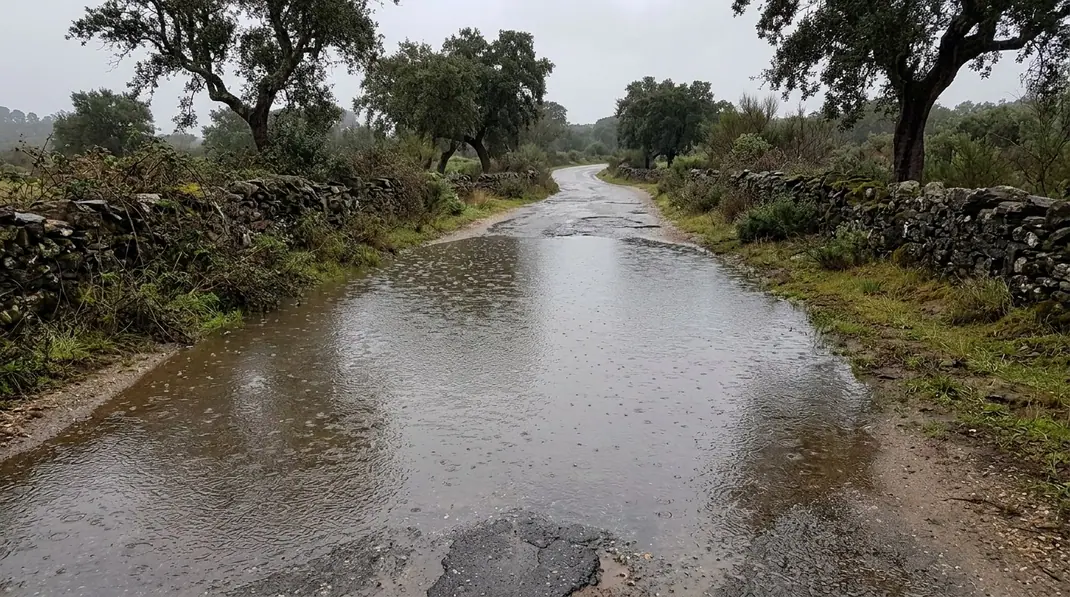
It is the loss of contact between the tyre and the road. According to tyre maker Continental, when driving fast on a wet road a layer of water can form between the tyre and the surface; the tyre loses contact and the driver loses steering response.
In that situation the driver cannot brake, steer or accelerate effectively. The usual cause is heavy rain building up water on the tarmac, but it also happens on uneven roads where large puddles form.
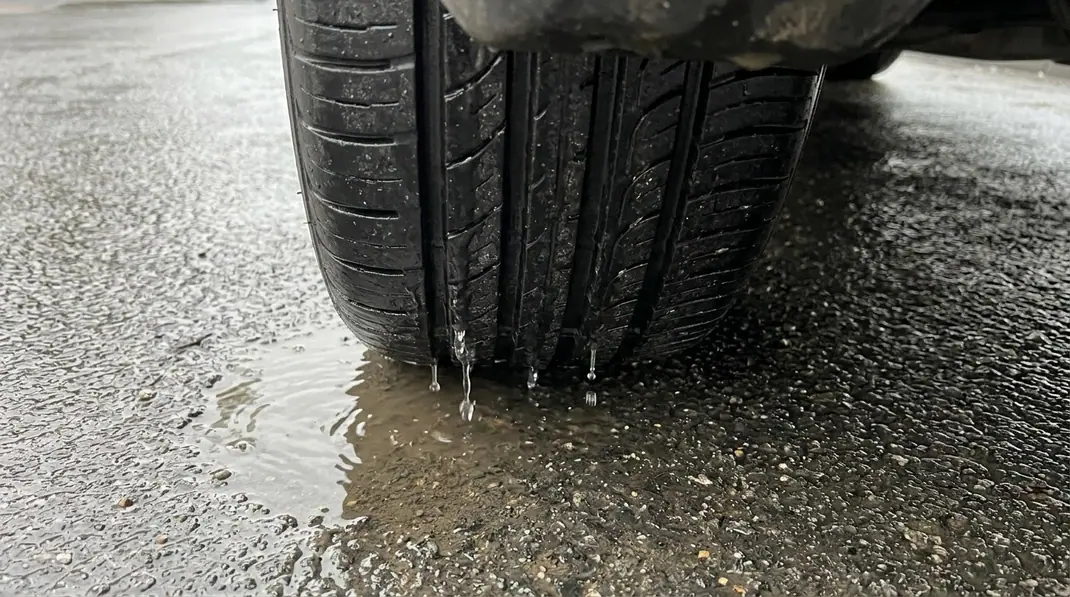
The tread of the tyre exists precisely to push water out. When the grooves are worn, or the speed is too high for the amount of water, they can no longer clear it.
How to tell the car is aquaplaning
The signs are usually quick and unmistakable:
- the steering suddenly feels very light, as if it had no resistance;
- the engine revs rise without the car accelerating, because the driven wheels are spinning on water;
- the front or rear seems to «float» and the car ignores small corrections;
- the stability control (ESP) light flashes on the dashboard, if the car has one.
If you do not know the symbol, see our guide to dashboard warning lights.
What to do if the car aquaplanes
The instinctive reaction (braking hard and turning the wheel) is the worst one. Do this, in this order:
- Stay calm and hold the wheel with both hands, without turning it sharply.
- Lift off the accelerator, without pressing the brake, and let the car lose speed on its own.
- Point the car straight ahead: correct the line only with small, smooth movements.
- Wait for the wheels to grip again: you feel it when the wheel regains weight and the car responds.
- Then brake gently and slow to a suitable speed; if you can, stop safely to recover.
ESP and ABS help once the wheels regain grip, but they do not stop the car from aquaplaning. Do not rely on them to make up for too much speed.
How to avoid aquaplaning
Slow down when it rains
This is the factor that depends most on you. In the rain, reduce speed even if the limit allows more: standing water on the tarmac calls for lower speeds. Avoid puddles and the ruts left by lorries, where water collects, and avoid sudden braking or sharp turns.
Tyres with tread and the right pressure
Continental recommends checking the pressure of all four tyres regularly and the tread depth, which must not fall below the legal minimum of 1.6 mm. See how to measure it in our guide to bald tyres and the right tyre pressure for your car.
When buying new tyres, check the wet-grip class on the European label (A to E). We explain how to read it in how to choose tyres for your car.
Leave more distance to the car ahead
On a wet road braking takes longer, so leave a much bigger gap to the car in front. As a rule of thumb, not a legal rule, double the gap you would leave on a dry road. Continental also advises increasing the distance to other vehicles when it rains.
Check the warnings before you set off
If you are making a long trip, check the heavy-rain warnings from IPMA, Portugal's weather institute. If the warning is orange or red and the trip can wait, postpone it.
What the law says about speed in the rain
Article 24 of the Highway Code (Código da Estrada) requires drivers to regulate their speed taking into account, among other factors, the weather conditions, so that they can stop within the clear and visible space ahead. Article 18 requires keeping enough distance to avoid an accident if the car in front stops suddenly.
The ANSR lists among serious offences driving at a speed that is excessive for the weather conditions, and also breaking the rules on distance between vehicles. According to the Highway Code, serious offences carry a fine of €120 to €600, and the ANSR gives a driving ban of 1 month to 1 year.
So being under the speed limit does not protect you: if your speed is excessive for the rain, you can be fined. See the amounts in our guide to speeding fines.
Used cars: what to check for wet weather
Before buying a used car, check the condition of all four tyres, the manufacture date (the DOT code on the sidewall) and whether the car has driver aids such as ESP and tyre pressure monitoring (TPMS).
On 16 November 2026 there were 9,546 active cars on AUTO.MOTO.pt. Among the adverts that list equipment, 507 mention ESP and 441 tyre pressure monitoring. See the used cars for sale and use the filters to compare.
Figures according to the Highway Code and the ANSR at the time of publication; always check the version in force.
Frequently asked questions
What should I do when the car aquaplanes?
Lift off the accelerator, keep the wheel straight, do not brake hard and wait for the wheels to regain grip. Only then should you brake gently.
At what speed does aquaplaning happen?
There is no single speed. It depends on the amount of water, the condition of the tread and the tyre pressure. The risk rises with speed, so always slow down when it rains.
Do ABS or ESP prevent aquaplaning?
No. They help when the wheels regain grip, but they do not stop the layer of water forming under the tyre.
Do new tyres remove the risk?
They reduce it, because they clear water better, but they do not remove it. With a lot of water and high speed, even good tyres can aquaplane.
Can I be fined for driving fast in the rain?
Yes, even below the limit. The ANSR classifies driving at a speed excessive for the weather conditions as serious; according to the Highway Code, serious offences carry a fine of €120 to €600, with a possible driving ban.
What is the legal minimum tread depth?
1.6 mm. Below that the tyre is bald, but in the rain it is wise to replace them before they reach that limit.