Yes, a reflective vest is mandatory in every car in Portugal, as is the warning triangle. You wear the vest when the car is stopped on the road or the verge and you are about to place the triangle, repair the car or remove cargo. The fine is €60 to €300 for each item missing.
This guide explains what the Highway Code says: who must carry a vest and a triangle, when to use them, where to keep the vest, how to place the triangle and what the fines are.
Vest and triangle: what the law says
Art. 88 of the Highway Code requires every motor vehicle on the road to carry a warning sign (the triangle) and a vest, both retroreflective and of an officially approved model. In other words, both are part of the car's compulsory equipment.
Vehicles with two or three wheels, motor cultivators and quadricycles without a body are exempt. For a car, a van or a lorry the obligation always applies, even if you never leave town.
When you must wear the reflective vest
You do not wear the vest to drive. Art. 88(4) says that when the vehicle is stopped on the carriageway or the verge, or has dropped cargo, the vest is mandatory for whoever:
- places the warning triangle;
- repairs the vehicle;
- removes the vehicle or the cargo.
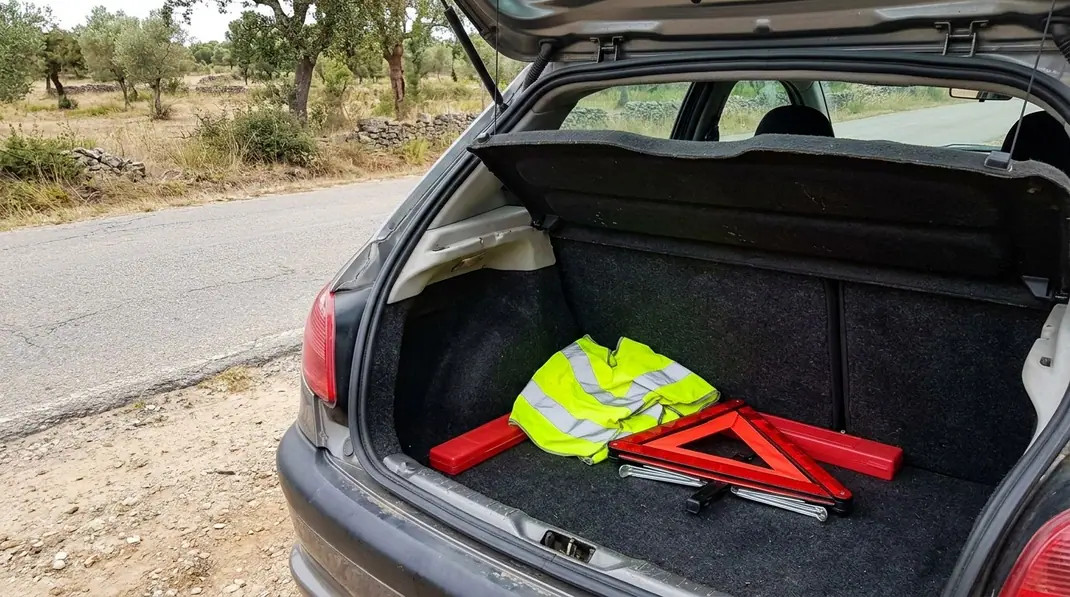
According to the ACP, the driver does not have to leave the car already wearing the vest, so it can be kept in the boot. But you must put it on before placing the triangle, which means fetching it on the road with traffic passing.
Where to keep the vest and the triangle
The law does not set a place. The ACP says both can stay in the boot. As our own advice, not an obligation, keep the vest within reach of the driver's seat (in the door pocket or under the seat), so you can put it on before getting out.
If the vest is buried under the luggage, you fetch it in the worst possible spot, with cars passing. The triangle, which is bigger, is fine in the boot, secured so it does not rattle.
How and where to place the warning triangle
The triangle is mandatory whenever the vehicle is stopped on the carriageway or the verge (art. 88(2)). The law says how to place it in paragraph 3:
- perpendicular to the road surface and to the axis of the carriageway;
- at least 30 m from the rear of the vehicle or of the cargo;
- so that it is clearly visible from at least 100 m;
- with special care in places of poor visibility, such as bends and crests.
At the same time, switch on the hazard lights: art. 87(3) requires the warning devices and the hazard lights to be used until the vehicle is parked or removed.
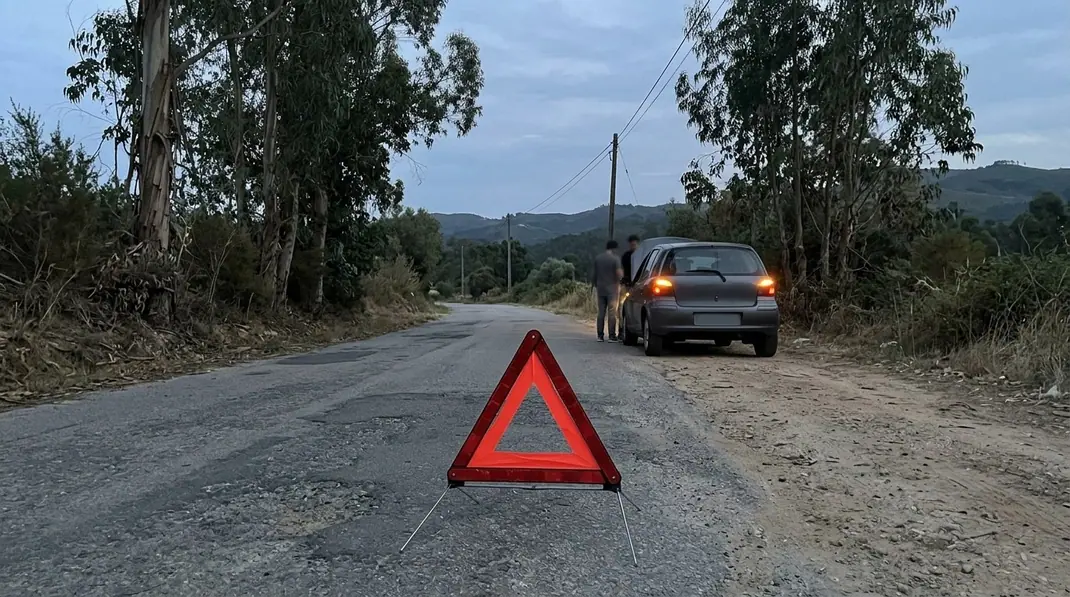
Art. 87 also says that people not involved in removing or repairing the vehicle must not stay on the carriageway. Passengers should wait off the road, behind the barrier if there is one.
What colour and standard the vest must have
The vest must be retroreflective, meaning it reflects the light that hits it. The ACP says it can be yellow, orange, green or pink, and must meet standard EN 471 or EN 1150. Look for that reference on the label before buying, and replace the vest if it is torn or faded.
What about motorcycles and mopeds?
No. The obligation in art. 88(1) excludes vehicles with two or three wheels, so you do not have to carry a vest or a triangle on a motorcycle. If you want a motorcycle licence, see our guide to the A1, A2 and A categories.
Fine for not having a vest or a triangle
Art. 88 provides for two different fines:
- €60 to €300 for each item missing, if the car is driven without a vest or without a triangle (paragraph 6);
- €120 to €600 if the vehicle is stopped and you do not use the triangle, or do not wear the vest when required (paragraphs 2 to 4).
Without a vest and without a triangle, the fine applies to each one. If you commit both offences at the same time, two reports are issued (paragraph 8). In practice, having both items in the car avoids the first fine, and using them when you stop avoids the second.
According to the ANSR, not using the triangle and the hazard lights is a serious offence, and on motorways or similar roads a very serious one. Serious and very serious offences carry a fine and a driving ban. Stopping after a breakdown without the precautions of art. 87 carries a fine of €60 to €300, or €120 to €600 on a motorway.
What to do if your car breaks down or you have an accident
Whenever possible, take the car off the carriageway or bring it as close as possible to the right-hand verge (art. 87). Then follow these steps:
- switch on the hazard lights and, if it is safe, switch off the engine;
- put the vest on before getting out, on the pavement or verge side;
- place the triangle at least 30 m away, watching the traffic;
- keep passengers away from the road;
- call your insurer or a tow truck for assistance and, if anyone is hurt, call 112.
After an accident, our guide on what to do after a car accident explains the order of actions. If another vehicle is involved and nobody is hurt, see how to fill in the amicable accident report.
When buying a used car, check the equipment
When you buy a used car, the triangle and the vest are not always in the boot. Check they are there and that the vest is not torn. They cost little, but missing them can earn a fine on the first trip.
On 12 November 2026, there were 9,491 active cars on AUTO.MOTO.pt, of which 2,096 were priced between €500 and €10,000. See the used cars for sale and get alerts for new adverts in the AUTO.MOTO app.
The figures in this article are those of the Highway Code as republished in 2020 and of the ANSR; always check the version in force before acting.
Frequently asked questions
Is a reflective vest mandatory in the car?
Yes. Art. 88 requires every motor vehicle, except those with two or three wheels, to carry a vest and a triangle of an approved model. Each one missing carries a fine of €60 to €300.
Can I keep the vest in the boot?
Yes. The ACP says you do not have to leave the car wearing the vest, so it can be in the boot. It is better to keep it closer, to put it on before getting out.
How far away do you place the triangle?
At least 30 m from the vehicle and so that it is visible from at least 100 m, perpendicular to the road surface and to the axis of the carriageway.
When do I have to wear the vest?
When the car is stopped on the carriageway or the verge and you are going to place the triangle, repair the car or remove the vehicle or the cargo.
How much is the fine for not having a reflective vest?
€60 to €300 for each item missing. If you are stopped and do not wear the vest when required, the fine is €120 to €600.
Do motorcycles need a vest and a triangle?
No. The obligation in art. 88 does not apply to vehicles with two or three wheels.