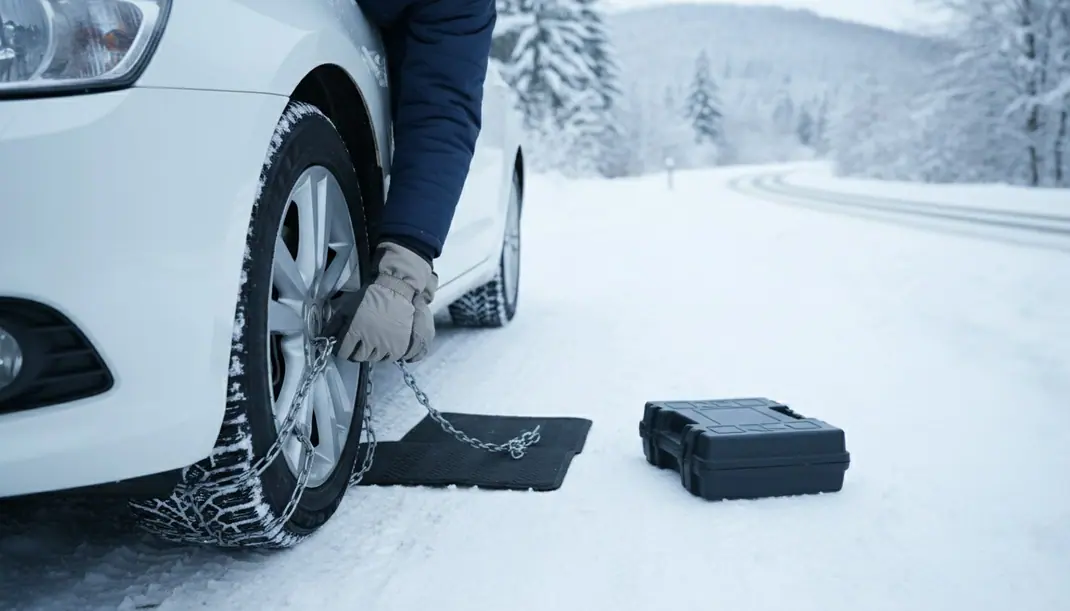
Snow chains go on the driving wheels: on the front ones in a front-wheel-drive car, which is most cars. In Portugal, they are only compulsory where the D9 sign is posted, which requires chains on two driving wheels.
If you are heading to the Serra da Estrela or other mountains in winter, keep them in the boot, practise fitting them at home and do not go above 50 km/h with them on.
In this guide we explain when snow chains are compulsory, which and how many wheels they go on, how to choose the size, how to fit them and whether snow socks will do.
When snow chains are compulsory in Portugal
The Portuguese Road Signs Regulation has two signs. The round blue D9 sign requires vehicles to have snow chains on two driving wheels. The H5 information sign only recommends them.
- D9 (mandatory): without chains, you cannot continue past that point;
- D15: marks the end of the D9 requirement;
- H5 (recommended): advises chains but does not require them;
- H36: marks the end of the recommendation.
Ignoring a mandatory sign such as D9 is an administrative offence punished with a fine, under Article 29 of the same regulation. Outside stretches with a D9 sign, there is no general obligation to use them.
Snow chains in the Serra da Estrela: when to take them
Not always, but it is wise to take them from November to March. In heavy snow, the authorities often close the roads to Torre and, when they reopen, chains may be required. Without them, you may have to turn back.
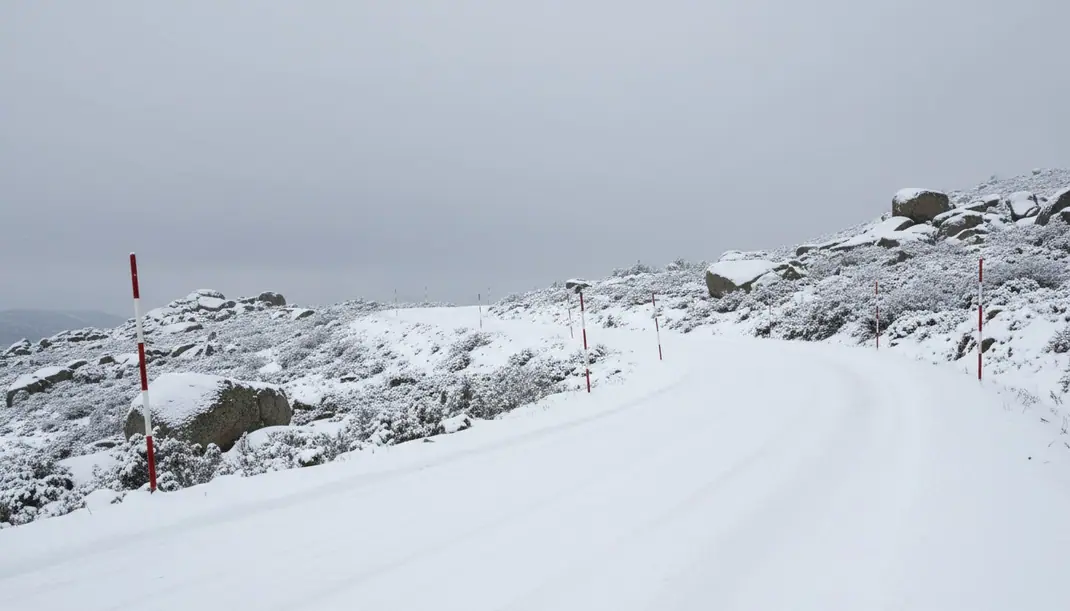
Before you leave, check the IPMA weather warnings for the Guarda and Castelo Branco districts and Civil Protection updates on closed roads. Take a full tank, warm clothes and a charged phone.
Which wheels snow chains go on
Chains always go on the driving wheels, the ones that pull the car. If you are not sure which those are, check the manual or our article on how a car's transmission works.
- front-wheel drive: chains on the two front wheels;
- rear-wheel drive: chains on the two rear wheels as the legal minimum; Michelin recommends all four, so you keep steering grip;
- all-wheel drive (4x4): follow the car's manual; Michelin recommends all four wheels.
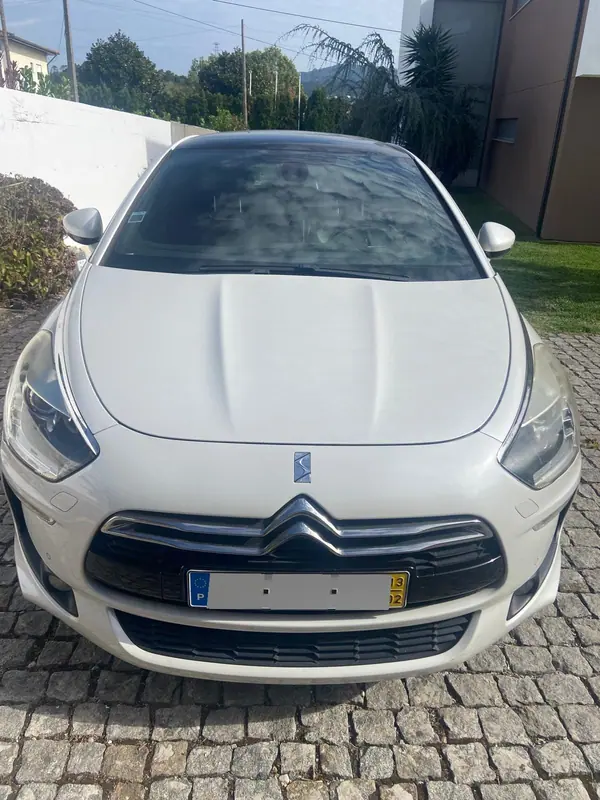
Front-wheel drive is the most common. Among the 161 cars for sale on AUTO.MOTO.pt whose advert states the drive type (most do not), 65% are front-wheel drive, 22% rear-wheel drive and 13% all-wheel drive (data from 22 October 2026).
How many wheels need chains?
The D9 sign requires chains on two driving wheels, so a set of chains comes with two. On a 4x4 or a rear-wheel-drive car, you may need two sets for all four wheels.
How to choose snow chains
The size depends on your tyre size, printed on the sidewall, for example 205/55 R16. Buy chains made for that exact size. If you are unsure how to read it, see our guide to choosing the right tyres for your car.
- metal chains: the classic option, with the best grip in fresh snow and on ice;
- composite chains: easier and quicker to fit;
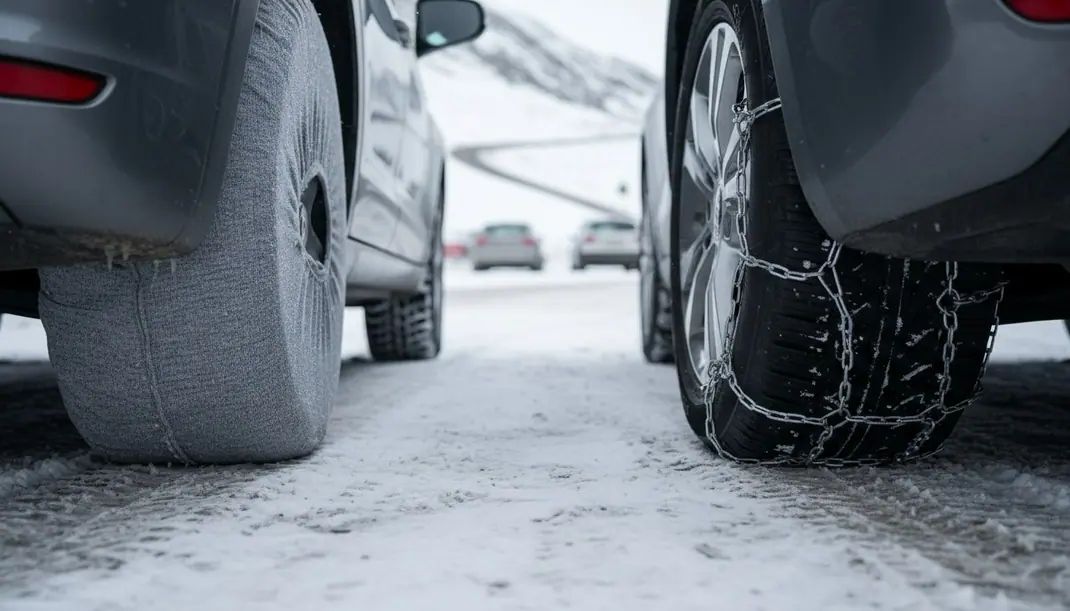
- snow socks (textile): the simplest to put on, but less effective in fresh snow and on ice;
- wheel clearance: some cars have little room in the wheel arch; the manual says whether they take chains and which type.
Snow socks or chains?
The Michelin guide to snow chains says textile socks perform like chains on packed snow but worse in fresh snow and on ice. The Portuguese regulation refers to snow chains and does not mention socks. If you are heading to an area with a D9 sign, chains are the safer choice.
How to fit snow chains, step by step
Fit them once at home in dry weather, so you are not learning in a hurry on the roadside, in the cold and in the dark.
- stop on flat, safe ground off the carriageway, with your hazard lights on and your vest on;
- put on gloves and use a cloth or mat to kneel on;
- lay the chain out flat on the ground, untangled, and pass it behind the wheel;
- close the inner fastener first and then the outer one, at the top of the wheel;
- drive forward half a metre to free the part that was under the tyre, then tighten the tensioner;
- drive about 100 metres, stop and tighten again.
Always follow the chain maker's instructions. Not all models fit the same way.
Driving with snow chains
- speed: Michelin advises not going above 50 km/h with chains;
- smoothness: accelerate, brake and steer gently, with no sudden movements;
- take them off: remove them as soon as there is no more snow on the road, because tarmac wears out both the chains and the tyres;
- drying: at home, rinse them with fresh water and let them dry before storing.
In snow, it is normal to see the traction control light flashing on the dashboard. If another light comes on, see our guide to dashboard warning lights and what each one means.
Cold weather also lowers tyre pressure. Before driving up the mountain, check your tyre pressure with the tyres cold.
What if you often drive in snow?
If you live inland or go to the mountains every winter, consider winter or all-season tyres, or an all-wheel-drive car. To find them, you can search tyres by size for your car. See the SUVs for sale on AUTO.MOTO.pt and check the drive type in the advert, as not every SUV is a 4x4.
Frequently asked questions about snow chains
When should you fit snow chains?
When there is a D9 sign, which makes them compulsory, or when the road has snow or ice and the car starts losing grip. Fit them before you get stuck, in a safe place.
Which wheels should snow chains go on?
On the driving wheels: the front ones on a front-wheel-drive car, the rear ones on a rear-wheel-drive car. On a 4x4, follow the manual.
Do you need chains to go to the Serra da Estrela?
They are only compulsory where there is a D9 sign, but in winter it is wise to take them. In snow, the roads to Torre may be closed or require chains.
How many wheels should have snow chains?
The law requires chains on two driving wheels. On rear-wheel or all-wheel drive cars, all four are recommended.
How fast can you drive with snow chains?
Michelin gives a maximum of 50 km/h. Also check the limit stated by the maker of your chains.