Within the highly complex, fascinating, and deeply intricate universe of automotive engineering, the roaring internal combustion engine is frequently, and somewhat unfairly, crowned as the absolute singular protagonist, happily receiving all the glory, heavy media attention, and wild applause for producing spectacular, headline-grabbing horsepower figures. However, there exists a profound, undeniable mechanical truth that frequently completely escapes the casual, everyday driver: an engine, regardless of how incredibly powerful, highly sophisticated, or massive it physically is, remains completely and utterly useless if it inherently lacks a highly complex mechanical system fundamentally capable of deeply channeling, actively domesticating, and perfectly translating that raw, violent rotational force directly into a controlled, usable physical movement strictly for the driven wheels. That absolutely vital system, the true, unsung mechanical hero quietly residing deep beneath the central floor tunnel of your vehicle, is undeniably the transmission.
Profoundly understanding exactly what a transmission physically is, the widely varying types of advanced mechanical architectures available on the modern market, and precisely how to actively perform their correct, preventative maintenance is absolutely not merely a frivolous exercise in academic technical curiosity. It is, in hard reality, a highly fundamental, essential competence of total automotive literacy. This knowledge becomes incredibly, specifically critical when heavily navigating the massive, treacherous, and highly demanding market of used cars (the Portuguese term for the vibrant used car market), where accidentally purchasing a vehicle possessing a deeply neglected, severely damaged gearbox can instantly and tragically morph into a financially devastating nightmare. In this massive, encyclopedic, and deeply technical mechanical guide, we will surgically dissect the complex internal anatomy of modern automotive transmissions, heavily explore the deep technological evolution ranging from pure, classic manual gearboxes all the way to advanced continuous variations, and actively help guarantee that your absolute next massive mobility decision is precisely as buttery smooth as a flawless, perfect gear shift.
1. The Fundamental Problem: Deep Thermodynamics and the Vital Need for Gear Ratios
To genuinely, truly understand the fundamental core purpose of any transmission, we must actively and closely analyze the absolute physical, thermodynamic limitations inherent strictly within a traditional Internal Combustion Engine (ICE). Unlike a highly modern electric motor, which successfully and flawlessly manages to physically output its absolute maximum peak torque (the raw twisting force) instantaneously directly from zero revolutions per minute (RPM), a classic gasoline or heavy diesel engine proudly possesses a remarkably narrow, highly restricted window of efficient physical operation. A combustion engine fundamentally only produces highly usable, effective peak power and massive torque strictly within a very specific, narrow band, generally heavily situated right between roughly 2,000 and 5,000 RPM. If the RPMs dramatically drop below that specific band, the massive engine completely lacks rotational force, violently stalls, and physically dies; if pushed far above that specific redline limit, the massive internal mechanical friction and massive heat simply destroy the moving internal steel components.
If engineers foolishly decided to physically link the heavy spinning crankshaft of the engine directly, rigidly to the drive wheels of the heavy car completely without any intermediary mechanical system, the massive vehicle would absolutely lack the required, massive low-end physical force necessary to simply accelerate away from a dead stop. If it somehow, miraculously managed to physically launch itself forward, the vehicle's absolute top speed would instantly be strictly, rigidly limited by the absolute maximum physical rotational limit of the engine itself, meaning the screaming car would likely struggle to comfortably surpass 30 or 40 miles per hour, with the protesting engine howling violently right on the terrifying verge of complete, catastrophic self-destruction.
The brilliant, heavy transmission perfectly, elegantly resolves this fundamental mechanical paradox strictly through the highly intelligent use of heavy, toothed steel gears strictly of widely varying, differing physical sizes, effectively creating what we universally call specific gear ratios. The heavy first gear actively utilizes a tiny, very small gear firmly positioned on the engine's input shaft to physically turn a vastly larger gear securely located on the output shaft heading to the wheels. This brilliant setup drastically reduces wheel rotational speed but violently, massively multiplies the engine's torque output, successfully allowing a heavy, massive two-ton premium vehicle to launch itself easily up a steep, terrifying mountain incline. As the heavy vehicle successfully gathers massive kinetic forward momentum and vital inertia, the highly complex transmission smoothly, progressively transitions up into significantly higher gears (utilizing steel gears vastly closer in physical physical size to each other), actively reducing the torque multiplication factor but substantially, massively increasing the final, ultimate rotational speed of the heavy road wheels. Renowned, highly prestigious global research institutions precisely like the Society of Automotive Engineers (SAE) frequently, heavily publish extensive, peer-reviewed engineering papers detailing exactly how the fine optimization of these specific gear ratios represents the absolute most highly critical engineering factor strictly responsible for massive improvements regarding the overall global fuel efficiency of modern automobiles.
2. Anatomy and Evolution: The Classic Manual Transmission
The classic manual gearbox remains undeniably the absolute purest, most classic, and physically most directly engaging mechanical form of automotive transmission. Despite the highly pronounced, sharp global decline in heavy sales, specifically within the massive luxury automotive segment, the traditional manual transmission absolutely continues to act heavily as the vital, beating driving force powering basic mobility across the entire European continent. Its highly enduring, profound popularity resides deeply in an unbeatable, perfect combination of incredibly low physical weight, absolute mechanical simplicity, massive ease of repair, and incredibly low, highly residual manufacturing costs.
The enduring appeal of the manual gearbox is perfectly exemplified by highly popular, widely accessible models like the Dacia Sandero. By offering a highly robust, mechanically simple, and proven manual transmission, it aggressively and successfully keeps the absolute entry purchase price incredibly accessible for the masses while effectively guaranteeing that the long-term running maintenance costs actively remain extremely, exceptionally low.
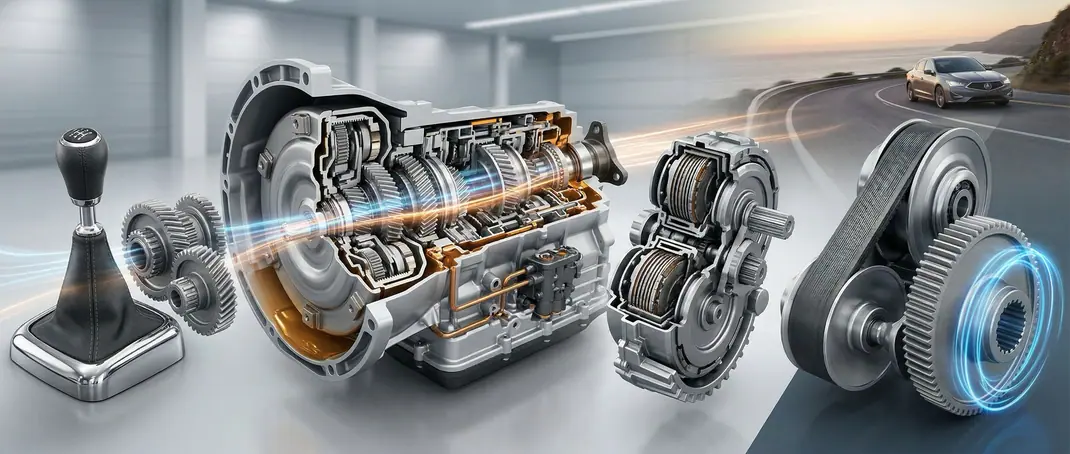
A classic manual transmission is fundamentally physically composed of exactly three highly critical internal elements: the massive flywheel rigidly attached to the engine, the sacrificial friction clutch assembly, and the heavy physical gearbox itself housing the steel cogs. The clutch is the vital, sacrificial mechanical friction device that directly allows the driver to selectively, temporarily physically disconnect the violent rotational force of the heavy engine entirely from the transmission input. When the driver heavily depresses the left foot pedal, a throw-out bearing forcefully pushes against the massive diaphragm spring (pressure plate), rapidly pulling the friction-material-coated clutch disc safely away from the spinning engine flywheel. It is precisely this vital millisecond of complete, total mechanical disconnection that allows the driver to physically, manually move the heavy gear lever, smoothly sliding the internal synchromesh sleeves (soft metal rings, frequently manufactured from durable bronze, specifically designed to match the spinning speed of the massive steel gears long before the actual engagement) from one physical gear directly to another completely without causing a terrifying, highly destructive metallic grinding explosion.
3. Hydraulic Engineering: The Automatic Transmission with a Torque Converter
While the classic manual gearbox inherently, exhaustingly requires the constant, physical intervention of all the driver’s moving limbs, the classic, traditional automatic transmission proudly assumed the massive mission of actively providing absolute, unshakeable luxury and plush comfort strictly by completely, entirely removing the heavy left clutch pedal. Deep at the beating heart of this brilliant mechanical invention, there exists absolutely no rigid, physical, solid-metal connection linking the engine securely to the gearbox; there exists, remarkably instead, an incredible engineering marvel of advanced fluid dynamics universally called the "torque converter."
The classic torque converter physically resembles a massive, heavy, hollow metal "donut," tightly, heavily sealed and completely filled with highly viscous, specialized transmission fluid. Deep within its complex interior, there firmly exist two massive bladed fans securely mounted directly facing each other. One massive fan (the impeller) is rigidly bolted directly to the spinning engine; the opposing fan (the turbine) is firmly connected to the transmission's input shaft. As the revving engine actively accelerates, the spinning impeller violently hurls the heavy transmission fluid at incredibly high pressures directly against the angled blades of the opposing turbine, forcefully causing it to rapidly rotate. This brilliant, fluid-based physical connection is the exact foundational reason why older, vintage automatic cars inherently felt so incredibly smooth at parking speeds, but also why they felt so sluggish, lethargic, and deeply inefficient regarding fuel consumption, heavily due to the gigantic, massive parasitic energy losses constantly generated by internal fluid friction drag.
However, today, heavily driven by the spectacular, relentless advancement of mechanical engineering spearheaded actively by massive global transmission manufacturing titans such as ZF Friedrichshafen, modern torque-converter automatics frequently proudly possess eight, nine, or even a staggering ten forward speeds, brilliantly combined with ultra-fast mechatronic valve bodies and advanced physical "lock-up clutches." These sophisticated clutches physically lock the two spinning halves tightly together at fast cruising speeds, completely eliminating the fluid slip and successfully matching or occasionally even vastly surpassing the raw fuel efficiency of a classic manual gearbox.
4. The Limitless Approach: The Continuously Variable Transmission (CVT)
The highly advanced Continuously Variable Transmission (CVT) has aggressively and entirely abandoned the antiquated, classical engineering concept of physically possessing heavy, fixed steel gears or specific steps. Instead of mechanically, heavily climbing up strictly defined, rigid stair steps (1st, 2nd, 3rd gears), the CVT beautifully and flawlessly offers a literally infinite, endless number of highly variable transmission ratios.
The internal physical architecture of a typical, traditional CVT cleverly utilizes a pair of highly complex, cone-shaped, expandable metal pulleys, heavily connected securely by an incredibly strong, high-tensile steel pushbelt. The massive metal cones actively slide inwards and outwards under intense hydraulic pressure, continuously, seamlessly altering the exact physical running diameter of the steel belt in real-time. This brilliant, continuous engineering approach successfully allows the gearbox to intelligently keep the engine operating precisely, exactly at its specific rotational sweet spot of absolute maximum fuel efficiency (for quiet highway cruising) or its peak torque curve (for heavy, aggressive acceleration), completely independent of the actual, physical speed at which the heavy car is currently traveling forward.
Modern continuously variable transmissions have evolved significantly. Take, for instance, the advanced systems found in cutting-edge machines like the highly anticipated Nissan Qashqai 2026. These vehicles utilize highly intelligent software mapping specifically designed to carefully fine-tune the advanced Xtronic CVT, actively simulating physical gear shifts directly during heavy, aggressive acceleration, beautifully eliminating the old, loud, and annoying "rubber band" engine drone, all while strictly maximizing advanced hybrid traction and buttery smoothness heavily required for dense urban driving.
5. Racing Heritage for the Street: Dual-Clutch Transmissions (DCT/DSG)
If the traditional torque converter heavily, undeniably prioritizes plush smoothness, and the clever CVT fiercely prioritizes methodical fuel consumption, the highly advanced Dual-Clutch Transmission (DCT) fiercely, aggressively prioritizes the absolute, pure delivery of ballistic, uninterrupted speed. Commercially introduced widely in the mid-2000s, this massive technological leap heavily inspired directly by elite motorsport competition is, deep within its physical essence, literally two completely separate manual gearboxes brilliantly housed and packaged together strictly within a single, heavy aluminum metal block.
One heavy-duty physical clutch exclusively, strictly controls the even-numbered gears (2nd, 4th, 6th), while the second, massive independent clutch strictly manages the odd-numbered gears (1st, 3rd, 5th). When the aggressive driver accelerates fiercely forward in 3rd gear, the transmission's highly sophisticated, ultra-fast computer has actively, mechanically pre-selected 4th gear securely on the other half of the gearbox. The actual physical gear shift is absolutely not the clunky mechanical movement of heavy gears engaging, but rather precisely the lightning-fast, electronic opening of one spinning clutch in the exact, identical millisecond that the second, waiting clutch aggressively closes. The astonishing, violent result is a completely uninterrupted, seamless gear change that frequently takes a mere 8 microscopic milliseconds, completely lacking any physical break in the massive delivery of twisting power. This is the exact reason why this highly complex architecture is incredibly widely utilized in high-performance, elite sports cars heavily produced by Porsche, Ferrari, and securely across the massive sporting line of the entire Volkswagen Group fleet.
6. The Heavy Challenge and Strict Evaluation in the Used Car Market
When the highly intelligent modern consumer inherently possesses a highly fixed, rigid financial budget and actively seeks highly viable, smart alternatives to the brutal, massive financial depreciation that shiny brand-new cars heavily suffer during their first three years of life, their intensive research invariably, rapidly turns toward the massive, highly attractive second-hand vehicle market. However, when strictly evaluating highly valuable options within the complex ecosystem of used cars, the precise internal health status of the heavy transmission must undeniably, unequivocally represent your absolute primary, highest mechanical concern, frequently, significantly surpassing even the massive wear of the engine block itself.
Completely unlike a heavy cast-iron engine block that can frequently, stubbornly survive years of minor oil neglect or light abuse, a highly computerized, highly pressurized automatic transmission or a highly complex dual-clutch gearbox is incredibly, extremely mechanically sensitive to abuse. If the previous, careless owner heavily utilized the vehicle strictly to constantly tow massive, heavy loads directly up steep mountain passes, the invisible thermal degradation of the internal transmission fluid may have already microscopically, irreparably destroyed the complex internal hydraulic valve body. When actively test-driving any vehicle strictly within this complex market, the smart driver must absolutely, fundamentally perform the vital cold "Reverse-to-Drive" physical test. Start the engine completely cold for the very first time that day, press firmly on the heavy brake pedal, and aggressively shift the lever directly into "Reverse," and subsequently directly into "Drive." If there firmly exists a massive, violent clunk, a highly terrifying, long hesitation exceeding two full seconds before the heavy gear mechanically engages, or severe, aggressive shuddering directly within the cabin, simply walk away. Physically replacing a highly complex mechatronic module inside a damaged DCT transmission heavily situated outside of factory warranty can easily and quickly exceed several thousands of hard-earned euros, completely and utterly destroying any massive economic benefit that the smart second-hand purchase initially, originally offered. Respected automotive entities like the Associação Automóvel de Portugal (ACAP) have frequently and heavily shared vital statistical data indicating exactly how the precise mechanical conservation status imperatively dictates massive market price fluctuations and strong value retention regarding vehicles in private, second-hand sales.
7. The Massive Blind Spot of Ownership: Deep Gearbox Maintenance
The absolute greatest, most damaging urban myth heavily, deliberately perpetuated by many large automotive dealerships consistently over the last entire decade, frequently proudly registered directly within user manuals for purely marketing reasons and a highly illusory reduction of the "Cost of Ownership," is the terrifying existence of the mysterious "Sealed for Life Transmission." Complex tribology engineers and pure fluid mechanics absolute experts know fundamentally that this dangerous statement is a complete, total scientific fallacy.
Transmission fluid violently operates strictly under conditions of immense, terrifying mechanical stress. It absolutely does not serve merely to simply lubricate the massive solid steel gears; it highly actively, critically acts as a thermal cooling fluid specifically designed to physically dissipate the extreme, massive heat dynamically generated by heavy clutch friction, it aggressively acts as the primary hydraulic actuation pressure securely inside the mechatronic valve body, and it effectively cleans away the microscopic, abrasive metallic debris that naturally, physically detaches directly during normal, everyday mechanical engagement operations.
In a standard manual gearbox, proactively replacing the thick gear oil exactly at 100,000 kilometers securely ensures that the vital oil film remains physically capable of actively protecting the massive bearing spheres. In the highly demanding DCT (Dual Clutch) gearboxes that actively utilize a "Wet Clutch" system (where the massive friction discs literally swim deeply in the hot oil specifically to cool themselves), the rigorous, highly strict physical change of the expensive fluid and the microscopic microparticle filter precisely at rigid, manufacturer-mandated intervals (typically highly strictly enforced every 60,000 kilometers) is the absolute, sacred mechanical commandment. Foolishly, arrogantly ignoring this highly basic, relatively cheap preventative intervention, which costs a mere few dozen or small hundreds of euros, effectively guarantees the highly inevitable, catastrophic total physical failure of the massive unit, whose resulting sharp metallic debris will hopelessly and irreparably clog the tiny, vital hydraulic pressure galleries.
8. The Massive Revolution of the Future: Transmissions in the Electrification Era
As the massive, silent electric revolution actively advances inexorably across the global automotive landscape, the very foundational, classic concept of what a transmission is is undergoing a complete, radical overhaul. Pure electric vehicles (EVs) proudly possess a massively, fundamentally different energy delivery profile. A massive EV motor can easily, smoothly rev to an incredible 15,000 or 18,000 RPM and violently, instantly delivers its massive peak torque output directly from the absolute first single degree of physical rotation.
Strictly due to this fantastic, incredible mechanical elasticity, highly modern electric cars generally completely lack the strict need for heavy, highly complex multi-ratio gearboxes. They intelligently utilize a simplified, massive single-speed transmission (frequently and accurately called a direct "reduction gear"). This highly robust, heavy-duty reducer possesses a solid, fixed gear ratio of roughly 9:1 or 10:1, which acts strictly to mechanically reduce the furious, screaming rotational speeds of the electric rotor directly down to a highly usable rotational wheel speed securely on the half-shafts, massively multiplying the raw electric torque for bone-crushing, violent launches while actively allowing the extreme, high engine RPM to effortlessly reach 120 mph completely without the need to ever actively shift gears.
On the other hand, the highly complex world of Conventional Hybrid (HEV) and advanced Plug-in Hybrid (PHEV) vehicles has actively added a massive, monumental layer of heavy complexity directly to transmission design. The highly advanced e-CVT technology completely, cleverly avoids utilizing fragile conical belts, utilizing instead a massive, brilliant set of planetary interlocking gears heavily, masterfully combined directly with a pair of incredibly powerful electric motor-generators. This allows a continuous, highly computerized, seamless blending of pure physical power violently originating from both highly flammable gasoline and high-voltage electrons working in absolute, perfect mechanical harmony. Industry-leading publications, highly respected entities such as Car and Driver, have frequently, correctly classified the highly successful hybrid integration of these complex transmissions as the absolute most highly complex mechanical engineering leap actively undertaken by the automotive industry strictly within modern recorded history.
9. The Direct Impact on National Market Decisions
The fundamental, core architecture of the heavy transmission effectively dictates vastly more than just exactly how a car smoothly launches away from a busy traffic light; it highly actively, definitively shapes the entire, massive economy of scale regarding global mobility tourism. When eager, potential buyers actively evaluate highly valuable options amidst the massive volume of used cars currently circulating extensively, automatic gearboxes have recently aggressively converted themselves completely from highly ignored luxury items straight into absolute, mandatory necessities specifically required for daily driving securely within dense, highly frustrating stop-and-go city traffic.
Heavy utility cars strictly equipped with smooth automatic gearboxes (especially highly popular B-segment city hatchbacks and highly lifted C-segment crossover SUVs) firmly hold a substantially, massively stronger resale value and effectively suffer vastly, incredibly less financial depreciation strictly with age, heavily reflecting the complex dynamic preferences of the modern, current generation that highly favors immense, plush comfort and absolute peace of mind above all else.
10. Your Absolute Next Highly Intelligent Mechanical Choice
The true, immense power of the automotive transmission resides deeply and profoundly in its massive, invisible capability to flawlessly shape the exact, strict profile of your ultimate dream vehicle and to completely, entirely alter your physical, sensory experience directly connected with the open road. A highly purist, classic six-speed manual transmission instantly and violently summons the deep, heavy roots of pure driving engagement, making it absolutely ideal for the raw, emotional enthusiasm of aggressively carving up a twisting, high-altitude mountain road precisely on sunny, perfect weekends. On the highly distinct other hand, a modern, brilliantly calibrated Continuously Variable Transmission (CVT) or a highly refined torque converter acts almost identically like an invisible, highly professional butler, imperceptibly taking charge strictly to actively absorb the heavy, frustrating stress of chaotic, dense stop-and-go traffic found in massive cities, effectively transforming highly pressured, tiring driving completely into a relaxing, plush experience.
The massive financial investment specifically into a premium vehicle, placing a highly particular, intense focus directly on a robust, highly intelligent gearbox choice, is absolutely something that should never, ever be foolishly rushed. If your calculated intellect is highly actively pointing your very next deep automotive search directly toward the seemingly inexhaustible, highly complex second-hand market, and you highly actively seek a secure, premium platform that successfully unites verified, honest sellers, highly transparent vehicle valuations, and a massively diverse, expansive inventory, we warmly and strongly invite you to effectively take the reins of your deep exploration strictly through a highly secure digital ecosystem. Whether you are deeply, passionately interested in heavily exploring the absolute most economical, highly efficient manual hatchbacks available on the market, or fiercely seeking the brutally potent, lightning-fast dual-clutch sports cars, visit the absolute leading, premier portal in the entire country right now and navigate confidently directly through the absolute largest national digital directory at AUTO.MOTO.pt. Because intelligently, securely acquiring your absolute next perfect car firmly equipped with exactly the right transmission is, far above absolutely all else, smoothly shifting your mechanical gears firmly toward the absolute smoothest, most unforgettable, and incredible journey of your entire driving life!