In the contemporary era of the global automotive industry, where massive electrification, the rapid integration of artificial intelligence, and the wild proliferation of gigantic touchscreens have drastically inflated the prices of new vehicles, one specific brand has consistently sailed against the heavy current. Dacia, meticulously operating under the massive umbrella of the Renault Group, has effectively rewritten the rules of the automotive game. The Dacia Sandero is absolutely not just a simple car; it is a profound sociological and economic phenomenon. Repeatedly crowned as the absolute best-selling car to private retail customers across the entire European continent, the Sandero boldly proves that pure financial rationality still holds a deeply prominent place inside family garages.
But the burning question that constantly dominates the minds of anxious consumers actively looking to escape the exorbitant, skyrocketing prices of upper segments is direct and highly pragmatic: ultimately, how much does a brand-new Dacia Sandero actually cost today? And, even more importantly, exactly what does the consumer get in return for that hard-earned money? This highly exhaustive, deeply technical, and heavily financial guide will surgically dissect every single detail of the modern Dacia Sandero, ranging from its brilliant LPG engines to its advanced technological platform, carefully comparing its true value in a harsh economic market where severe inflation actively pushes many buyers toward the alternative of used cars.
1. The Evolution of the Philosophy: From "Low-Cost" to the "Smart Buy"
To genuinely and fully comprehend the current pricing structure of the new Dacia Sandero, it is absolutely vital to understand the profound, radical metamorphosis of the brand itself. Over a decade ago, Dacia was strictly, sometimes unfairly, viewed as a pure "low-cost" brand, where the incredibly low sticker price reflected an obvious, painful compromise in exterior aesthetics, acoustic comfort, and active safety. However, the introduction of the third generation of the Sandero completely and irreversibly shifted the global paradigm.
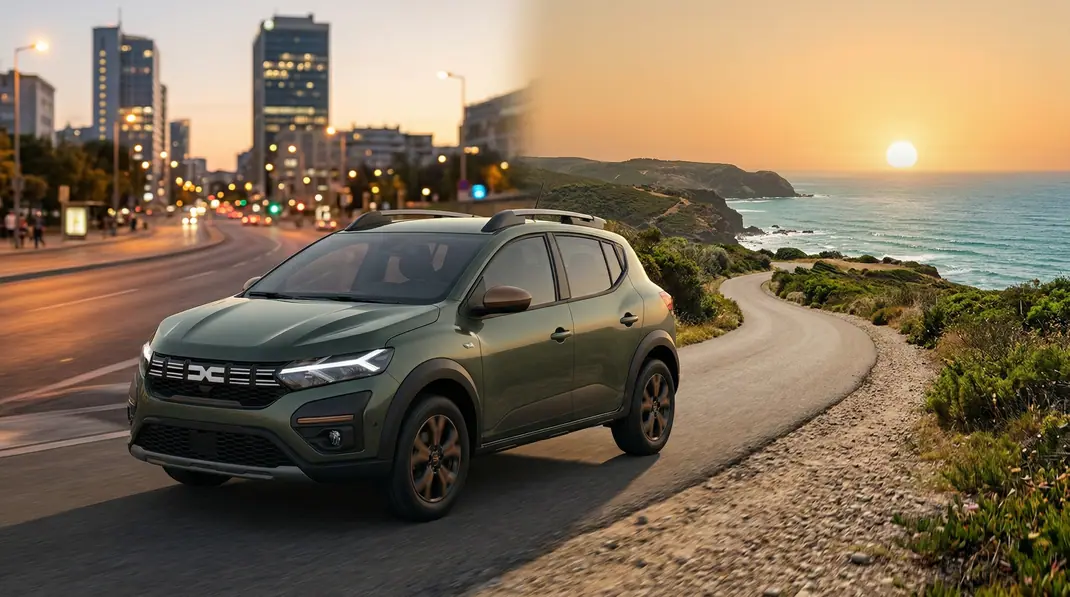
The massive, invisible revolution was the highly strategic adoption of the advanced CMF-B platform from the Renault Group. This is exactly the identical structural, highly tensile, and technological base that currently underpins the massive-selling Renault Clio and the popular Renault Captur. By intelligently utilizing this modern modular architecture, Dacia successfully managed to offer an infinitely more rigid chassis, a vastly more refined dynamic behavior on the open highway, and, crucially, the vital capacity to seamlessly integrate modern Advanced Driver Assistance Systems (ADAS). The Sandero completely ceased to be the sad car you only buy strictly because it is cheap; it triumphantly became the definitive "Smart Buy." The modern consumer absolutely no longer feels they are being socially or physically penalized for choosing Dacia. The bold exterior design, proudly featuring the brand's brand-new visual identity, the aggressive front grille featuring the interlocking "Dacia Link" logo, and the striking "Y-shaped" luminous signature featuring standard LED headlights, gracefully gives it a robust, contemporary stance that effectively rivals vehicles that cost thousands of euros more.
2. Pricing Structure and Trim Levels in the European Market
The exact price of a brand-new Dacia Sandero effectively varies significantly depending precisely on the specific version actively chosen: the classic, low-slung Sandero (frequently dubbed the Streetway) or the highly popular, lifted crossover version, universally known as the Sandero Stepway. While exact final prices suffer minor adjustments specifically due to local inflation and heavy Portuguese taxation (such as ISV and VAT), the foundational base structure stubbornly remains the absolute most highly competitive in the entire European market. Dacia Portugal has actively maintained a highly transparent pricing policy, completely avoiding the confusing, illusory discount campaigns utilized by other brands in favor of offering a "fair price" strictly from the very first kilometer.
A. Dacia Sandero (Streetway): The Champion of Rationality
The classic entry-level model is purely, unashamedly focused entirely on daily function and strict urban economy.
- Essential Trim: This is the spartan, highly basic version, whose entry price generally sits impressively within the €12,500 to €13,500 bracket. It is an almost unbelievable, logic-defying value in today's inflated new car market. Although it comes heavily stripped of luxury comforts (frequently completely lacking a central touchscreen, replaced instead by the highly ingenious Media Control system that smartly utilizes the driver's own smartphone clamped to the dash via a dedicated app), it strictly includes the absolute legal safety essentials: active emergency braking, six airbags, a digital speed limiter, automatic lights, and bright LED headlights.
- Expression Trim: Sitting comfortably at a price point hovering around €14,000 to €15,000, the Expression level is the absolute "sweet spot" for the overwhelming majority of Iberian buyers. It heavily adds vital 21st-century comfort elements, such as the Media Display infotainment system featuring a crisp 8-inch touchscreen (fully compatible with wired Apple CarPlay and Android Auto), manual air conditioning, rear electric windows, rear parking sensors, and front fog lights. The cabin beautifully receives soft fabric inserts seamlessly spanning the dashboard and door cards, which dramatically elevates the tactile perception of quality and completely eliminates the depressing sensation of cheap, hard plastics that were omnipresent in previous older generations.
B. Dacia Sandero Stepway: The Massive Allure of Crossover Styling
The rugged Stepway is the true, undeniable profit engine and sales locomotive for Dacia. It frequently, consistently represents well over 70% of all Sandero sales. Its massive appeal resides deeply in its aggressive, adventurous aesthetic: a significantly elevated ground clearance (a massive 174 mm compared to the 133 mm of the standard Sandero), highly ingenious modular roof bars (which can be cleverly transformed into crossbars in minutes with the simple turn of an Allen key hidden in the glovebox), heavy black plastic cladding protecting the wheel arches, and much more robust, sculpted bumpers featuring faux skid plates.
- Stepway Essential: This version kicks off strongly around the €15,000 mark. It beautifully offers the highly coveted SUV visual stance demanded by the modern market completely without the massive running costs inherently associated with a heavy C-segment SUV.
- Stepway Expression: Perfectly situated between €16,500 and €17,500, deeply depending on the specific engine choice. It seamlessly includes all the technological upgrades of the standard Expression, but proudly wears a much more appealing, dominant, and aggressive visual presence on the road.
- Stepway Extreme: The absolute, undisputed top of the range. With prices actively fluctuating strictly between €18,000 and €19,500 (or slightly more if optionally equipped with the automatic gearbox), the Extreme version proudly includes highly exclusive design elements featuring stunning Copper Brown details, specific dark alloy wheels, the advanced Extended Grip system (specifically designed to significantly improve traction on highly slippery surfaces like mud or snow by altering the ESP software definitions), hands-free keycard entry, a reversing camera, and the highly innovative MicroCloud fabric, which is extremely resistant, deeply easy to clean, and beautifully simulates the premium touch of soft velvet.
3. Powertrains: Absolute Economy Taken to the Extreme (ECO-G)
Dacia took a highly strategic, incredibly bold corporate decision with the third generation of the Sandero: they completely and utterly eliminated all diesel engines from the lineup. In a complex era of rapid energy transition and highly punishing Euro 6d-Full and Euro 7 emissions standards, the massive financial investment heavily required to actively make a small diesel engine legally compliant would be ruthlessly passed directly onto the final consumer, completely ruining the fundamental purpose of the cheap car. Instead, Dacia heavily bet the house on three core configurations entirely based on a highly robust 1.0-liter, three-cylinder engine block heavily developed by the Renault Group.
- SCe 65 (Sandero Only): A basic, naturally aspirated engine outputting a meager 65 horsepower. It is purely, strictly destined for cheap urban rental fleets and slow city delivery services. It rapidly and painfully runs out of breath on fast highways or steep mountainous inclines, but it is the sole mechanical reason responsible for keeping the entry base price so incredibly, impossibly low.
- TCe 90: The vital addition of a turbocharger completely and magically transforms the tiny 1.0-liter block. Producing 90 horsepower and a vigorous, punchy wave of torque at low RPMs, it is the absolute ideal engine for those who actively drive a mixed route between congested city streets and fast motorways. It can be confidently mated to a slick 6-speed manual gearbox or a highly smooth automatic CVT (Continuously Variable Transmission). The heavy introduction of the CVT was a massive milestone for Dacia, offering unprecedented, relaxing comfort in the heavily congested, stop-and-go urban traffic of Lisbon or Porto, although it does elevate the initial purchase price by roughly €1,500.
- ECO-G 100 (Bi-fuel LPG): This is the absolute crown jewel and the definitive mechanical choice of more than half of all private retail buyers in Portugal. Dacia is remarkably the only automotive brand in the entire market to proudly offer a Liquefied Petroleum Gas (LPG) system meticulously installed directly from the factory line. The brilliant ECO-G engine delivers 100 horsepower specifically when it operates on LPG (interestingly, it is physically more powerful and highly responsive running on gas rather than standard petrol). The brilliant system intelligently utilizes two completely distinct fuel tanks: a standard 50-liter petrol tank and a secondary, highly safe 40-liter usable LPG tank cleverly housed directly in the circular space formerly destined for the heavy spare wheel.
The pure financial mathematics of LPG are absolutely unbeatable. Heavily considering the daily statistical data provided by the GlobalPetrolPrices index, the physical price of one single liter of LPG in Portugal frequently, consistently costs significantly less than half the price of standard 95-octane unleaded petrol. Although the volumetric consumption of LPG is physically slightly higher (roughly 10% to 15% more in liters per 100 km due to lower energy density), the actual, real-world financial savings directly at the fuel pump easily reach a massive 40%. A typical driver heavily covering 15,000 kilometers annually can successfully and easily save hundreds of euros every single year strictly on fuel alone. Furthermore, the combination of the two massive, fully filled tanks actively gives the Sandero ECO-G an absurd, seemingly endless theoretical driving range that can easily exceed a staggering 1,200 kilometers, making it absolutely ideal for rapidly crossing the entire country from north to south completely without stopping.
4. The Consumer Dilemma: Brand New vs. The Market of Used cars
When a rational consumer currently has a strict, hard budget heavily set between €15,000 and €18,000, they face one of the absolute greatest, most complex dilemmas in the modern automotive industry. With this exact financial amount, they can confidently walk directly into a shiny Dacia dealership and proudly order a brand-new, customized Sandero Stepway Expression, featuring exactly 0 kilometers on the digital odometer, the intoxicating, unmistakable smell of a new car interior, and the absolute, unshakeable peace of mind provided by a strict 3-year factory warranty (which is easily extendable).
On the other hand, that exact same financial budget perfectly allows them to aggressively enter the vast, incredibly tempting, and highly varied market of used cars. With a solid €17,000 in hand, a highly astute buyer can easily acquire from a premium dealer of used carsa handsome, 4-year-old Volkswagen Polo, a current-generation Renault Clio boasting incredibly low mileage, or even a larger, heavier C-segment vehicle retiring from a corporate leasing fleet, such as a sleek Seat Leon or a Ford Focus. These older premium vehicles absolutely offer plusher interiors heavily featuring soft-touch plastics, vastly superior acoustic sound insulation highly noticeable at highway speeds of 120 km/h, and front grille badges that inherently carry a vastly different, heavier social weight.
However, the cold, calculating mathematical equation frequently, decisively tilts directly toward the brand-new Dacia primarily for strict reasons of heavily mitigated financial risk. Choosing to buy used inherently always implies a highly uncomfortable margin of anxiety and dark uncertainty regarding the exact, truthful mechanical history, previous accident damage, and the strict maintenance diligence of the former owner. The brand-new Sandero completely, entirely annihilates that heavy stress. Surprisingly, and fiercely contradicting the common, widely held market logic that states that cheap cars depreciate incredibly rapidly, the Dacia Sandero has undeniably proven to proudly boast one of the absolute best, highest value-retention rates in the entire automotive market. When you actively search for Dacias specifically in the highly active market of used cars, you will instantly notice that the asking prices stubbornly, extraordinarily remain incredibly high. This remarkably low, slow depreciation actively occurs because there is inherently always a massive, insatiable public demand for highly economical, immensely reliable cars featuring incredibly low running maintenance costs, actively rendering the initial purchase of the new vehicle an incredibly sensible, highly protected, and incredibly smart long-term financial investment. The respected Associação Automóvel de Portugal (ACAP) has frequently, consistently registered the Sandero specifically as the absolute sales leader to private individuals precisely because of this profound, unshakeable financial pragmatism.
5. Total Cost of Ownership (TCO) in Portugal
The shiny showroom sticker price is absolutely just the initial entry ticket; the true, terrifying cost of an automobile ultimately reveals itself slowly in its daily running maintenance. The Sandero shines blindingly bright specifically in the vital metric of the Total Cost of Ownership (TCO).
- Taxation (IUC and ISV): Because the highly efficient engines feature a very low physical displacement (merely 999 cc) and actively emit heavily contained, incredibly low levels of CO2 (especially in the clean-burning ECO-G version), the mandatory annual road tax, known in Portugal as the Imposto Único de Circulação (IUC), is incredibly, laughably low, comfortably remaining in the low hundred-euro range. The heavy, highly feared Imposto Sobre Veículos (ISV) registration tax, which is heavily paid at the exact moment of initial purchase, is also massively, significantly mitigated by the vehicle's low certified emissions.
- Insurance and Routine Maintenance: Being a highly mechanical, relatively simple vehicle, completely lacking highly complex, fragile pneumatic air suspensions, and actively using standard, cheap tire sizes (frequently utilizing standard 15 or 16-inch steel or alloy wheels, which cost a tiny, insignificant fraction of the terrifying price of the massive 18-inch rubber required for larger premium SUVs), the routine, scheduled maintenance strictly within the official Renault/Dacia dealership network is highly economical. The annual premium for comprehensive, all-risks insurance is also directly proportional to the vehicle's low replacement value, successfully resulting in highly affordable, cheap annual policies.
6. Safety and Technology: What the Crash Tests Do Not Tell You
The absolute greatest, loudest criticism frequently, heavily pointed directly at the Dacia Sandero is its highly publicized, poor ratings strictly in the rigorous crash tests conducted by Euro NCAP. The latest, current model received a meager, seemingly terrifying two-star rating. However, it is absolutely, fundamentally vital that the highly intelligent consumer deeply comprehends the complex, hidden context of these stars within the current, highly aggressive testing methodology utilized by Euro NCAP.
The modern evaluation heavily, overwhelmingly focuses on the active, mandatory presence of highly expensive, high-tech active safety assistants (ADAS)—such as highly complex active lane-keeping radars, driver fatigue detection utilizing infrared interior cameras, and advanced autonomous emergency braking featuring highly complex cyclist recognition capabilities strictly at night. Dacia, in order to successfully, strictly keep the retail price incredibly low, completely refuses to equip the budget Sandero with the most highly expensive, overly complex versions of these fragile radars, strictly limiting the vehicle strictly to the absolute bare essentials heavily demanded by European law. However, specifically regarding pure, structural passive safety—meaning the vital, physical integrity of the steel survival cell, the massive tensile strength of the advanced CMF-B platform structure, and the actual physical protection of adults and small children during a real, terrifying, violent physical impact—the Sandero actively performs an incredibly solid structural job, highly comparable to many heavily praised four-star vehicles from slightly older generations. It is absolutely, unequivocally not an "unsafe" or dangerous car to drive your family in; it simply, smartly chooses to completely lack highly expensive, fragile electronic equipment that Dacia intimately knows its target, budget-conscious customer absolutely does not wish to pay for.
Inside the quiet cabin, the digital technology offered is strictly, beautifully utilitarian, yet it functions flawlessly. The standard Media Display system is highly responsive, rapid, and easily legible under harsh sunlight. Physical ergonomics have been heavily, beautifully improved with the welcome inclusion of highly tactile, physical rotary controls specifically for the climate control system (featuring tiny, crisp digital screens seamlessly integrated directly into the rotary dials on the highest trim versions), intelligently positioned USB ports located precisely next to the display screen, and a highly clever, incredibly practical factory-installed physical bracket designed to safely dock your smartphone securely right next to the steering wheel—a solution of such simple, practical brilliance that many highly expensive luxury brands foolishly ignore it entirely.
7. The Final Decision
Accurately and truthfully answering "how much does a Dacia Sandero cost" aggressively demands vastly more than simply throwing out a random number located between €13,000 and €19,000. It deeply, profoundly costs the true, immense value of financial rationality in a harsh, heavily inflated world where brand-new automobiles have suddenly, tragically become completely inaccessible for the average, hard-working middle class. The Sandero brilliantly democratizes absolute access to highly modern, incredibly safe, and fully warranty-backed automotive mobility. If you heavily, desperately value the false social status dictated strictly by the shiny corporate logo printed on the steering wheel, or if you deeply need to violently accelerate from 0 to 100 km/h in a terrifying six seconds, the humble Sandero was absolutely not designed for you.
However, if you actively, pragmatically view the automobile purely as a liberating, highly reliable transportation tool and you deeply value the careful retention of your hard-earned family capital; if you actively prefer to intelligently invest that massive monetary difference in unforgettable travel experiences, good food, or the future education of your children, the Dacia Sandero is, undeniably, unarguably, the absolute smartest, most brilliant mechanical masterpiece of the entire decade. There absolutely does not exist another vehicle in the entirety of Europe that successfully offers such a highly spacious cabin, an incredibly low running cost per kilometer (heavily thanks to the brilliant ECO-G system), and such a highly robust, modern design for the exact same, incredibly low monetary amount.
Making a highly informed, highly educated decision strictly within the complex automotive world is absolutely crucial. Whether your strict financial mathematics heavily lead you directly to the glass doors of a Dacia dealership to acquire the absolute, flawless reliability of a brand-new Sandero, or if you intelligently decide to carefully explore options of exceptional value deep within the premium used market, deep research is your absolute greatest, most valuable ally. To actively find the absolute best, highly competitive financing opportunities, smoothly compare aggressive new car campaigns, and actively discover the largest, most highly reliable national digital catalog of automobiles and motorcycles from absolutely all global brands, actively take the reins of your personal mobility right now. Make an incredibly smart, highly informed, and secure choice. Visit the absolute largest digital automotive marketplace in Portugal and easily find the perfect car flawlessly tailored for your lifestyle at AUTO.MOTO.pt. Your absolute next great, unforgettable deal on the open road begins exactly right here!