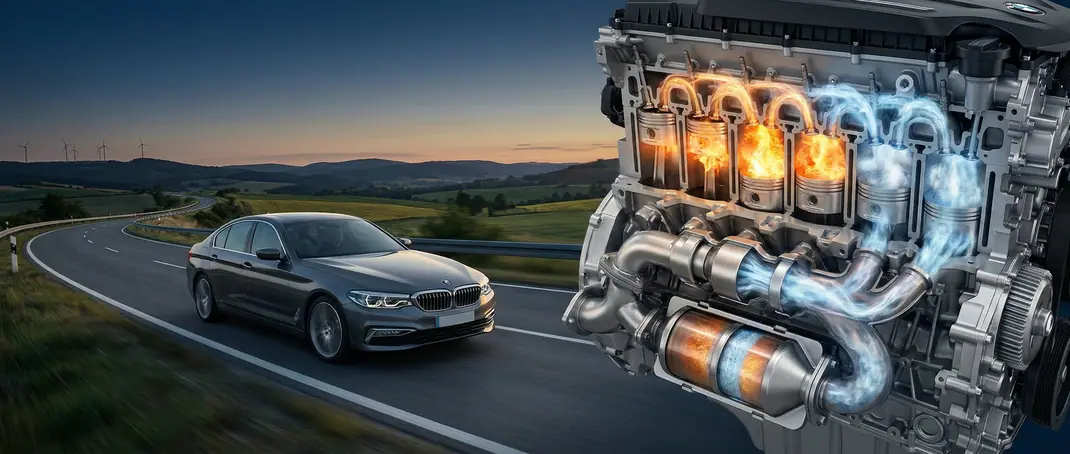
In the highly dynamic, rapidly shifting contemporary era of mobility, overwhelmingly dominated by daily news headlines focusing fiercely on lithium-ion battery densities, the expansion of fast electric charging networks, and the seemingly inevitable, heavily mandated global energy transition, it almost feels like a severe automotive taboo to dedicate genuine words of high praise to the traditional diesel engine. Ever since the infamous, highly publicized "Dieselgate" emissions scandal violently rocked the industry back in 2015, the dense, oily fuel that once proudly served as the absolute, undisputed backbone of the heavy European economy was rapidly and mercilessly villainized by politicians and the media alike. However, for true, deeply knowledgeable connoisseurs of complex mechanical engineering, and for the millions of hardworking drivers who relentlessly traverse tens of thousands of kilometers annually on open highways, the actual, factual, and highly advanced current technological reality tells a radically different and deeply fascinating story.
Far, far from being a dead or dying technology, the modern diesel engine was fiercely and aggressively forced to rapidly evolve under the immense, crushing pressure of the absolute strictest, most punishing emissions regulations ever conceived in the history of human mobility. The magnificent, undeniable result of this relentless, uncompromising legislative pressure is the absolute, undisputed zenith of the internal combustion engine. Today's premier diesel engines are nothing short of breathtaking thermodynamic marvels: they are incredibly, surgically clean, absurdly and highly fuel-efficient, meticulously refined to the quiet point of absolute silence, and consistently offer a relentless, massive wave of low-end pulling torque that standard petrol (gasoline) engines simply cannot hope to accurately replicate without the highly complex, heavy assistance of hybrid electric motors. If your ultimate, burning question is, "which is the absolute best diesel engine available today?", this exhaustive, deeply technical guide will surgically dive into the complex bowels of combustion physics, meticulously explore advanced exhaust gas treatment technologies, and carefully dissect the true, undisputed kings of the European road, perfectly preparing you for your very next major purchasing decision, whether that occurs inside a pristine new car showroom or whilst navigating the vast, lucrative market of used cars.
1. The Undeniable Physics: Exactly Why Diesel Survives and Thrives
To genuinely and fully comprehend the sheer engineering genius behind the absolute best modern diesel engines operating today, we must actively regress back to the most fundamental, baseline principles of classical thermodynamics and physics. The brilliant German engineer Rudolf Diesel masterfully designed this specific engine architecture at the very end of the 19th century utilizing a remarkably simple, yet deeply profound and highly effective physical principle: pure compression ignition. In stark contrast to traditional petrol engines (operating on the Otto Cycle), which heavily depend on an artificial electrical spark fiercely generated by a spark plug to forcefully ignite the delicate mixture of ambient air and vaporized fuel, the heavy-duty diesel engine (operating on the Diesel Cycle) violently compresses the intake air deep inside the metallic cylinder to such extreme, massive levels (frequently utilizing incredibly high compression ratios ranging from 16:1 to a staggering 20:1) that the ambient temperature of that trapped air instantly, violently spikes to well over 700°C. When the dense liquid fuel is finally, forcefully sprayed under massive pressure directly into this scorching, glowing hot furnace, it spontaneously, violently ignites all by itself.
This incredibly high, physically demanding compression ratio directly and undeniably translates into a vastly superior level of fundamental thermal efficiency. While an absolutely excellent, highly advanced modern petrol engine frustratingly wastes a massive portion of its valuable thermal energy as useless heat aggressively pumped out through the exhaust pipe and into the liquid cooling system (typically achieving a peak thermal efficiency hovering around 35% to 40%), the absolute best, most modern diesel engines can effectively and astonishingly exceed a massive 45% thermal efficiency when operating smoothly at steady highway cruising speeds. Furthermore, the oily liquid diesel fuel itself physically possesses a significantly higher energy density than volatile petrol (containing roughly 10% to 15% more potential thermodynamic energy securely packed into every single liter). This magnificent, highly effective combination of superior, efficient thermodynamics and a deeply dense, energy-rich fuel is the exact mathematical and physical reason why a massive, heavy, aerodynamically challenged German diesel SUV can miraculously manage to sip a mere 6.0 liters of fuel per 100 km (nearly 40 MPG) at fast highway cruising speeds—a remarkable, almost magical feat that remains entirely, laughably impossible for a similarly sized, naturally aspirated petrol equivalent.
2. The Evolution of Supreme Cleanliness: The Absolute Triumph Over Emissions
The grand, historical, and heavily justified criticism aggressively leveled against diesel technology has always deeply centered around localized air pollution, specifically the heavy emission of highly toxic Nitrogen Oxides (NOx) and fine, airborne Solid Particulate Matter (Soot/PM). Brilliant automotive engineers absolutely did not arrogantly ignore this massive, life-threatening environmental problem; rather, they ingeniously solved it by successfully miniaturizing highly complex, multi-stage chemical processing plants and carefully installing them directly into the vehicle's hot exhaust system. The highly respected European Automobile Manufacturers' Association (ACEA) has heavily and exhaustively documented precisely how the incredibly strict, highly punishing Euro 6d and the upcoming Euro 7 emission standards completely forced global vehicle manufacturers to boldly innovate in highly radical, wildly expensive ways.
The absolute best engines available today heavily utilize incredibly advanced, ultra-high-pressure Bosch Common Raildirect injection systems, which are amazingly capable of operating at terrifying internal fuel pressures that effortlessly exceed 2,500 bar (representing a force over 2,500 times greater than normal, ambient atmospheric pressure). At this unbelievable, ballistic pressure, the thick diesel fuel is violently pulverized into microscopic, ultra-fine droplets forced through highly sensitive, ultra-fast piezoelectric injectors. This advanced electronic speed seamlessly allows for multiple, highly precise fuel injections during every single, microscopic engine cycle (featuring tiny pre-injections, the massive main injection, and crucial post-injections). This brilliant, highly complex sequencing beautifully and effectively softens the violent combustion explosion, completely eliminating the classic, loud, agricultural "clattering" noise heavily associated with old diesel clunkers, and massively reduces the initial formation of dirty soot right at the source of combustion.
Deep within the hot exhaust piping, the true chemical magic finally happens. First, the dirty exhaust gases rapidly pass through a highly active Diesel Oxidation Catalyst (DOC), directly followed by a highly dense Diesel Particulate Filter (DPF) that aggressively captures and violently incinerates 99.9% of the remaining solid soot particles. The final, most incredibly crucial and complex piece of the environmental puzzle is the Selective Catalytic Reduction (SCR) system. This highly advanced system intelligently injects a highly precise, measured aqueous urea solution (universally and commercially known globally as AdBlue) directly into the fiercely hot exhaust gas stream. The extreme, searing heat instantly transforms the liquid urea directly into ammonia gas. This ammonia then aggressively reacts chemically with the highly toxic NOx gases deep inside a specialized, rare-earth coated catalyst, magically transforming the deadly poison into completely harmless, pure water vapor and inert, pure nitrogen gas (the exact same harmless gas that already safely composes roughly 78% of the ambient air we freely breathe every day). The final, treated air gracefully exiting the tailpipe of a highly advanced, latest-generation diesel vehicle actively driving through heavily polluted, smog-filled city centers can, in certain highly specific circumstances, actually contain vastly fewer solid particles than the dirty ambient atmospheric air that the engine originally, actively sucked into its intake.
3. The Absolute Titans of Engineering: The Podium of the Best Diesel Engines
Attempting to subjectively point to one single, solitary engine block as definitively "the absolute best" is a highly complex task, as it deeply depends upon the specific intended application (a small, economical engine designed for a lightweight urban hatchback inherently possesses vastly different engineering goals than a massive, torque-rich engine built for a long-wheelbase luxury limousine). However, standing proudly upon the highest podium of contemporary, world-class thermodynamic excellence, three undeniable masterpieces of legendary German engineering prominently stand out, brilliantly representing the absolute, cutting-edge state of the art regarding internal combustion.
A. The Crown Jewel of Munich: The BMW B57 (3.0 Liter, Inline-Six Cylinder) If the ultimate, prestigious award is strictly given to the absolute perfect, flawless balance between silky, electric-like smoothness, mind-boggling, highly frugal fuel economy, and a brutal, relentless wave of raw torque fully capable of physically wrinkling the asphalt, the magnificent BMW B57 engine is universally, widely considered by elite mechanical engineers and veteran automotive journalists as the absolute finest passenger diesel engine currently existing in the world. Originally launched in 2015 to successfully replace the already excellent, highly revered N57 engine, the B57 is meticulously built around the highly efficient, cost-effective modular architecture philosophy heavily pioneered by the BMW Group. Both the massive engine block and the complex cylinder head are meticulously cast from highly advanced, lightweight aluminum alloys. The classic, beautiful inline-six cylinder configuration is, by its very physical and geometrical nature, perfectly, intrinsically balanced regarding primary and secondary dynamic forces and moments of inertia. This vital engineering reality means that this long engine absolutely does not suffer from the harsh, unwanted natural vibrations heavily inherent to more compact V6 engine designs. The B57 operates so incredibly silently and smoothly at idle speed that many uninformed passengers will confidently, stubbornly swear they are sitting inside a refined petrol car. In its highly popular 30d iteration (featuring a single, highly responsive variable geometry turbocharger), it smoothly produces an impressive 286 HP and a massive, deeply satisfying 650 Nm of twisting torque. In vastly more powerful, highly aggressive versions, such as the brutal 40d, it smartly utilizes two sequential turbochargers of different sizes to violently achieve 340 HP and a tire-shredding 700 Nm of torque. BMW has also masterfully, seamlessly integrated advanced 48-Volt Mild-Hybrid (MHEV) technology directly into this block. A powerful electric starter-generator instantly, silently adds 11 HP of immediate electric thrust directly to the crankshaft, brilliantly filling in the tiny, microscopic gap of turbo lag and safely allowing the heavy combustion engine to completely, silently shut off while coasting at high highway cruising speeds of up to 160 km/h whenever the driver completely lifts off the accelerator pedal, saving incredibly valuable drops of fuel.
B. The Giant of Stuttgart: Mercedes-Benz OM656 (2.9 Liter, Inline-Six Cylinder) Mercedes-Benz triumphantly and proudly returned to its glorious, deeply historical roots featuring the buttery-smooth inline-six cylinder architecture after spending several long decades producing compact, yet less refined V6 engines. The massive OM656 block is a pure, unadulterated, and massive exhibition of the staggering financial power and the sheer, overwhelming technological research and development capability of Mercedes-Benz. The absolute most fascinating, deeply technical engineering detail of this incredibly advanced engine is that while the massive cylinder block is cast from lightweight aluminum, the reciprocating pistons inside are actually forged from high-strength, heavy steel. This highly unusual, seemingly counterintuitive metallurgical combination brilliantly solves a highly complex, deep thermodynamic problem: lightweight aluminum expands significantly more when exposed to intense heat than rigid steel does. As the engine rapidly warms up to its scorching operating temperature, the physical difference in thermal expansion actively increases the microscopic clearance gap specifically between the steel piston and the aluminum cylinder wall, brilliantly and heavily reducing internal mechanical friction by a massive, highly significant 40%. To perfectly, flawlessly seal this expanded gap without losing critical combustion compression, Mercedes intelligently utilizes a highly secretive, patented manufacturing process called Nanoslide, where the bare cylinder walls are heavily coated with a microscopic layer of iron and carbon utilizing a twin-wire electric arc process. The staggering result is a nearly mirror-polished, incredibly hard surface that is massively resistant to extreme mechanical wear over hundreds of thousands of kilometers. Additionally, the OM656 proudly utilizes a highly complex stepped-bowl combustion chamber design meticulously machined directly into the crown of the steel piston. This specific geometric shape massively improves the turbulent mixing of the injected air and diesel fuel, significantly and aggressively reducing the initial formation of dirty soot right at the source of combustion much more effectively than traditional, simple bowl designs. With high-end power outputs that can easily reach a massive 330 HP and a staggering 700 Nm of torque (featured prominently in the luxurious 400d versions), it is the absolute, undisputed global champion regarding the eerie silence of rolling refinement and the effortless, relentless delivery of massive passing power on the unrestricted German Autobahns.
C. The True Redemption of Wolfsburg: Volkswagen Group EA288 Evo (2.0 Liter, Four-Cylinder TDI) While the elite brands of BMW and Mercedes-Benz fiercely battle for absolute global dominance within the highly expensive, ultra-luxury segment boasting massive six-cylinder blocks, the absolute best, most fundamentally important, and highly relevant diesel engine designed for the actual real world—the exact engine that tirelessly, reliably moves millions of hard-working sales representatives, busy families, and vital transport services completely across the massive European continent—is undeniably, unquestionably the highly robust 2.0 TDI EA288 Evo engine block developed by the massive Volkswagen Group. Following the incredibly severe, highly embarrassing, and monumentally expensive mistakes committed strictly during the dark days of the past emissions scandal, VW was fiercely forced to invest literal billions of euros in deep research to absolutely guarantee that their brand new 2.0 TDI was not only mechanically flawless, but also proudly stood as a highly respected, global environmental leader. The absolute greatest, most highly celebrated technological innovation of the EA288 Evo is the brilliant, highly complex "Twin Dosing" AdBlue injection system. The clever engineers deliberately and intelligently installed two entirely separate, independent SCR catalytic converters, each featuring its own dedicated, independent AdBlue fluid injector. The very first SCR catalyst is strategically mounted extremely close to the hot exhaust manifold of the engine, allowing it to heat up incredibly rapidly immediately after a cold winter start to actively clean the dirty exhaust gases during slow, highly congested urban city traffic. The second, significantly larger SCR catalyst is strategically positioned much further back, deep under the floor of the vehicle chassis. When the loaded car is traveling at highly elevated speeds on the highway under massive engine load (for example, when aggressively towing a heavy caravan up a steep hill), the exhaust gas temperatures rise far too high for the first SCR catalyst to effectively and efficiently process the NOx; it is exactly at this critical moment that the second, much cooler catalyst actively and flawlessly takes over the chemical processing. This genuinely genius, highly adaptable twin-dosing technique massively cuts highly toxic NOx emissions by a staggering 80% when directly compared to the previous engine generation, absolutely guaranteeing that these highly efficient vehicles easily and proudly pass the absolute most difficult, highly stringent Real Driving Emissions (RDE) road tests with flying colors.
4. The Deep Financial Impact and the Lucrative Used Car Market
Actually owning, operating, and deeply enjoying the absolute best of today's highly advanced diesel technology is an exercise not merely rooted in the pure, visceral pleasure of driving (heavily due to the massive, addictive waves of low-end torque), but it is also deeply rooted in pure, highly pragmatic, and heavily calculated financial mathematics. If your specific, personal daily usage profile is strictly limited to very short, cold five-kilometer daily trips to the local supermarket or slowly dropping the children off at school deep within the chaotic, heavily gridlocked city center of Lisbon or Porto, aggressively acquiring a highly modern, incredibly complex diesel engine is absolutely not the correct technical or sound financial choice (the vital DPF filter will absolutely never have the necessary time to reach its high operating temperature and perform a successful regeneration, inevitably causing highly expensive, catastrophic mechanical problems down the road).
However, if your grueling, demanding daily routine heavily involves high-speed motorways, long intercity connections, or highly frequent, exhausting trips between the northern and southern borders of the country, the strict financial mathematics violently and overwhelmingly tilt deeply in favor of the mighty diesel engine. And it is exactly, perfectly here that the massive, highly prosperous, and deeply intelligent market of used cars brilliantly reveals itself as the absolute best, most lucrative financial arena for the astute, highly informed consumer. Heavily due to the highly aggressive, relentless, and often irrational political campaigns aggressively waged against diesel technology in major European capital cities over the last few turbulent years, the initial, brutal depreciation curves specifically for top-tier, premium luxury diesel vehicles suffered a massive, incredibly sharp drop strictly during the very first three years of the vehicle's lifespan.
This highly specific, complex socioeconomic situation has effectively created an absolute, glittering golden opportunity for smart buyers. A highly informed, heavily educated consumer can confidently enter the vast used cars market today and proudly, intelligently purchase a deeply luxurious, highly equipped BMW 5 Series (featuring the widely acclaimed B57 engine) or a beautiful Mercedes-Benz E-Class (proudly featuring the smooth OM656) that is merely three to four years of age for a highly substantial, massive fraction of its original, eye-watering showroom price. The unlucky first owner heavily, painfully absorbed the terrible, brutal initial impact of the massive financial depreciation. The highly intelligent second owner—the exact person who smartly purchases within the used market—happily takes home an absolute, undeniable masterpiece of thermodynamic engineering perfectly situated in the absolute prime of its mechanical life (especially considering that these massive engine blocks are structurally over-engineered and specifically built to easily run 400,000 or even 500,000 kilometers completely without breaking a sweat), deeply enjoying incredibly low, highly economical fuel consumption and absolutely unbeatable, supreme touring comfort at a highly rational, easily justifiable price. A rigorous, deeply meticulous evaluation of the vehicle's maintenance state, particularly focusing heavily on the complex AdBlue system and the deeply recorded digital history of the DPF regenerations, will absolutely guarantee long decades of flawless, impeccable, and highly reliable service.
5. Crucial Maintenance Secrets for Unmatched Longevity
Absolutely guaranteeing that one of these deeply excellent, highly advanced engines effectively continues to proudly be "the absolute best" over the long, demanding years requires a very strict, highly uncompromising commitment to complex chemical and meticulous preventive maintenance. The engineering tolerance for mechanical neglect regarding these super-advanced, highly complex engine blocks is absolutely zero.
- Strict, Uncompromising Oil Specifications: It is absolutely not sufficient to merely utilize any standard, cheap synthetic oil bought off a supermarket shelf. Highly modern engines heavily burdened with extremely complex, sensitive exhaust gas treatment systems actively, fiercely demand highly specialized lubricants strictly formulated with "Low-SAPS" chemistry (meaning a highly verified, strictly low content of sulfated ash, phosphorus, and harsh sulfur). Utilizing an incorrect, cheap oil containing way too much ash will rapidly, irreversibly clog and completely destroy the highly sensitive DPF filter prematurely, directly resulting in a massive, highly painful mechanical repair bill that easily exceeds thousands of hard-earned euros.
- Absolute Fuel Quality: The highly complex, wildly fast piezoelectric injectors that actively operate at an unbelievable 2,500 bar natively possess microscopic spray holes that are significantly finer and narrower than a single human hair. The frequent, highly recommended use of premium, heavily additized diesel fuel is absolutely not a silly, shallow marketing myth designed to steal your money; the highly advanced, heavily concentrated chemical detergents actively present in these premium fuels are absolutely, undeniably crucial to strictly prevent massive, highly destructive carbon crystallization on the delicate injector tips and to safely, properly lubricate the extremely sensitive high-pressure fuel pumps.
- Deeply Respecting Regeneration Cycles: When the engine's highly intelligent electronic management brain accurately detects that the DPF is becoming dangerously full of trapped, dirty soot, it aggressively, actively injects raw, unburned diesel fuel directly into the cylinders strictly during the exhaust stroke to artificially, massively elevate the exhaust temperature deep inside the filter and violently incinerate the accumulated dirt (a complex process known as active regeneration). If the unaware driver repeatedly, foolishly interrupts this critical, highly vital cycle by suddenly shutting off the engine right in the middle of the process, the raw, unburned liquid diesel fuel can physically, dangerously run down the cylinder walls past the piston rings, heavily contaminating the vital engine oil located in the sump, significantly diluting its lubricating properties, and dangerously elevating the oil level to catastrophic points.
6. The Absolute Next Step Toward the Perfect Machine
The highly advanced modern diesel engine has triumphantly, undeniably reached an incredible plateau of absolute engineering genius and massive environmental cleanliness that was completely, utterly unthinkable a mere decade ago. Whether it is the silky, relentlessly powerful, and deeply efficient BMW B57 inline-six, the highly masterful, incredibly smooth, and legendary long-lasting Mercedes-Benz OM656, or the deeply resilient, highly popular, and hyper-efficient workhorse that is the Volkswagen 2.0 TDI EA288 Evo, the absolute pinnacle of top-tier, world-class mechanical engineering remains readily, proudly available for anyone who deeply, passionately seeks seemingly inexhaustible highway range and completely indomitable, relentless pulling force.
Successfully making the absolute right, intelligent purchasing decision simply involves perfectly, seamlessly aligning the sheer, undeniable genius of advanced combustion technology precisely with the exact, specific profile of your highly personal daily commute. If the vast, open road and massive, cross-continental mileages loudly, relentlessly call your name, your very next great, highly economical, and deeply comfortable long journey is eagerly waiting for you directly in the right, highly intelligent automotive market. Do not, under any circumstances, allow the magnificent, highly capable machine of your absolute wildest dreams to slip away. Start your deeply informed, highly transparent, and absolutely secure automotive search right now, actively exploring the absolute best, most highly trusted national market for excellent automobiles and thrilling two-wheeled vehicles. We strongly, warmly invite you to visit the premium portal AUTO.MOTO.pt today. It proudly stands as the absolute premier platform of excellence in Portugal, specifically and meticulously designed exclusively for highly informed individuals who deeply desire to safely buy, securely sell, and passionately explore incredible vehicles with absolute, unwavering confidence. Find the absolute perfect, flawless engine specifically tailored for your unique life right now at AUTO.MOTO.pt and deeply, truly enjoy the open road exactly as it heavily deserves to be lived!