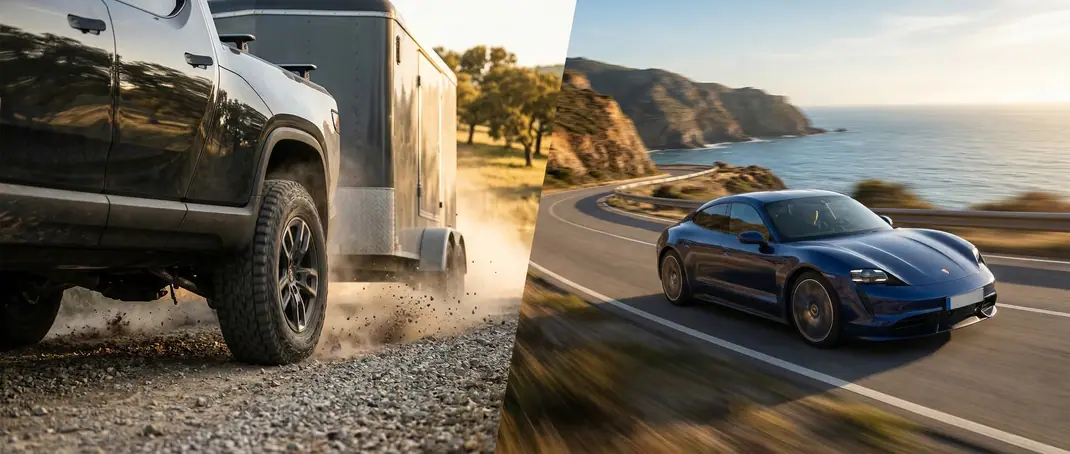
When we enthusiastically flip through the glossy specification brochures of automotive brands or when we spend countless late-night hours meticulously analyzing listings in the highly dynamic and fiercely competitive market for second-hand vehicles, there is a single, solitary numerical figure that almost entirely monopolizes casual conversations, heavily dominates massive marketing campaigns, and deeply captures the imagination of drivers worldwide: Horsepower (HP). However, when we actually sit aggressively behind the steering wheel, firmly press the accelerator pedal deep into the carpet, and vividly feel our entire physical body being violently and exhilaratingly shoved backward deep into the upholstery of the seat, the invisible physical force that is actively acting upon us in that precise millisecond is absolutely not horsepower. What we are physically experiencing, in its most brutal, unadulterated, and purest mechanical form, is engine torque.
For deeply passionate automotive engineering enthusiasts and for absolutely any highly informed, smart buyer actively exploring the massive market of used cars, acquiring a profound, crystal-clear understanding of exactly what torque is represents a fundamental necessity. It is the raw torque that fundamentally dictates a vehicle's crucial ability to execute rapid, highly safe overtaking maneuvers on a busy, narrow national road; it is the massive torque reserves that magically allow an imposing, luxurious Bentley Continental GT to effortlessly propel its heavy, two-ton-plus chassis with aristocratic, silent smoothness; and it is the immediate, explosive torque punch that grants a punchy single-cylinder motorcycle like the KTM 690 Enduro R that thrilling, highly reactive burst of acceleration when aggressively exiting a tight dirt corner. In this exhaustive, highly technical, and definitive engineering guide, we will surgically dissect the underlying physics, the complex mathematics, and the intricate mechanical ballet occurring deep behind engine torque, practically guaranteeing that you will absolutely never look at a car's technical specification sheet in the exact same naive way ever again.
The Fundamental Physics: The Lever Principle and Rotational Motion
To genuinely, deeply comprehend torque, we must temporarily step out of the garage and regress back to the most fundamental, basic principles of classical mechanical physics. Torque is absolutely not a raw measurement of speed, nor is it a measurement of isolated kinetic energy; torque is, by strict, mathematical, and physical definition, the exact measurement of a rotational force (or twisting moment) actively applied around a central axis, a fulcrum, or a pivot point.
The absolute simplest, most visual way to grasp this abstract concept is to mentally imagine the physical act of utilizing a long, heavy lug wrench (a tire iron or cross wrench) to aggressively loosen a tight lug nut holding your car's wheel in place. If you physically push down and apply an exact, measurable force of 100 Newtons (roughly equivalent to 10 kilograms of solid weight) upon the extreme far end of a wrench handle that measures exactly 1 meter in length, you are currently, physically generating exactly 100 Newton-meters (Nm) of twisting torque directly upon the center of that stubborn nut. If the metallic nut is severely rusted, completely calcified, and absolutely refuses to turn or move even a millimeter, the physical work accomplished is mathematically zero, but the brutal twisting force (the torque) of exactly 100 Nm continues to be physically present and actively applied to the metal. The classical, fundamental mathematical formula utilized globally by engineers to calculate this twisting force is represented as:
Torque(τ)=Force(F)×Distance(r)
So, exactly how does this simple, basic workshop physics lesson directly translate to the dark, violent, and searingly hot interior of an internal combustion engine? The geometric principle is exactly, perfectly the same.
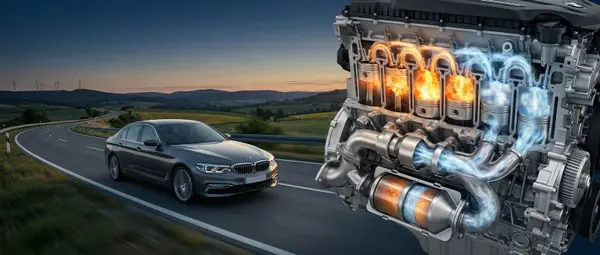
Deep inside an engine cylinder, a highly volatile, precise mixture of atmospheric air and atomized fuel is violently compressed upward by the piston and subsequently ignited (by a high-voltage spark plug in a petrol engine, or through extreme pressure auto-ignition in a heavy diesel engine). This sudden ignition instantly generates a contained, violent explosion and a massively rapid expansion of superheated combustion gases. These expanding gases violently exert a massive, brutal downward force directly onto the top surface (the crown) of the metal piston. The heavy piston, being forcefully shoved downward by the explosion, aggressively pushes down on a connecting rod. This connecting rod, in turn, is physically coupled to an eccentric, offset "throw" or journal located on the heavy crankshaft (the main rotating spine of the engine). The exact physical, geometric distance extending from the absolute geometric center axis of the spinning crankshaft directly out to the specific point where the connecting rod journals attach acts exactly and precisely as the long arm of the wrench handle from our previous mechanical example. The massive, explosive force aggressively pushing the piston down, directly multiplied by this exact physical lever arm built into the crankshaft, is exactly what chemically and mechanically creates the fundamental rotational force. This is the precise, beautiful moment when the stored chemical energy of the liquid fuel is finally, mechanically transformed into usable rotational mechanical energy: the engine's torque. This twisting force is traditionally expressed globally in Newton-meters (Nm) within the European metric system, or heavily cited as pound-feet (lb-ft) within the Anglo-Saxon imperial measurement system.
The Eternal Battle: Torque vs. Horsepower
One of the absolute greatest, most persistent, and widely debated points of confusion within global automotive culture is the highly intrinsic, deeply mathematically linked, yet frequently, terribly misinterpreted relationship between torque and horsepower. The legendary, iconic American automotive engineer, racing driver, and constructor, Carroll Shelby, brilliantly summarized this complex relationship in what is arguably one of the most famous, heavily quoted adages in the entire automotive industry: "Horsepower is what sells the cars; torque is what wins the races". Another highly popular, visceral variation of this colorful automotive metaphor sharply explains that torque determines exactly how hard your car physically smashes into a concrete brick wall, while horsepower determines exactly how fast the car was traveling when it finally hit that wall.
To successfully demystify this eternal relationship, we must firmly rely on pure mathematics. Horsepower is absolutely not an independent, raw physical force that can be directly measured off the engine's crankshaft with a simple, isolated sensor. Horsepower is, in reality, a purely mathematical value mathematically derived directly from the actual torque output. Horsepower measures the exact rate at which mechanical work is successfully accomplished over a specific period of time. In other, highly simplified words, horsepower is the mathematical result of taking the raw rotational twisting force (the torque) and multiplying it by exactly how fast the engine is currently spinning (measured in Revolutions Per Minute - RPM). The classic, universally accepted equation formulated in the imperial system is:
Horsepower(HP)=5252Torque(lb-ft)×RPM
(Note: The prominent number 5252 is a highly specific mathematical constant strictly derived from the complex conversion of radians per second and the original, historic definition of a horsepower formally proposed by the Scottish engineer James Watt way back in the late 18th century).
To properly and clearly visualize this dynamic relationship, vividly imagine two wildly different vehicles parked side-by-side: a massive, heavy-duty industrial agricultural tractor and a wildly extreme, featherweight Formula 1 racing car. The massive tractor is equipped with a gigantic, slow-revving heavy diesel engine that reliably produces a brutal, earth-shattering torque figure of 1000 Nm very early in the rev range, sitting right at a low 1500 RPM. This colossal, twisting torque allows it to effortlessly rip massive tree stumps directly out of the frozen ground and tow dozens of tons of heavy cargo without breaking a sweat. However, the heavy internal components of the tractor's engine simply cannot safely spin faster than a sluggish 2500 RPM. Therefore, strictly due to its incredibly low rotational speed, the resulting mathematical total horsepower is actually surprisingly low (perhaps only peaking at around 200 HP). The highly advanced Formula 1 car, sitting completely on the other end of the engineering spectrum, features a tiny, incredibly lightweight 1.6-liter V6 engine. Its raw maximum torque figure is surprisingly, incredibly modest, frequently hovering around a mere 350 Nm to 400 Nm (when operating without the complex electrical hybrid assist). If we foolishly hitched the F1 car to the heavy farm tractor's loaded trailer, the highly strung racing engine would simply stall and violently shut down when attempting to move the dead weight from a standstill. However, this magnificent racing engine is masterfully engineered to spin to a shrieking, mind-bending 15,000 RPM. By mathematically multiplying a relatively modest twisting torque figure by an absolutely astronomical, sky-high rotational speed, the mathematical resulting horsepower is a thunderous, explosive figure that easily exceeds 800 HP, allowing the lightweight aerodynamic chassis to violently pierce the air and achieve top speeds of 350 km/h on the long main straight.
Torque is the pure, muscular, underlying pushing force. Horsepower is simply the engine's ability to maintain that exact push while aggressively spinning faster and faster to ultimately overcome the massive, invisible wall of aerodynamic wind resistance at extremely high velocities.
Engine Architecture: The Impact of Displacement and Piston Stroke
The foundational, baseline amount of torque that a naturally aspirated internal combustion engine (an engine operating without any forced air turbochargers or superchargers) can manage to produce is governed almost entirely by its total volumetric capacity (its overall engine displacement) and the highly specific, internal geometric design of its metal cylinders. As a very general, long-standing rule of mechanical engineering thumb, physically larger engines featuring higher displacement naturally inhale a significantly greater volume of atmospheric air and fuel during every single combustion cycle. This inevitably creates significantly larger, much more powerful internal explosions, which subsequently results in significantly more natural, low-end torque.
However, the exact physical shape and geometric dimensions of that total displacement matter immensely to the engine's final character. The crucial geometric ratio dynamically balancing the cylinder's width (the bore) against the distance the piston physically travels up and down (the stroke) entirely dictates the final, emotional personality of the powerplant.
- "Undersquare" Engines (Long Stroke Design): If the vertical distance the piston travels (the stroke) is physically longer than the physical width of the cylinder (the bore), the engine mechanically acts exactly like a highly extended, very long lever arm (featuring a crankshaft where the connection journals are positioned much further away from the central axis). This specific design fundamentally creates vastly more twisting torque at extremely low engine speeds. This is exactly why heavy commercial hauling vehicles, diesel pickup trucks, and imposing, rumbling heavy cruiser motorcycles almost exclusively utilize long-stroke engine designs. The highly negative trade-off here is that the heavy piston must physically travel a massive vertical distance during every single cycle, actively generating an excessive amount of internal thermal friction, which physically prevents the engine from safely reaching thrillingly high RPMs.
- "Oversquare" Engines (Short Stroke Design): Conversely, if the cylinder's diameter is absolutely massive and wide, but the piston's vertical travel distance (the stroke) is incredibly short and stubby, the mechanical lever arm acting on the crankshaft is extremely small (inherently generating much less immediate, low-end torque). However, because the wide pistons only travel a minuscule vertical distance during each cycle, they can violently move up and down at truly terrifying, blistering speeds without the severe risk of the connecting rods snapping in half. This specific geometry safely allows the highly strung engine to aggressively breathe deeply at 8,000 or even 9,000 RPM, successfully maximizing the top-end, mathematical horsepower while heavily sacrificing the pulling force found at low RPMs. This is the absolute classic, iconic internal design philosophy heavily favored by shrieking Italian supercars and high-revving Japanese track-focused superbikes.
Forced Induction: The Transformative Role of Turbochargers
In today's highly regulated modern automotive market, the natural, baseline torque traditionally governed strictly by physical engine displacement has been massively bypassed and artificially augmented by an engineering technology that has forever altered the fundamental rules of the mechanical game: forced induction. This radical shift has been heavily led globally by the relentless research and development from major engineering firms, as heavily documented by specialized automotive engineering organizations such as SAE International, and heavily pioneered by global turbocharger giants like Garrett Motion.
Back in the automotive landscape of the late 90s, a standard, naturally aspirated 1.0-liter petrol engine produced a laughably weak torque output, rarely managing to exceed a pathetic 90 Nm. Today, incredibly small, highly stressed 1.0-liter three-cylinder engines comfortably and reliably generate a massive 170 Nm to 200 Nm of torque, aggressively rivaling the pulling power of the heavy, old, naturally aspirated 2.0-liter engines of the past. How exactly is this physically achieved? Purely through the violent, forced packing of dense air. A modern turbocharger intelligently utilizes the rapidly expanding, waste exhaust gases fiercely exiting the engine to violently spin a turbine wheel at astronomical, mind-bending speeds (frequently exceeding a staggering 200,000 RPM). This spinning exhaust turbine is physically connected via a central metal shaft to an intake compressor wheel, which actively sucks in fresh ambient air from the atmosphere, aggressively pressurizes it (creating dense boost), and forcefully, violently injects it directly into the engine's intake manifold. By forcefully packing much more dense oxygen molecules into the combustion chamber, the highly intelligent engine control unit (ECU) can safely inject significantly more fuel to match it, resulting in a massively stronger, much more violent explosion directly upon the piston crown, which exponentially and dramatically multiplies the resulting torque. The true, undeniable magic of the modern, computer-controlled turbocharger lies absolutely not just in increasing the absolute maximum torque figure, but in revolutionizing the Torque Curve. Automotive manufacturers specifically and carefully calibrate the electronic wastegate valves to allow the turbo to reach its absolute maximum boost pressure incredibly early in the rev range, frequently hitting maximum torque at just 1,500 RPM. This creates a highly desirable straight, horizontal flat line directly across the engine's dyno graph (known in the industry as a "torque plateau") that remains perfectly flat and constant all the way up to 4,000 RPM. This massive, relentless, sustained pushing force available at low speeds is exactly what makes modern, downsized cars feel so incredibly agile, deeply punchy, and highly reactive in stop-and-go city traffic.
The Silent Revolution: The Paradigm Shift of Electric Vehicles (EVs)
Absolutely any deep, highly technical discussion regarding automotive torque today would be fatally, unforgivably incomplete without dedicating serious attention to the massive technological earthquake actively provoked by modern electric motors. A highly complex internal combustion engine inherently possesses a very serious, deeply problematic thermodynamic flaw: sitting at exactly 0 (zero) RPM, it mathematically and physically produces zero torque. It must absolutely always be left running at a wasteful idle speed (a minimum of roughly 800 RPM) simply to avoid stalling and dying, and its true, maximum torque peak is only achieved somewhere deep in the middle of the rev range, precisely as the volumetric efficiency of the intake airflow finally optimizes. This severe physical limitation heavily mandates the mandatory inclusion of complex, heavy slipping clutches and highly intricate, heavy multi-gear transmissions simply to get the car moving from a dead stop.
Electric motors brutally and effortlessly defy this restrictive mechanical law. Due entirely to the fascinating physics of electromagnetism (specifically, the highly controlled magnetic interaction actively occurring between the fixed stators and the spinning rotors, powerfully driven by highly advanced, high-voltage current inverters), an electric motor is intrinsically and beautifully capable of delivering 100% of its absolute maximum, brutal torque output instantly, overwhelmingly, and right from exactly 0 RPM. When the eager driver aggressively pushes the accelerator pedal into the floor of a modern electric vehicle, the absolute peak torque physically impacts the driven wheels in a fraction of a millisecond, long before a complex combustion engine can even begin to deeply breathe in air, mix the fuel, ignite the spark, and spool up the exhaust turbo pressure. It is precisely this violent, incredibly linear, and absolutely instantaneous delivery of massive twisting moment starting from total, dead inertia that grants modern electric vehicles that deeply famous, brutal, neck-snapping off-the-line acceleration capability. This instant force aggressively pins the driver's body deep into the seat, easily allowing heavy, comfortable, two-ton family electric SUVs to utterly humiliate shrieking, loud, multimillion-dollar combustion supercars during the first crucial 50 meters sprinting away from a red traffic light.
Multiplying the Force: The Undeniable Importance of the Gearbox
The raw torque physically generated directly at the spinning crankshaft of the engine is absolutely not the exact torque figure that finally, ultimately reaches the rubber tires and makes contact with the harsh asphalt (technically known as the Wheel Torque). Situated between the roaring engine block and the quiet road actively operates the absolute greatest unsung hero of complex automotive physics: the intricate transmission and differential system, a highly vital drivetrain component whose complex mechanical dynamics are frequently and deeply dissected in heavy, analytical automotive journalism by world-renowned publications such as Motor Trend.
The complex gearbox is, at its most fundamental, innermost core, a massive mathematical torque multiplier. The spinning internal gears operate precisely and elegantly under the exact same mechanical principles as levers, actively trading rotational force for rotational speed, and vice versa. When you firmly engage 1st gear in your car (a highly "short" or "low" gear ratio), a very small, fast-spinning gear directly connected to the engine is actively turning a significantly larger, much slower-spinning gear located on the transmission's output shaft. If the mechanical ratio of 1st gear is exactly 4:1 (meaning the engine's crankshaft must rotate 4 times to force the output shaft to rotate just 1 time), and we then add the final drive ratio of the rear axle differential (for example, let's say 3.5:1), the original engine torque is massively, geometrically multiplied by a staggering factor of 14 times (4 x 3.5 = 14) long before it finally reaches the alloy wheels. This incredible physical phenomenon means that if your relatively modest, small engine is currently generating just a meager 100 Nm of raw torque, the heavy metal driveshafts will be physically, actively applying a massive 1,400 Nm of brutal twisting force directly onto the rubber tires while slowly pulling away in 1st gear. It is precisely this colossal, massive multiplication of internal torque that magically allows your heavy car to successfully launch and pull away on a deeply steep, terrifying mountain incline with five heavy adult passengers fully loaded on board. As the vehicle successfully gains forward momentum and speed, and the driver actively shifts up into the higher, taller gears (like 4th, 5th, or 6th gear), the mathematical multiplication ratio progressively and rapidly decreases, actively favoring the raw rotational speed of the wheels highly over the pure twisting force. This is precisely why the exact same car accelerates significantly more slowly and feels much lazier when you aggressively press the pedal while already cruising at a high speed of 120 km/h on the open highway.
Torque in the Real World: Exactly why does it matter in daily driving?
Automotive marketing departments and glossy dealership brochures heavily sell the impressive, flashy numbers of "Horsepower", but what average drivers truly utilize, physically experience, and deeply appreciate during their stressful daily driving routines is the underlying torque, especially the force available at the lower and middle RPM ranges (commonly referred to as low-end torque or grunt). The true, undeniable utility of deep torque is heavily reflected in real-world, highly critical driving scenarios heavily analyzed by safety boards like Euro NCAP:
- Executing Safe Overtaking on National Roads: When you are frustratingly stuck cruising at a slow 70 km/h directly behind a massive, articulated heavy truck on a narrow two-lane road, and you are suddenly presented with a very brief, incredibly short passing straightaway, you absolutely do not have the time, the space, or the luxury to perform multiple, aggressive downshifts to desperately ring the engine's neck screaming up to 6,500 RPM in a frantic search for the peak maximum horsepower. What aggressively pulls you out of extreme danger, rapidly completes the maneuver, and forcefully catapults you safely into the clear lane ahead is a massive, deep reserve of punchy torque readily available precisely where you currently are, at a low 2,000 RPM.
- Heavy Towing and Maximum Payload Capacity: If your primary, frequent goal is to safely tow a very heavy utility trailer, pull a large recreational boat out of the water, or haul a massive family caravan up a hill, a high-horsepower but extremely low-torque engine (such as the screaming, high-revving engine found in a purist Japanese sports car) will struggle immensely and terrifyingly. It will aggressively demand that the clutch be heavily slipped, burnt, and abused at high RPMs merely to get the massive vehicle moving from a dead stop. A modern, highly efficient turbodiesel engine, featuring an internal architecture heavily optimized for pulling power, will effortlessly produce a massive 400 Nm of torque at a lazy 1,700 RPM, confidently handling the massive extra dead weight with absolute, unbothered, and silent ease.
- Urban Driving Comfort and Smoothness: A modern engine blessed with a highly accessible torque peak that arrives very early heavily reduces the driver's constant, exhausting need to relentlessly change gears (if driving a traditional manual gearbox) or heavily prevents the highly aggressive, jerky downshifts (kick-downs) commonly experienced in confused automatic transmissions. The car effortlessly surfs and flows smoothly through heavy, stop-and-go city traffic in a highly docile, relaxed, and incredibly responsive manner, completely without the engine ever sounding or feeling like it is constantly struggling or straining to keep up with the chaotic urban rhythm.
How to Properly Interpret the Torque Curve when Evaluating Used Cars
When deeply diving into the profound, highly dynamic, and often overwhelming research required when navigating the vast market of used cars (the Portuguese term for used cars), a massive number of potential buyers commit the highly frequent, innocent, yet terrible mistake of sorting and filtering their search results exclusively based on the absolute maximum declared horsepower value. This highly funneled, incredibly narrow vision completely and utterly ignores the true mechanical "personality" and the actual, daily dynamic behavior of the vehicle on the road. The true, golden key to proper mechanical evaluation hides perfectly within the complex dyno graph (specifically, the shape of the power and torque curve).
When carefully analyzing detailed listings of used cars, you must actively question and deeply investigate the exact RPM range at which the specific car reaches its maximum, peak torque output. If you are actively searching for a highly peaceful, peppy, and responsive car for daily city life, for comfortably transporting the children to school runs, or for undertaking relaxed, long family road trips with a heavily loaded trunk, you must heavily prioritize and value engines where the maximum peak torque is achieved incredibly early, preferably well below the 2,000 RPM mark (as is perfectly, beautifully typical in contemporary, high-tech turbodiesel engines and modern, highly advanced, small-displacement turbocharged petrol blocks). These specific cars will feel incredibly strong, punchy, and utterly effortless during 95% of your normal, everyday driving time. On the exact opposite end of the spectrum, if you are passionately seeking a thrilling, adrenaline-fueled weekend warrior in the shape of a small, lightweight sports car or a purist, stripped-out hot hatch, and you genuinely, deeply enjoy the highly engaging physical act of aggressively exploring the absolute screaming limits of the mechanics on a tight, sinuous mountain road, a highly strung, naturally aspirated engine that fiercely guards its peak torque (and its peak emotional thrill) way, way up high near the screaming 5,500 RPM or 6,000 RPM mark will be incomparably more emotionally rewarding. However, it will aggressively demand significantly more driver involvement, frequent gear shifting, and advanced driving technique on your part to keep the engine exactly in its narrow, happy powerband.
The absolute next great step toward your total, dynamic control on the road
Grasping with absolute, crystal-clear clarity the fundamental, physical, and technical difference between raw horsepower and pulling torque virtually guarantees that your very next automotive acquisition will be perfectly, flawlessly aligned and scientifically calibrated with your specific, daily transportation needs, the exact challenging geography of your daily commute, and your highly personal, unique driving style. Absolutely do not let yourself be foolishly deluded merely by flashy, grandiose, high horsepower numbers printed on a glossy specification sheet; you must actively demand to deeply know, understand, and viscerally feel the empirical, brutal, and powerful force of the engine's raw rotational twisting power.
Whether your highly specific, personal necessity heavily demands the massive, inexhaustible, heavy-duty torque required to effortlessly pull massive weight, the beautifully smooth, linear torque delivery perfectly suited for transporting your beloved family in total silence, or simply the pure, unadulterated, childish joy of feeling an instant, violent, reactive acceleration pinning you to the seat on a completely empty backroad, the absolute perfect, dynamic market is currently, eagerly waiting for you. Explore in meticulous, comprehensive detail the vast, exciting Portuguese automotive market and confidently find the exact, perfect machine that flawlessy delivers the exact pulling force and thrilling dynamic handling you so deeply seek. Uncover the absolute best, highly negotiated financial deals, carefully analyze deeply transparent, heavily documented mechanical histories, and confidently guarantee that you make the most solid, highly intelligent mechanical choices possible. We strongly invite you to visit AUTO.MOTO.pt today, proudly standing as the absolute premier, leading digital platform of excellence in Portugal, specifically built to empower you to safely, securely, and transparently buy and sell the absolute best passenger automobiles, heavy commercial vans, and thrilling motorcycles with total, absolute confidence. Find your absolutely perfect, torque-rich engine right now at AUTO.MOTO.pt and viscerally feel the true, pulling force of every single incredible journey!