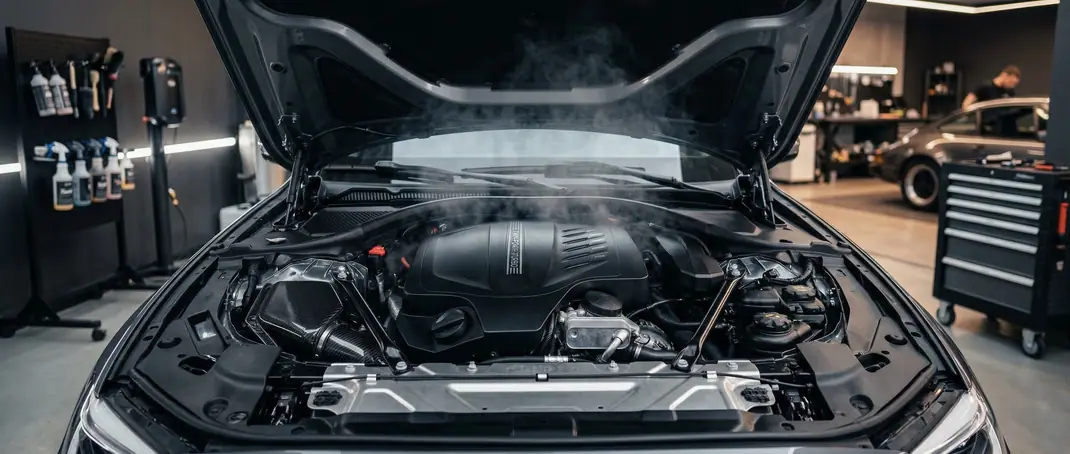
For the vast majority of passionate automotive enthusiasts and highly meticulous daily drivers, the exterior washing of a motor vehicle represents a sacred, time-honored ritual. Countless hours are joyfully dedicated to the careful application of thick active snow foams, precise multi-stage paint correction polishing, the layering of exotic carnauba waxes, and the curing of advanced ceramic sealants that guarantee an absolutely immaculate, mirror-like shine to the vehicle's bodywork. However, there exists a specific location that, despite being the fundamental, beating mechanical heart of the entire machine, is frequently and sadly voted to a dark, dusty, and greasy state of abandonment: the engine bay. Raising the heavy hood of a vehicle with a few years of road experience frequently reveals a rather grim scenario of mechanical neglect, where thick, baked-on layers of abrasive road dust, spilled synthetic oils, dry dead leaves, fine silica sand, and dark soot accumulate mercilessly over delicate plastics, rubber hoses, and vital, expensive metallic components.
The persistent question of "where and exactly how should I wash my car's engine?" is undoubtedly one of the most common and deeply feared doubts within the vast universe of automotive maintenance. The overwhelming, paralyzing fear of causing a massive catastrophic short circuit, permanently destroying the complex Engine Control Unit (ECU), or leaving the beloved vehicle totally immobilized on the driveway effectively pushes many cautious drivers completely away from performing this necessary task. Nevertheless, an impeccably clean engine bay is absolutely not merely an act of shallow aesthetic vanity; it is a highly imperative technical necessity designed to ensure long-term mechanical longevity, promote overall road safety, and, in a highly specific manner, significantly boost the asset valuation within the highly competitive and vast market of used cars. This exhaustive, deeply technical guide will surgically dissect the underlying science, the profound dangers, the preferred professional methodologies, and the exact options available to successfully execute this delicate intervention with absolute, total safety and confidence.
The Science and Engineering: Exactly why should you wash your engine?
Before we intensely explore the "where" and the "how," it is absolutely fundamental to fully comprehend the underlying "why." Thoroughly cleaning the engine compartment offers highly tangible, easily measurable mechanical and financial benefits that extend far, far beyond simple visual aesthetics.
- Optimal Thermal Efficiency and Heat Dissipation: An internal combustion engine is, in its most basic scientific essence, a massively powerful, highly controlled furnace that continuously generates staggering amounts of thermal energy. The heavy cast iron or aluminum engine block, the deep oil sump, the delicate aluminum cooling radiators, and the turbo intercoolers profoundly depend entirely on the efficient transfer of intense heat to the rapidly flowing surrounding air (a physical process known as convection) in order to maintain their highly specific, ideal operational temperatures. A thick, caked-on layer of greasy dirt, sticky oil, and road dust acts exactly like a highly efficient, unwanted thermal insulating blanket wrapped tightly around the engine. This dark thermal barrier brutally impedes the efficient dissipation of internal heat, aggressively forcing the car's vital cooling system (the mechanical water pump and the large electric cooling fans) to continuously labor in an intense state of massive overexertion. Over a prolonged period, this retained heat can easily lead to the highly premature, catastrophic aging and cracking of rubber head gaskets and vital seals strictly due to excessive, continuous thermal stress.
- The Crucial Early Detection of Vital Fluid Leaks: Within a dark, dirty engine bay heavily covered in thick, oily sludges, it is virtually and physically impossible to accurately detect the exact origin point of a slow, creeping leak involving synthetic engine oil, pressurized power steering fluid, vital engine coolant (antifreeze), or highly corrosive brake fluid. A meticulously clean, brightly illuminated engine allows absolutely any new fluid leak, regardless of how microscopic or minor it might initially appear, to be identified instantly and accurately through a simple, quick visual inspection. This immediate identification actively allows for relatively cheap, preventative mechanical repairs to be confidently carried out long before they dangerously escalate into massively catastrophic, highly expensive roadside mechanical failures.
- Active Prevention of Accelerated Material Degradation: Modern complex hydrocarbons (such as engine oils and raw fuels) are, by their very chemical nature, incredibly aggressive, highly destructive natural solvents when they come into contact with automotive rubbers. If these harsh liquids are carelessly left to sit and heavily soak into vital rubber coolant hoses, spinning accessory drive belts, or heavy-duty rubber engine mounts (silent blocks) for extended periods, the oil will aggressively attack the polymers. This causes the rubber components to dangerously swell, significantly soften, and eventually suffer a catastrophic, explosive rupture, usually under heavy driving loads.
The Rapid Technological Evolution and Extreme Electronic Sensitivity
The entire operational paradigm and the associated risks regarding the washing of automotive engines have changed dramatically and irreversibly over the last three decades. Back in the 1980s and the early 1990s, the spacious engine bays of that era housed purely analogue, highly robust mechanical systems: heavy mechanical carburetors, simple physical rotary distributors, and a glaring, almost total absence of highly sensitive, fragile electronic sensors. Washing those old, rugged engines frequently involved nothing more complex than aggressively throwing heavy buckets of soapy water directly over the block or ruthlessly using a standard, high-flow garden hose without facing any major negative repercussions, provided the owner merely remembered to temporarily cover the main air intake opening and the electrical distributor cap with a simple, cheap plastic grocery bag.
Today, the stark reality of modern, highly advanced automotive engineering is diametrically and totally opposite. A modern motor vehicle, regardless of whether it is a pure internal combustion engine (ICE) model or a highly complex hybrid electric vehicle (HEV), is essentially a massively powerful, high-speed rolling data center. The tightly packed engine bay is completely jammed with hundreds of highly precise, incredibly sensitive electronic components that continuously operate across highly complex, fast-paced CAN-bus communication networks. These networks are absolutely essential for the basic functioning and safety of the vehicle, a complex reality frequently and exhaustively detailed in deep technical engineering documentation published by global automotive giants such as Bosch Mobility. Deep within the bay, we find the critical Engine Control Unit (ECU), complex ABS/ESP braking modules, incredibly sensitive Mass Air Flow (MAF) sensors, heated oxygen sensors, massive high-capacity smart alternators, highly sensitive independent ignition coils for every single engine cylinder, and literally dozens of intricate electrical connectors. Although global automotive manufacturers heavily utilize specialized plastic plugs and connectors that proudly boast official Ingress Protection ratings (frequently rated at IP67 or IP68, which are specifically designed to safely resist mild splashing water and the natural, ambient humidity found on wet roads), these tiny internal silicone and rubber weather seals inevitably age, dry out, and shrink over years of exposure to extreme engine heat. Crucially, they were absolutely never designed or engineered to withstand the brutal, direct, and prolonged injection of high-pressure liquid water commonly found in modern washing equipment.
Where you should NEVER wash your engine: The Hidden Danger of "Jet Washes" (Self-Service Bays)
This is exactly where a massive number of well-intentioned drivers commit their gravest, most massively expensive mechanical error. Driven entirely by the allure of extreme convenience and highly attractive low costs, the overwhelming temptation to quickly pop open the car's hood at a local self-service car wash center (Jet Wash) and aggressively aim the powerful high-pressure water lance directly at the dirty engine block is incredibly huge. This highly destructive practice must be avoided at absolutely all costs.
The massive industrial-grade, high-pressure water pumps actively utilized in these commercial washing centers frequently and violently blast water at terrifying pressures that easily exceed 100 or even 130 bar (over 1800 PSI). This incredible, ballistic water pressure is more than powerful enough to physically slice through and completely destroy the aged, brittle plastic insulation surrounding delicate electrical wires. It easily forces microscopic water droplets directly past the tired silicone seals and deep into the main fuse boxes, violently rips off vital paper identification barcodes and warning labels, and forcefully pushes corrosive moisture directly into the very heart of highly sensitive, massively expensive electronic sensors. If pressurized water manages to aggressively breach an electrical connector and remains trapped inside, it will rapidly initiate a highly destructive phenomenon known as accelerated galvanic corrosion directly on the delicate copper or silver terminal pins. Days, or perhaps even weeks, after the seemingly innocent engine wash, the car may suddenly begin to exhibit terrifying warning messages on the digital dashboard (the dreaded Check Engine light), suffer from violent engine misfires, exhibit highly erratic, jerky behavior from the automatic transmission, or, in the absolute worst-case financial scenario, experience the complete, irreversible frying of the main ECU. The replacement and complex dealer reprogramming of a burnt ECU can easily and painfully exceed thousands of euros in damages. The high-pressure water lance is an absolutely excellent, highly effective tool for blasting thick mud out of wheel arches and rapidly cleaning filthy alloy wheels, but it remains the sworn, ultimate, and undisputed enemy of the modern, electronics-heavy engine bay.
Where the true professionals wash engines: The meticulous art of Automotive "Detailing"
To absolutely guarantee a cleaning process that is simultaneously deeply profound, incredibly safe, and capable of producing jaw-dropping, showroom-quality results, the absolute ideal, undisputed solution is to seek out the services of highly specialized automotive care studios known globally as Car Detailing centers. These dedicated, highly trained professionals do not recklessly utilize blind buckets of water and highly destructive pressure lances; instead, they heavily rely on advanced chemical science, immense patience, and highly specialized, expensive equipment that effectively mitigates absolutely all the heavy risks associated with extreme moisture.
Certified detailing studios that are strictly aligned with and highly respected by global automotive care associations, such as the widely recognized International Detailing Association (IDA), rigorously adopt highly specific, incredibly safe methodologies, which are fundamentally divided into three highly advanced approaches:
1. Manual Chemical Cleaning and Ultra-Low Pressure Rinsing This is the revered, classic approach of safe, meticulous automotive detailing. The engine must first be allowed to reach a mildly warm temperature (it must not be excessively, blazing hot, as this would cause the cleaning chemicals to instantly dry out, flash, and permanently stain the delicate black plastics, nor should it be totally, freezing cold, because a mild amount of thermal heat actively helps to effectively soften and break down stubborn, thick greases). The professional detailer meticulously begins by physically and carefully isolating absolutely all highly sensitive electrical components. The massive alternator, the exposed main fuse box, the open air filter intake tract, and the sensitive ignition coils are highly carefully and tightly wrapped in thick clinging plastic film, specialized automotive masking tape, or thick, highly absorbent microfiber towels. Following this crucial preparation, a highly specialized, citrus-based degreaser or a premium, high-quality alkaline All-Purpose Cleaner(APC) is carefully applied. This chemical boasts a highly precise, rigorously measured dilution ratio designed specifically to ensure it does not chemically burn or aggressively oxidize highly sensitive bare aluminum surfaces. The applied chemical is then patiently left to actively sit on the surface (a highly critical phase known as the dwell time) to safely break down the tough molecular bonds of the baked-on dirt and sticky engine oil. The absolutely most crucial step is the meticulous mechanical agitation: the specialist utilizes specialized detailing brushes equipped with incredibly soft, flexible bristles (frequently manufactured from natural, soft boar's hair or highly chemical-resistant soft synthetic fibers) to patiently, gently brush and actively lift the deeply impregnated dirt from every single hidden corner, deep groove, and convoluted rubber tube inside the engine bay. The final, crucial rinsing phase is absolutely never performed using highly dangerous, high-pressure equipment. Instead, it is executed utilizing highly controlled manual pump sprayers, gentle free-flowing garden hoses equipped with a minimal, gentle water flow (highly similar to the gentle flow of a garden watering can), or specialized mist-generating equipment designed to simply, gently wash away the excess dirty detergent and the heavily suspended dirt particles. Finally, any and all remaining residual water is immediately, forcefully expelled from the engine bay utilizing highly filtered, moisture-free compressed air nozzles or massively powerful, dedicated hot air blowers specifically engineered for safe automotive drying (commonly known as car dryers). This guarantees that absolutely no dangerous, stagnant pools of water remain hidden deep within the dark, complex cavities of the engine block.
2. The Deep Cleaning Revolution of Steam (Steam Cleaning) Professional steam cleaning has totally, completely revolutionized the safe, deep care of the complex engine bay over the last two exciting decades. Highly specialized, wildly expensive professional equipment forcefully shoots a highly concentrated, precision-directed jet of pure water vapor that is heavily superheated to extreme temperatures frequently ranging between a scorching 150°C and 180°C. This superheated steam possesses a truly extraordinary, almost magical capacity to instantly, safely dissolve heavy, thick greases, deeply dried-out, caked-on sludges, and old, sticky silicone cosmetics purely due to its massive, intense thermal energy. This heavily reduces the need to rely on harsh, highly aggressive chemical degreasing agents. The absolutely enormous, undeniable engineering advantage of this specific technique is that the actual physical, volumetric quantity of liquid water forcefully introduced into the highly sensitive engine compartment is practically zero (the steam frequently operates at an incredibly low moisture content of less than 5%). The intense steam deeply cleans, highly sterilizes, and almost immediately evaporates entirely into the air. It is incredibly, inherently safe for complex modern electronic wiring harnesses and actively allows the detailer to reach deeply hidden, physically inaccessible areas that traditional brushes simply cannot touch, all without the terrifying risk of accidentally flooding highly vital, expensive electrical components.
3. The Absolute Pinnacle of Cleaning Technology: Cryogenic Cleaning (Dry Ice Blasting) This is, without a single shadow of a doubt, the absolute most secure, highly advanced, visually mesmerizing, and fiercely expensive cleaning technique currently available anywhere within the elite, world-class automotive detailing industry. Cryogenic cleaning, widely known as dry ice blasting, utilizes tiny, microscopic pellets of solid carbon dioxide (CO2) that are violently projected at incredibly high, supersonic speeds and massive pressures through a highly specialized, heavy-duty blasting gun. The underlying physical phenomenon is deeply based on advanced thermodynamics and the fascinating physical process of sublimation. When the tiny, frozen dry ice pellets, which exist at a terrifyingly low temperature of approximately -78.5°C, violently strike the dirty, greasy, and relatively warm surface of the engine block, three massive physical actions occur simultaneously in a fraction of a millisecond:
- Intense Thermal Shock: The extreme, instantaneous freezing cold causes the sticky dirt, thick oils, and heavy grime to become instantly, highly brittle, violently breaking their strong adhesive bond to the underlying metal surface.
- Massive Kinetic Impact: The high-speed pellets physically, violently smash directly into the brittle dirt layer.
- Violent Expansion via Sublimation: In a microscopic fraction of a second upon impact, the solid dry ice rapidly absorbs ambient heat and instantly transitions directly from a solid physical state into a rapidly expanding gaseous state (sublimation). It violently expands its physical volume by approximately 800 times. This microscopic, highly localized mini-explosion literally, physically tears the dirt directly out of the deep microscopic pores of the cast metal and the textured plastics from the inside out. The final, breathtaking result is an absolutely surgical, unbelievable level of deep cleanliness, fully capable of incredibly returning heavily oxidized cast aluminum components completely back to their original, flawless factory appearance. The absolute greatest, most paramount advantage of dry ice blasting is that it is a physical process that is 100% completely free of any liquids, any moisture, and any harsh, corrosive chemicals. There is absolutely zero liquid water left behind to painstakingly dry, there is absolutely zero electrical risk to sensitive components, and there are absolutely no highly toxic, greasy chemicals aggressively dripping down into the municipal drainage systems. It is the undisputed, absolute method of choice heavily favored by wealthy collectors of multi-million euro exotic vehicles, classic car aficionados, and elite, top-tier professional automotive restorers.
The Crucial Environmental Issue and Strict European Legislation
Moving far beyond the mere physical preservation of the complex vehicle mechanics, there exists a highly fundamental, incredibly serious legal and ecological component deeply associated with exactly "where" one should properly wash an engine. Washing a greasy, dirty car engine on the private driveway of your house, in your green garden, or openly on the public street is absolutely not merely heavily discouraged; in the vast majority of highly developed European countries, and operating under the incredibly strict, heavily enforced environmental directives established by the European Environment Agency (EEA), it is a strictly, heavily illegal practice that is actively targeted with massively heavy, punishing financial fines.
A standard, used engine bay inherently contains a highly toxic, dangerous amalgam of heavy, polluting hydrocarbons: thick residues of synthetic engine oil, highly corrosive hydraulic fluid, spilled ethylene glycol (engine antifreeze, which is incredibly toxic and deadly to local wildlife and pets), and fine, abrasive heavy metal dusts originating from the braking systems and engine wear. When a vehicle owner recklessly washes their engine out on the open street, the heavily contaminated wastewater, rich in this highly toxic, greasy paste, flows directly and uncontrollably down into the open street storm drains. It aggressively infiltrates the deep groundwater tables, massively contaminates local freshwater rivers, and actively destroys highly sensitive, fragile aquatic ecosystems. Legally licensed, professional automotive repair workshops and highly certified professional detailing studios are strictly obligated by harsh environmental laws to possess highly advanced, heavily monitored fat and hydrocarbon separator box systems permanently installed deep within their industrial drainage networks. These advanced, multi-stage systems actively intercept, physically separate, and safely store the thick oils, heavy greases, and toxic chemical contaminants away from the water long before the treated wastewater is finally directed into the public sanitation network. The highly dangerous, toxic residues are subsequently collected by highly specialized, heavily regulated chemical treatment entities. Choosing a fully qualified, legal professional to perform this task is, therefore, absolutely not only a smart choice for ensuring automotive safety, but it is also a mandatory, highly ethical act of civic responsibility and crucial environmental protection.
The Final Grand Finish: The Deep Nutrition of Engine Plastics
A truly professional, high-end engine wash absolutely never ends with merely the simple, final rinsing of the dirt. The highly potent, strong cleaning agents completely and ruthlessly strip away absolutely all the remaining protection from the textured black plastics, the large engine covers, and the flexible rubber hoses, frequently leaving them presenting a highly dried-out, pale, ugly, and heavily whitened appearance. In this naked state, they are highly, incredibly susceptible to deep, structural cracking severely provoked by the intense internal heat of the engine and the aggressive degradation induced by harsh UV rays penetrating through the front grille. The absolute final, definitive, and crucial step is the deep conditioning phase. Highly trained detailing specialists meticulously apply premium water-based or advanced ceramic polymer sealants specifically formulated and heavily engineered to easily withstand the extreme, blazing temperatures of the engine compartment. Unlike the terrible, old-fashioned, cheap, highly flammable silicone aerosol sprays of the past (which actively acted as massive, sticky magnets for fine dust and sand within mere days), modern, high-tech coatings dry completely to the touch. They deeply penetrate the microscopic pores of the complex polymers and gorgeously restore the original, beautiful satin-black factory finish, effectively creating a highly durable, anti-static protective barrier that aggressively repels harmful moisture and substantially, heavily retards the future accumulation of new road dirt and grime.
The Deeply Crucial Impact on the Automotive Market
An engine bay clearly presents itself as a highly revealing, truthful mirror deeply reflecting the hidden soul and the true, underlying maintenance history of a motor vehicle. Within the incredibly dynamic, fiercely negotiated, and highly competitive sector of automotive buying and selling, particularly within the massive, popular segment of used cars, the immediate visual presentation of the engine block plays a highly fascinating, dual psychological role, demanding an incredibly cautious, deeply analytical review by highly informed, smart buyers.
On the one hand, an impeccably clean, professionally and lovingly detailed engine, proudly featuring deeply nourished, soft rubbers and plastics glowing in their rich, original black hue, immediately and powerfully transmits to the potential buyer a strong, undeniable psychological message of deep trust, absolute mechanical transparency, and extreme, obsessive ownership zeal on the part of the previous driver. It clearly demonstrates that the vehicle's maintenance was definitely not merely limited to the strict, minimal, cheap obligations outlined in the owner's manual, but rather it actively extended to high-level, meticulous aesthetic care. This undeniably and invariably massively increases the perceived financial value of the entire vehicle in the highly critical eyes of the vast market of individuals highly interested in acquiring premium used cars. It is a truly formidable, highly justified, and highly profitable sales argument.
On the very other hand, a remarkably quick, incredibly poorly executed, excessively shiny, greasy wash (frequently featuring engine plastics literally dripping with thick, cheap, sticky silicone oils in a desperate, sad attempt to falsely mask old, heavily worn-out parts), performed highly hastily on the very eve of placing the car up for online sale, can act as a truly monumental, terrifyingly huge red flag. Unscrupulous, highly dishonest sellers frequently and aggressively utilize this deeply illusory, deceptive method to temporarily, quickly wash away the obvious, dark traces of highly active, massively expensive oil leaks originating from severely blown valve cover gaskets or massively failing high-pressure fuel pumps. Highly experienced, veteran car buyers know exactly how to carefully analyze these suspiciously recent, highly glossy washes and immediately, aggressively question the true, hidden motive behind this sudden, highly convenient "spring cleaning."
Accelerate towards your next vehicle with total security and absolute confidence
Regardless of whether you are meticulously observing a deeply authentic, incredibly thorough professional engine detail or cautiously staring at a highly suspicious, quick, greasy wash, the careful, highly analytical evaluation of the overall mechanical condition of a vehicle and the demand for total, absolute clarity regarding its true mechanical history are absolutely imperative and totally non-negotiable. Keeping your current, beloved car heavily protected with the absolute best, highest quality care possible is undoubtedly your very first, crucial step toward achieving deep, long-term peace of mind on the open road. However, when you are finally, truly ready to discover the incredible, flawless machine of your absolute wildest dreams, or if you deeply desire to sell your current, well-maintained automobile in a highly trusted environment where absolute transparency, deep security, and fair values always prevail, we proudly possess the absolute ideal, highly advanced digital platform specifically built for you. We highly encourage you to explore the absolute most reliable, highly secure automotive opportunities right now and dive deeply into the most engaging, highly dynamic mobility ecosystem available in Portugal. We strongly invite you to visit the premier digital portal AUTO.MOTO.pttoday. It is your ultimate platform of choice and deep trust across the entire national territory for safely, securely, and highly transparently buying and selling all types of light passenger automobiles, heavy-duty commercial vans, and thrilling motorcycles of all categories. Find your absolutely perfect next road partner right now at AUTO.MOTO.pt and confidently start your exciting new grand journey with all the absolute trust, peace of mind, and total security you truly deserve!