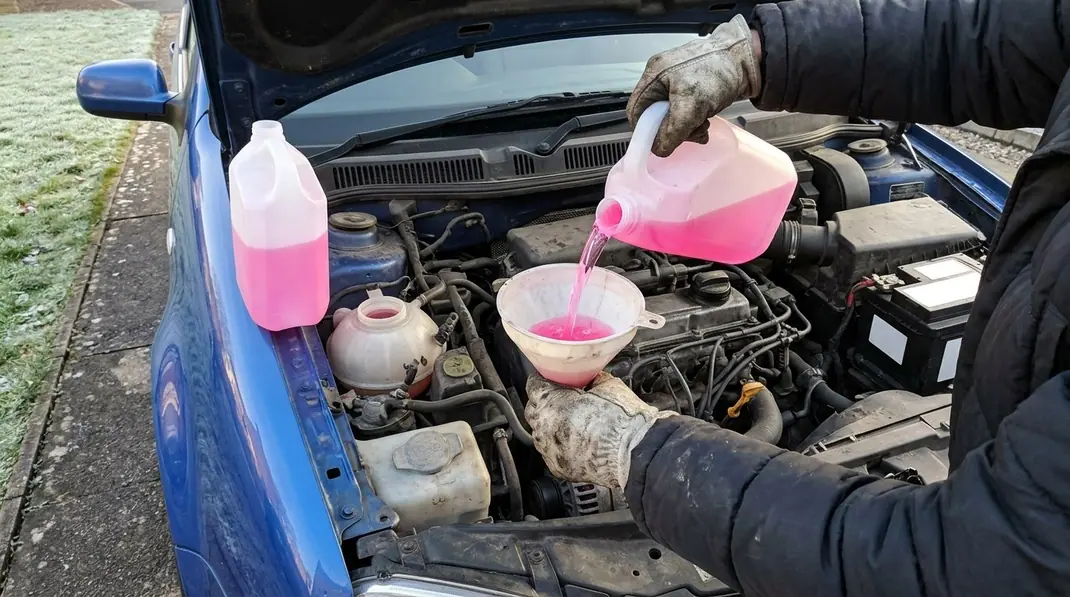
Change your coolant when the manufacturer says so in the manual, usually every 2 to 5 years, or around 48,000 km in some models. Colour does not decide: the car's specification does (G12, G13). Do not mix types or use plain water. One example price: about €6 a litre; for a full change, ask for a quote.
With the cold coming, it is time to look at the engine. This guide explains what coolant does, when to change it, what the colours mean, why antifreeze is not just water with dye, and how much it costs.
What coolant is for
Coolant, also called antifreeze, carries the heat from the engine to the radiator. According to Caetano, it is made of distilled water, ethylene glycol and additives, and protects the engine against overheating, corrosion and oxidation.
Ethylene glycol stops the water from freezing and from boiling too early. At usual concentrations, the more ethylene glycol, the better the protection:
- 10%: from -4 °C to 102 °C;
- 25%: from -12 °C to 103 °C;
- 50%: from -37 °C to 108 °C.
Pure antifreeze holds only additives and ethylene glycol and must be diluted, usually to about half, as the maker says; ready-mixed coolant already has the distilled water. In cold and mountain areas, such as the Serra da Estrela, a lower protection temperature is worth having.
When to change the coolant
There is one rule: follow your car's manual. Intervals vary by make. Postal quotes Toyota and Honda, for example, with a change every two years or 48,000 km, and suggests checking the coolant's condition every 24,000 km.
Lubricant makers give another sense of scale. According to Enilive, a G11 coolant lasts 2 to 3 years, a G12 or G12+ 4 to 5 years, and the newest ones are made for long intervals. Change it sooner if it looks dirty or rusty.
Changing early does not harm the engine or the radiator, Postal says. What harms them is leaving contaminated coolant to work for years.
How to check the level
Always check with a cold engine. The semi-transparent expansion tank has two marks, and the coolant should sit between minimum and maximum. It is the same idea as the engine oil level: every so often and before long trips.
- switch the engine off and let it cool;
- open the tank cap carefully, because the circuit may be under pressure;
- if it is low, top up with the right coolant to between the marks;
- if the level drops again within a few days, there is a leak and it needs a garage.
Never open the cap on a hot engine. If the temperature needle climbs or the red light comes on, stop safely and switch off. Our guide to dashboard warning lights explains what each symbol asks of you, and the one on engine problems covers the signs that something is wrong.
Coolant colours: what they mean
Colour helps, but it does not decide. According to Enilive, colours usually match the additives, but it is not a strict rule and colour guarantees nothing. The manufacturer's specification rules. The most common types are:
- IAT (usually green): inorganic additives, used in older cars with a shorter life;
- OAT (orange, red, pink or purple): organic additives, for engines with aluminium and modern systems, such as G12 and G12+;
- HOAT (yellow, turquoise or blue): hybrid, used by several European and American makes.
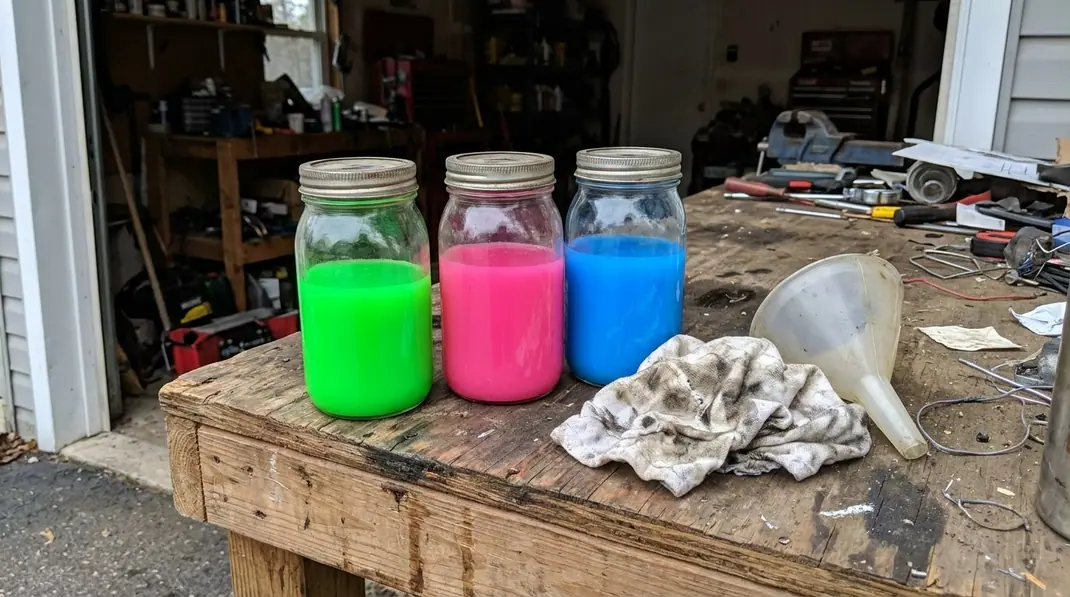
In the Volkswagen group, for example, G11 is blue, G12 red or pink, G12+ lilac and G12++ purple, according to Enilive. Even so, two brands can use the same colour with different chemistry.
Can I mix coolants or use plain water?
Do not mix, unless the manufacturer expressly says otherwise. Caetano is clear: never mix different types, because it can form a paste that blocks the circuit and damage the engine. Enilive explains that the silicates in an older coolant react with the organic acids of a modern one and form gel or sludge.
If you want to switch products, empty the circuit completely. And plain water? It is not recommended: it freezes at 0 °C, does not protect against corrosion and leaves less margin before boiling. In an emergency, with a cold engine, use at least distilled water and go to a garage to restore the right mix. In frost, do not leave plain water in.
Cold and frost: coolant in winter
In winter, weak coolant freezes, and ice can crack the block or the radiator. With 50% ethylene glycol, protection reaches -37 °C, far beyond what Portugal's climate demands. Follow the dilution the maker states and, before the first frosts, check the level and the condition of the coolant.
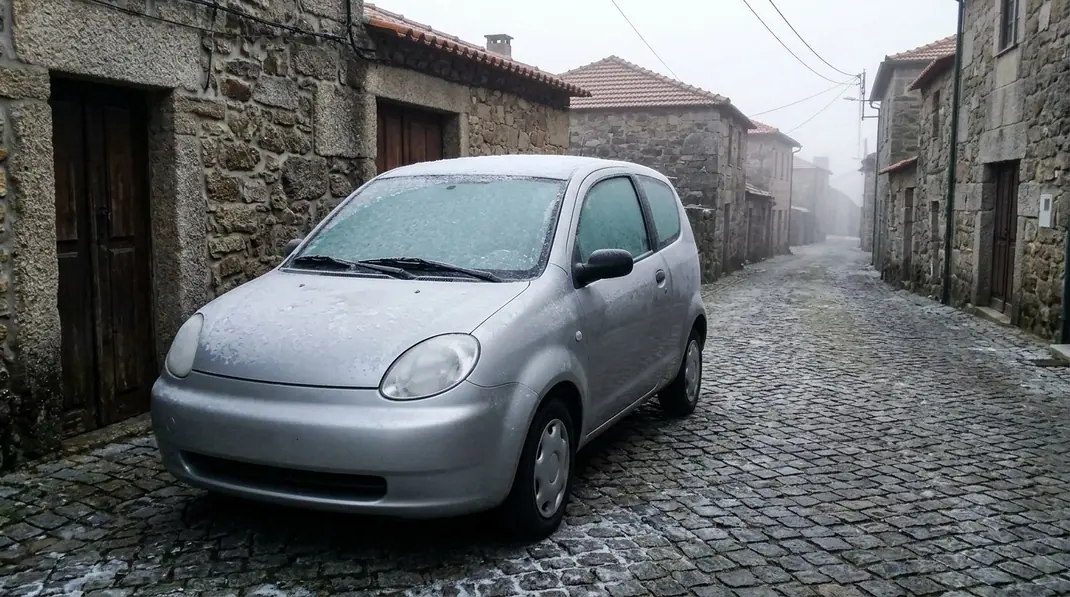
It is also the time to check the battery, which suffers in the cold. See our guide to the car battery.
How much it costs to change the coolant
There is no official price list. The product is the cheap part: at a nautical online shop with a Portuguese-language site, a 5-litre can of ready-mixed coolant was €29.99 on 8 November 2026, on promotion, about €6 a litre. It is only an example: the type your car requires may cost more.
Labour depends on the garage and the model, because the change means draining and bleeding the circuit. Always ask for a quote and whether it includes the coolant and the bleeding. Used coolant is waste: do not pour it down the drain or on the ground, and let the garage deal with it. It is toxic: keep it away from children and animals.
Coolant when buying a used car
When viewing a used car, open the bonnet and look at the expansion tank, with the engine cold. The coolant should be clean, with no rust and no oily film, and the level between the marks. Ask when it was last changed and ask for the invoice. Brown or oily coolant can point to a serious problem, so have a mechanic check it.
You can compare adverts among the used cars for sale and get alerts for new adverts in the AUTO.MOTO app on your phone.
Frequently asked questions
How often should coolant be changed?
As the manual says: usually every 2 to 5 years, and some makers state 48,000 km. If you do not know when it was last changed, ask a garage to test its condition.
What colour is coolant?
It can be green, blue, pink, red, orange, yellow or purple. Colour is only a clue; what counts is the manufacturer's specification, such as G12 or G13.
Can I put water in the radiator?
Only in an emergency, with a cold engine, and preferably distilled water. Water freezes at 0 °C and does not protect against corrosion like the right coolant.
Can I mix coolants of different colours?
No, unless the manufacturer says otherwise. Different types can react and form a paste that clogs the circuit. To switch products, empty everything first.
How much does a coolant change cost?
As an example, a 5-litre can of ready-mixed coolant cost €29.99 at a nautical online shop, and labour depends on the garage. Ask for a quote with the coolant and the bleeding included.