A car clutch usually lasts between 100,000 and 150,000 km, but it can wear out sooner if you drive mostly in town. The signs of a worn clutch are revs rising without the car speeding up, a biting point very high on the pedal, a burning smell and gears that are hard to engage.
As a guide, replacing the clutch kit at a workshop costs between €300 and €900. If the dual-mass flywheel also has to be replaced, the bill goes up and can exceed €1,000.
In Portugal the manual gearbox is still the most common, so a clutch replacement is a cost many drivers end up facing. Among the cars for sale on AUTO.MOTO.pt on 12 October 2026, 3,591 adverts list a manual gearbox and 2,799 an automatic.
In this guide we explain how a clutch works, how to tell it is worn, how many kilometres it lasts, what it costs to replace, what a dual-mass flywheel is and how to make the clutch last longer. At the end we answer the questions people search for most.
What a clutch is and what it does
The clutch connects and disconnects the engine from the gearbox. When you press the pedal, the link between the engine and the wheels is broken, so you can change gear or stop without stalling. When you lift your foot, the engine drives the car again.
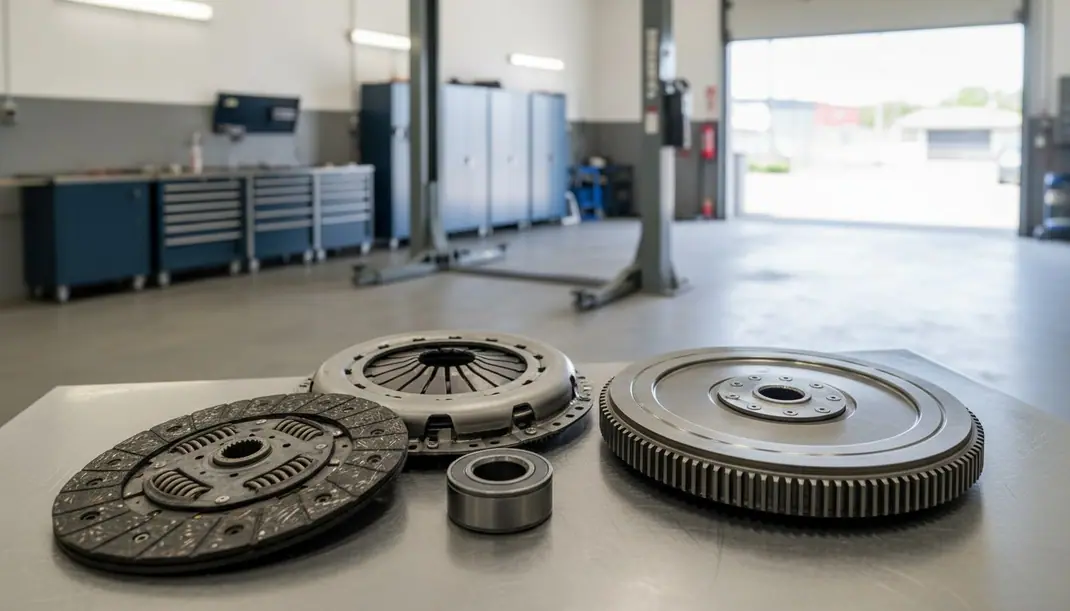
In a manual car, the assembly has three main parts:
- clutch disc: it has a friction lining, similar to brake pads, and it is the part that wears;
- pressure plate: it clamps the disc against the engine flywheel;
- release bearing: it passes the force of the pedal to the plate to engage and disengage the clutch.
These three parts are usually sold together as a clutch kit. Many cars also have a dual-mass flywheel, covered further down. To follow the whole path of the engine's power to the wheels, see our article on how a car transmission works.
Signs of a worn clutch
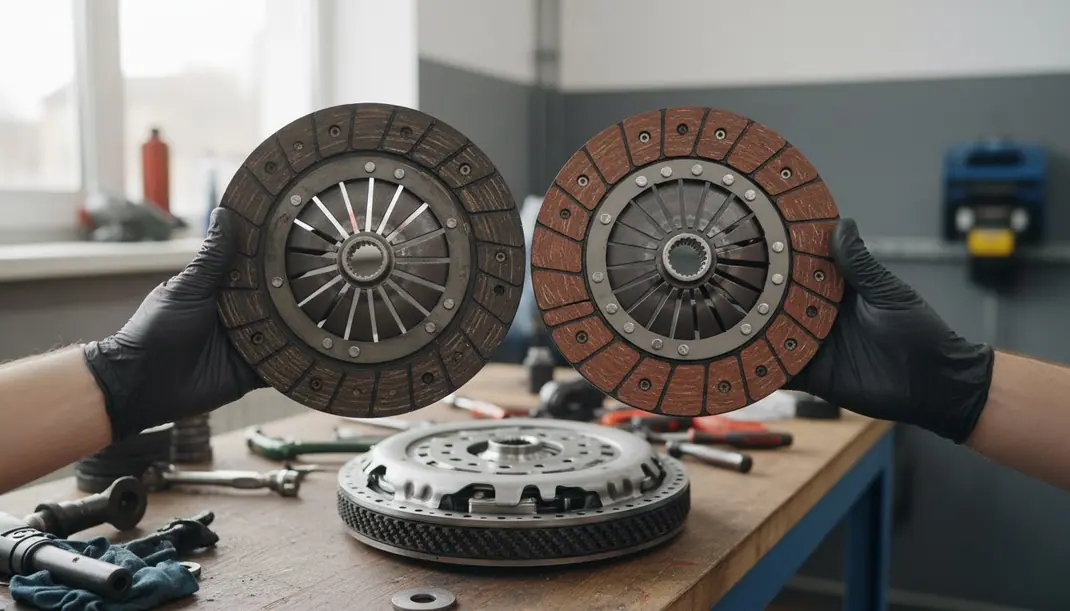
According to the Bosch Car Service network, on its clutch repair page, the most common symptoms are easy to notice without technical knowledge. If you recognise any of them, have the car checked before the fault gets worse.
Clutch slipping
This is the clearest sign. You press the accelerator, the rev counter climbs, but the car does not gain speed to match. It shows most on hills, in high gears and with a loaded car. The disc no longer grips and slips against the flywheel.
High biting point
When the car only starts moving with the pedal almost fully up, it is a typical sign of a worn disc or a worn pressure plate. On a clutch in good condition, the biting point is usually much lower.
Stiff or low clutch pedal
A pedal that has become stiff may point to wear in the pressure plate, the bearing or, on older cars, the cable. A pedal that stays low or does not come back may point to a worn disc or plate, or to a problem in the hydraulic circuit, such as air, low fluid or a leak in the master or slave cylinder.
Burning smell, judder and gears that are hard to engage
- burning smell: it appears when the disc slips and overheats, for example on a garage ramp or when towing;
- judder when pulling away: it can come from the disc, the plate or the dual-mass flywheel;
- hard or crunching gear changes: the clutch no longer fully separates the engine from the gearbox;
- noise when pressing or releasing the pedal: it usually comes from the release bearing.
How many kilometres a clutch lasts
There is no fixed figure. Bosch Car Service says the clutch should be inspected or replaced between 100,000 and 150,000 km. It adds that after 5 to 7 years of heavy use, it can be worn even with low mileage.
What matters most is how the car is used:
- town and stop-start traffic: in Lisbon or Porto, the clutch works at every traffic light and wears faster;
- open road and motorway: with few gear changes, it lasts much longer;
- loads and towing: a van that is always full or a car pulling a trailer wears the disc more;
- driving style: harsh starts and resting your foot on the pedal shorten the life of the clutch.
How much it costs to replace a clutch in Portugal
The price depends mainly on the model and on how many hours the workshop needs to remove the gearbox. Bosch Car Service publishes these indicative figures, to be used as a guide only:
- adjustment or small repairs: €100 to €300;
- replacing the clutch kit (disc, plate and bearing): between €300 and €900;
- repairing parts such as the pedal or the cylinder: about €150 to €500.
The same network quotes 2 to 6 hours of work, so as a rule plan to be without the car for a day. Much of the bill is labour: to reach the clutch, the workshop has to take the gearbox off.
Clutch replacement cost with a dual-mass flywheel
When the dual-mass flywheel also has to be replaced, the price rises a lot. The Nexus workshop network, in a 2020 article, quoted figures between €600 for a conventional kit and €1,200 with a dual-mass flywheel. Today's prices may differ, so treat these numbers only as an order of magnitude.
Before you accept a quote, check these points:
- whether it covers the full kit or just the disc;
- whether the dual-mass flywheel was measured and really needs replacing;
- whether the clutch master or slave cylinder is included;
- the brand of the parts and the warranty on the repair;
- how many hours of labour will be charged.
Get two or three quotes using the car's registration: prices can vary a lot from one workshop to another.
Dual-mass flywheel: what it is and when to replace it
A dual-mass flywheel is made of two masses joined by springs, which absorb engine vibration before it reaches the gearbox. According to Valeo, a clutch manufacturer, one in every two cars leaving the factory already has a dual-mass flywheel.
A dual-mass flywheel with too much play usually gives signs like these:
- vibration at idle that you feel in the pedal, the seat or the dashboard;
- metallic knocks when switching the engine off or on;
- noises when pulling away or at low revs.
These symptoms are easy to confuse with other parts, such as the engine mounts. The fault is confirmed at the workshop, usually by measuring the flywheel's play once the gearbox is off.
Dual-mass or single-mass
A single-mass flywheel is one rigid piece, simpler and cheaper. A dual-mass flywheel filters vibration better and is more comfortable, but costs more to replace. Some kits swap the dual-mass flywheel for a single-mass one. Talk to the workshop before choosing one, as the car may vibrate more.
How to make your clutch last longer
The ACP lists the habits that wear the clutch most. Most of them cost nothing to fix:
- do not rest your foot on the pedal, especially in traffic; even light pressure makes the disc slip and heat up;
- do not hold the car on a hill with the clutch; use the foot brake or the handbrake;
- always pull away in first gear, not second;
- press the pedal all the way down when changing gear;
- respect your car's load and towing limits;
- use the pedal only to change gear and, when stopped at lights, put the gearbox in neutral.
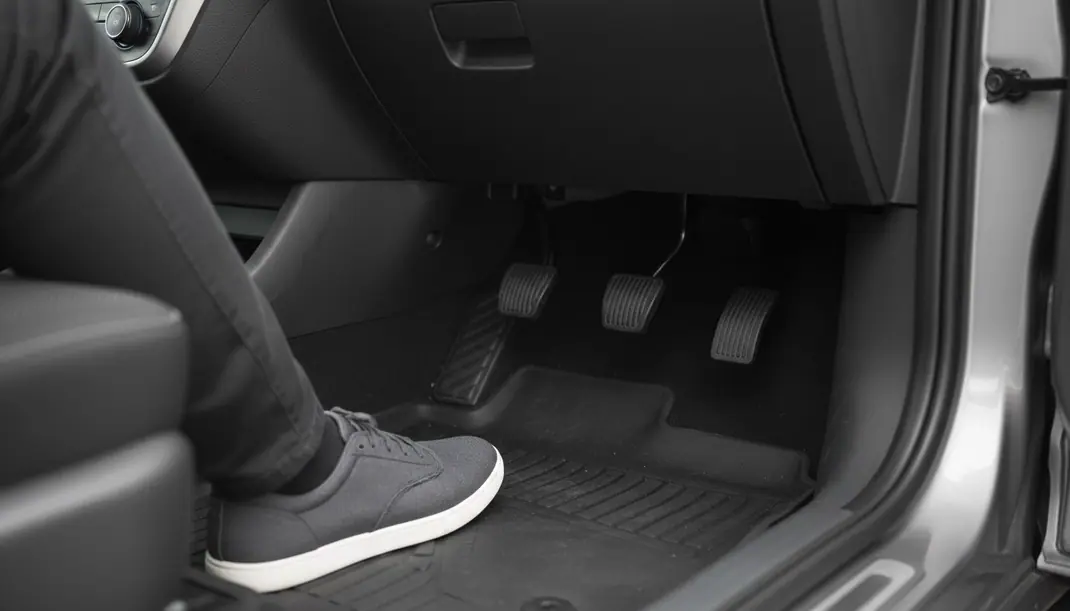
When pulling away, use only enough throttle to get the car moving. Starting with high revs and the pedal half up is what heats the disc most.
Do automatic cars have a clutch?
They do, but in a different way. An automatic car has no clutch pedal: the ACP lists the missing third pedal as one of the differences of automatic gearboxes. What sits inside depends on the type of gearbox:
- torque-converter automatic: the car pulls away through a hydraulic converter and gear changes are made by internal clutches running in oil, without a manual's clutch disc;
- dual-clutch gearbox: it has two electronically controlled clutches, which also wear and can be expensive to repair;
- CVT: it varies the ratio continuously, with no fixed gears, and pulls away, depending on the model, with a torque converter or its own clutch;
- electric cars: most have neither a clutch nor a multi-speed gearbox.
The market is changing fast. In the car adverts on AUTO.MOTO.pt that state the gearbox type, automatics make up 24% of cars built before 2015, 38% of those from 2015 to 2019, 59% of those from 2020 to 2023 and 69% of those from 2024 onwards.
Automatics also cost more: their median asking price is €24,280, against €12,900 for manuals. Part of the gap comes from the automatics for sale being newer on average.
Buying a used car: how to check the clutch
On a used car with more than 100,000 km, the clutch is one of the first things to assess. On the test drive, pull away on a hill and, in fourth or fifth at low revs, press the accelerator to the floor: if the revs climb and the car does not keep up, the clutch is slipping.
Also watch for a very high biting point, a burning smell or judder.
Ask for the service invoices. A recently replaced clutch is a real advantage and worth mentioning in the advert. Before you buy, you can check the car's history by VIN and compare prices among the used cars for sale.
A word on warranty: the clutch is a wear part. As we explain in our guide to what a used car warranty covers in Portugal, normal wear is generally excluded. Check the contract for what the seller covers.
If you are selling, a slipping clutch lowers the car's value. Get a car valuation and decide whether it pays to repair it before you advertise.
Frequently asked questions about the clutch
How many kilometres does a clutch last?
Generally between 100,000 and 150,000 km. If you drive mostly in town, tow, or rest your foot on the pedal, it can last much less.
How much does it cost to replace a clutch?
As a guide, between €300 and €900 to replace the kit at a workshop, according to Bosch Car Service's indicative figures. If the dual-mass flywheel also has to be replaced, the bill can exceed €1,000. The final price depends on the model, so get quotes.
How can I tell if my clutch is in good condition?
A healthy clutch does not bite very high, does not slip on hills, does not smell of burning and lets you change gear without crunching.
How long does a clutch replacement take?
According to Bosch Car Service, between 2 and 6 hours of work, depending on the model and the fault. In practice, plan to be without the car for about a day.
What happens when you press the clutch pedal?
The link between the engine and the wheels is broken. The engine keeps running but stops driving the car, so you can change gear or stop without stalling.
Embraiagem or embreagem?
In Portugal the word is «embraiagem». «Embreagem» is the Brazilian form. Both mean the same part: the clutch.