At a roundabout, whoever is entering gives way to those already circulating, in any lane. For the first exit, use the right-hand lane; for later ones, move right only after the exit before yours. Failing to give way costs €120 to €600 and is serious: it can mean 2 points and a driving ban. The wrong lane costs €60 to €300.
Roundabouts are where many drivers hesitate: «inside or outside?». This guide explains who has priority, how to choose your lane, how to signal the exit and what the most common mistakes cost.
Who has priority on the roundabout
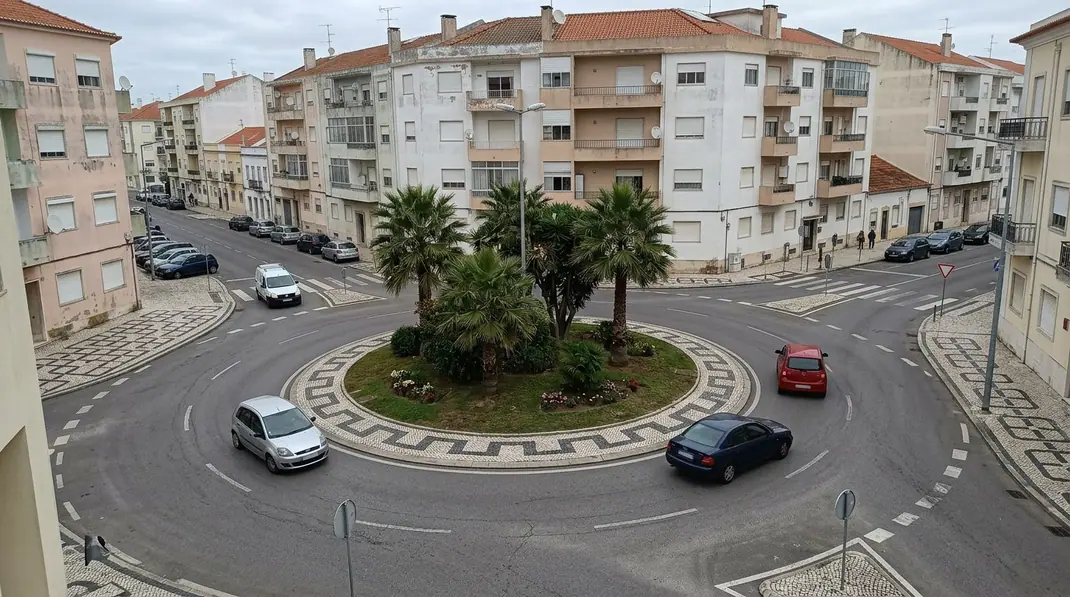
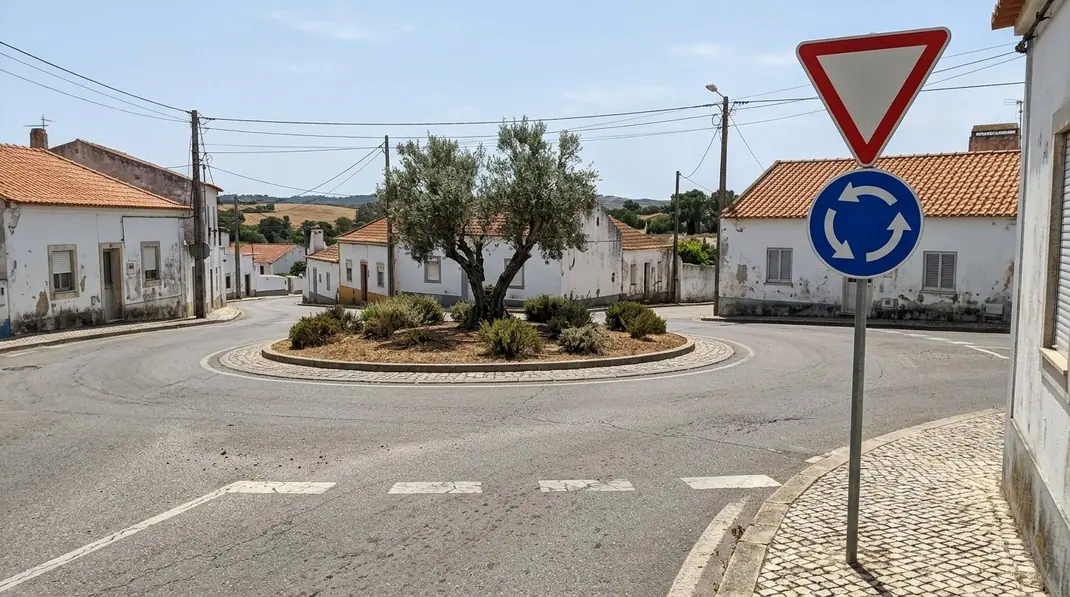
According to the Highway Code (Código da Estrada), a roundabout is a junction where traffic runs in a circular direction and which is signposted as such. Whoever enters must give way to vehicles already circulating, whichever lane they are in (articles 14.º-A and 31.º).
In practice, the give-way sign at the entrance applies to both lanes: before entering, look to the left and go only when there is room, even if the car coming is in the inner lane.
Which lane to use: inside or outside
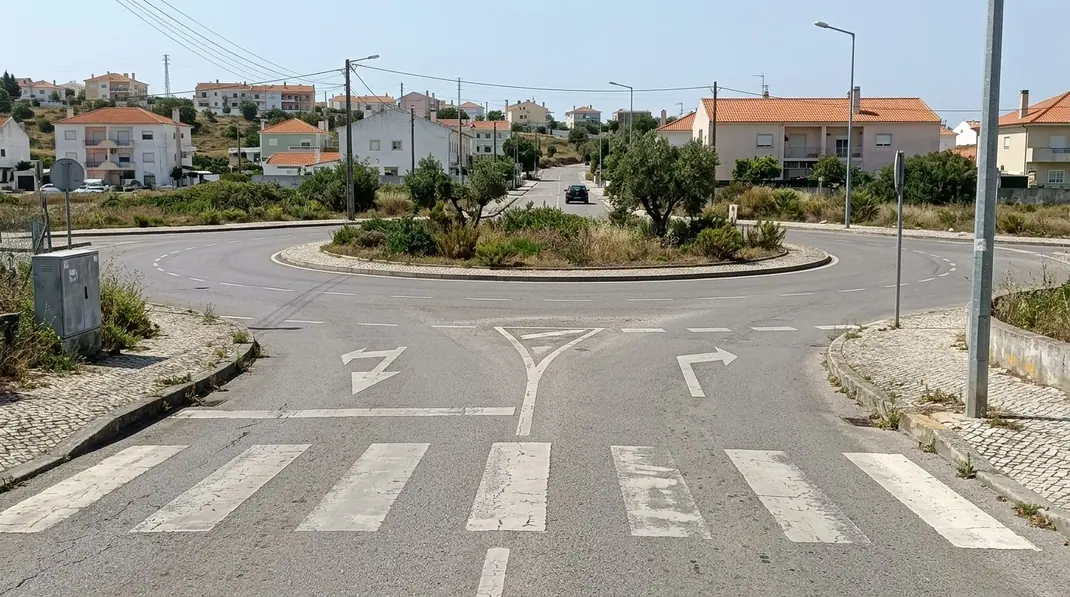
The law does not say always inside or always outside. It says to use the lane most convenient for your destination, with two rules of order:
- first exit: take the right-hand lane;
- other exits: take the rightmost lane only after passing the exit immediately before the one you want, moving over gradually and changing lane after taking due care.
On a roundabout with three exits, a driver leaving at the third uses the inner lane, passes the second exit and only then moves down to the right-hand lane. A driver in the right-hand lane who passes their exit, without signalling, gets in the way of whoever is leaving on the outside.
Cyclists, animal-drawn vehicles or animals led by drivers, and heavy vehicles may use the rightmost lane, but must let out anyone circulating inside who wants to leave. Note too that with more than one lane, moving faster than the vehicle in the other lane is not overtaking (article 42.º).
How to signal entering and leaving
Article 21.º requires you to signal in advance the intention to change lane or direction, and to keep the signal on until the manoeuvre ends. So switch on your right indicator before leaving, and whenever you change lane inside the roundabout.
The Code does not expressly provide for signalling left when entering. A driver going straight on or turning left uses the inner lane and signals lane changes. Failing to signal costs €60 to €300.
Roundabout fines and points
The most common mistakes carry these fines, set out in the Highway Code:
- not giving way to traffic on the roundabout: €120 to €600;
- not taking the right lane for the exit you want: €60 to €300;
- not signalling a lane change or the exit: €60 to €300;
- not giving way to pedestrians when leaving, when changing direction: €120 to €600;
- stopping or parking on the roundabout or within 5 m on either side of it, in built-up areas: €30 to €150.
Only the rules on giving way, changing lane and road position are among the serious offences in article 145.º, depending on the case, with 2 points and a driving ban of 1 month to 1 year (see the ANSR list).
Stopping, parking and not signalling are fines only. Points come off only when the decision is final. To check and recover points, see our guide to driving licence points. If you are fined, the ANSR frequently asked questions guide explains how to pay or file a defence.
Stopping or parking on the roundabout or on the central island is forbidden. For more on those fines, see the guide to the parking fine; to check whether you have one pending, the guide to checking traffic fines.
Pedestrians at the exit
When you leave, you are, as a rule, changing direction. Article 103.º tells you to slow down and, if needed, stop to let pedestrians and cyclists cross the road you are entering, even without a zebra crossing. On many roundabouts the crossing is right at the exit: look before you accelerate.
Common mistakes and driving tips
- entering without giving way to traffic from the inner lane;
- leaving directly from the inner lane and cutting across whoever is on the outside;
- staying in the right-hand lane and passing your exit, instead of going round again;
- not signalling at the exit, leaving others waiting without knowing what you will do.
If you miss your exit, do not brake or reverse: go round once more. Slow down on approach and always look left before entering. Anyone who has just passed their test and is looking for a first car can see the used cars for sale and get alerts for new adverts in the AUTO.MOTO app.
Frequently asked questions
Who has priority on a roundabout?
Whoever is already circulating, in any lane. Whoever enters must give way.
Do you go inside or outside on a roundabout?
In the lane that best suits your destination. For the first exit, use the right-hand lane; for the others, move right only after passing the exit before yours.
Do you have to use the indicator on a roundabout?
You must signal a lane change and the exit, with the right indicator. The Code does not expressly provide for signalling left when entering.
What is the fine for not giving way on a roundabout?
€120 to €600. It is a serious offence, which can mean 2 licence points and a driving ban.
Can I park on a roundabout?
No. Stopping or parking on the roundabout and within 5 metres on either side of it is forbidden. In built-up areas the fine is usually €30 to €150. Figures follow the Highway Code on the publication date: check the consolidated version.