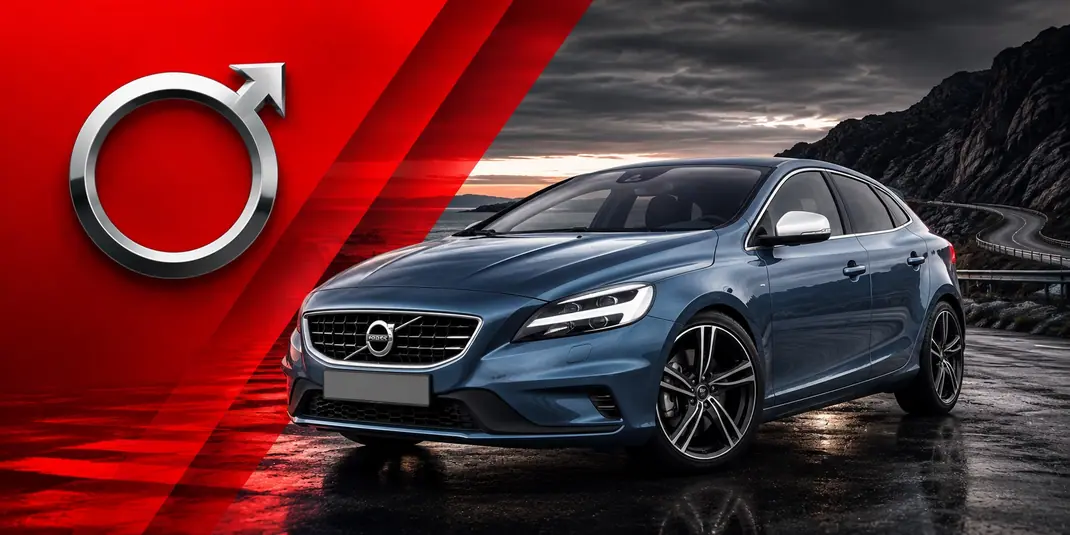
Introduction: The Premium Hatchback Reality
Depreciation curves mercilessly destroy premium automotive aspirations, transforming highly expensive showroom status symbols into accessible secondary market propositions within fifty months of original registration. European consumers obsessed with badge prestige heavily dictated the C-segment hatchback wars during the previous decade. German manufacturing conglomerates traditionally monopolized this highly lucrative sector, pushing the A-Class, 1-Series, and A3 onto millions of corporate fleet registers. Swedish engineers responded by resurrecting a familiar nomenclature, dropping a massive, heavily armored slab of Scandinavian sheet metal directly into the brutal corporate leasing crossfire.
Walking onto a dealership lot reveals an absolute saturation of these sleek, low-slung five-door models. Finding genuine, well-maintained used cars requires navigating past rows of artificially polished, ex-fleet workhorses suffering from severe deferred maintenance. Buyers automatically associate the diagonal iron mark across the front grille with absolute bulletproof longevity and indestructible safety cells. Marketing departments aggressively pushed this precise narrative, heavily leveraging the brand's historic reputation for building rolling bank vaults capable of surviving apocalyptic mileage. Reality inside the modern service bay dictates a far more complicated narrative, heavily reliant on extremely specific production years and corporate alliances.
Underneath the aggressively sculpted exterior lines lies a skeleton heavily rooted in cross-continental platform sharing. Ford’s massive global C1 architecture—the exact same high-tensile steel underpinnings found beneath the humble Ford Focus Mk3 and the Mazda 3—forms the foundational chassis of the Volvo V40. Swedish engineers did not simply copy the blueprints; they heavily reinforced the structural crash structures using ultra-high-strength boron steel, integrating their legendary SIPS [Side Impact Protection System] and introducing a groundbreaking exterior pedestrian airbag hidden beneath the rear edge of the bonnet. Bulking up the chassis added tremendous curb weight, forcing the suspension and powertrain modules to work exponentially harder just to achieve acceptable urban dynamic performance.
Powertrain Breakdown: The Ford Era vs. Volvo VEA
Lifting the heavy steel bonnet exposes a highly chaotic corporate lineage, completely shattering the illusion of pure Scandinavian engineering. Developing internal combustion engines demands billions of Euros in independent research and development capital—money the Swedish manufacturer lacked during the chaotic post-Ford, pre-Geely transitional era. Consequently, the engine bay became a literal melting pot of outsourced French, American, and finally, domestic propulsion technologies.
Buyers staring at classifieds constantly demand to know what engine does the Volvo V40 have before signing finance papers, assuming a single, unified answer exists. Answering this requires cross-referencing exact production dates with alphanumeric VIN codes. Diesel dominated the sales charts aggressively. Early production models [2012 to 2015] badged as the D2 utilize the PSA/Ford 1.6-liter turbocharged four-cylinder diesel block [engine code D4162T]. French engineers from Peugeot originally designed this eight-valve DV6C architecture, which relies on a single overhead camshaft and highly sensitive piezoelectric fuel injectors. Pushing a 1,500-kilogram chassis with merely 115 horsepower forces this small-displacement engine to operate constantly under severe load, accelerating turbocharger bearing wear and accelerating soot accumulation inside the exhaust manifold.
Five-cylinder magic existed briefly during the mid-cycle production phase, offering a completely different auditory and mechanical experience. Searching specifically for a Volvo V40 R design equipped with the legendary D5204T 2.0-liter inline-five [badged confusingly as either the D3 or D4 depending on factory ECU mapping] secures an engine actually designed and built in Skövde, Sweden. These blocks produce an intoxicating, off-beat growl and offer immense mid-range torque. They also suffer from heavily documented auxiliary belt tensioner failures. The auxiliary drive belt physically shreds, gets violently sucked directly into the main timing belt cover, and instantly destroys the entire valvetrain.
Corporate independence finally arrived in late 2014 with the rollout of the VEA [Volvo Engine Architecture] Drive-E generation. Swedish engineers completely abandoned the outsourced Ford and PSA units, designing a highly modular 2.0-liter four-cylinder aluminum block to serve both petrol and diesel applications [badged as T2, T3, T4, T5 for petrol, and D2, D3, D4 for diesel]. Diesel VEA blocks [engine code D4204T14] utilize advanced i-ART technology, placing individual pressure and temperature sensors on each of the four Denso fuel injectors to micro-manage combustion events.
Gearbox choices dictate long-term financial survival even more than the engine block casting. Early 1.6D models equipped with the "automatic" option received the catastrophic Ford Powershift transmission [Getrag 6DCT450]. This dual-clutch, wet-sump gearbox utilizes fragile internal plastic spring retainers that physically shatter if the synthetic hydraulic fluid is not rigorously flushed every 60,000 kilometers. Shards of plastic migrate through the mechatronic valve body, causing total loss of reverse gear and violently harsh upshifts—mandating a 3,000 Euro rebuild. Later VEA engines successfully transitioned to the infinitely superior Aisin-Warner TF-71SC and TG-81SC traditional torque-converter automatics, engineered in Japan and possessing genuine long-term durability.
Bureaucracy and Running Costs: The Portuguese IUC Factor
Taxation policies dictate European secondary market values mercilessly, forcing buyers to analyze bureaucratic formulas alongside mechanical reliability metrics. The Portuguese state relies heavily on automotive taxation to pad federal budgets, punishing owners of large-displacement, heavily polluting internal combustion engines with aggressive recurring annual fees. Ignorance regarding these exact fiscal formulas guarantees a devastating shock during the vehicle's registration anniversary month.
Calculating exactly how much iuc does the Volvo V40 pay requires examining both engine displacement [Componente Cilindrada] and factory-certified CO2 emissions [Componente CO2] registered explicitly on the vehicle's Documento Único Automóvel (DUA). Diesel vehicles suffer an additional punitive surcharge [Adicional de IUC] simply for utilizing heavy fuel. The Portuguese tax authority calculates these figures based on the exact date of the first European registration, creating massive financial disparities between seemingly identical vehicles parked side-by-side on a dealership lot.
Fiscal logic heavily favors the earlier, underpowered PSA-sourced engines purely from a bureaucratic standpoint. A 2014 D2 equipped with the 1.6-liter engine typically produces around 88 to 94 grams of CO2 per kilometer. Combining the lower displacement bracket [1251cc to 1750cc] with the lowest emissions bracket [up to 120g/km] results in an annual IUC bill hovering around a highly manageable 150 to 160 Euros. Fleet operators specifically ordered this exact powertrain configuration to artificially suppress operating expenses, completely ignoring the sluggish overtaking performance.
Purchasing a used Volvo V40 equipped with the superior, domestically engineered 2.0-liter VEA engine triggers immediate fiscal penalties. Upgrading to the Drive-E D3 or D4 bumps the vehicle directly into the heavily penalized 1751cc to 2500cc displacement bracket. Despite advanced emissions control logic keeping CO2 figures relatively low [often around 99 to 104 g/km depending on tire size and transmission], the larger cylinder bore guarantees an annual tax bill exceeding 230 Euros. Over a five-year ownership period, simply choosing the more reliable Swedish engine costs the owner nearly 400 Euros in additional governmental fees.
Petrol variants frequently offer bizarre fiscal loopholes for astute buyers mathematically dissecting the market. The late-model T3 [specifically the 1.5-liter VEA derivative mated to the automatic gearbox, engine code B4154T4] slips cleanly into the lower displacement tax bracket while completely avoiding the punitive diesel surcharge. Buyers terrified of clogged particulate filters and failing dual-mass flywheels can secure a quiet, refined turbocharged petrol engine, paying less than 145 Euros annually in IUC, effectively subsidizing the slightly higher fuel consumption through direct bureaucratic savings.
Heavy Maintenance: Belts, Tensioners, and Engine Care
Rubber synchronous belts dominate the valvetrain architecture across almost all variants of this specific Swedish hatchback, entirely rejecting the metal timing chains favored by German competitors. Modern automotive timing belts consist of high-tensile fiberglass or aramid cords, heavily encased in synthetic nitrile rubber, featuring highly specific trapezoidal teeth. These belts route through a complex labyrinth of camshaft sprockets, high-pressure fuel pumps, and tensioner pulleys, synchronizing the violent internal combustion process with microscopic precision.
Dealership service advisors frequently dodge direct questions regarding when to change timing belt Volvo V40, preferring to quote overly optimistic 150,000-kilometer or 10-year intervals printed in glossy marketing brochures. Independent specialists operating in real-world urban environments completely reject these suicidal factory recommendations. Engines idling endlessly in heavy traffic accumulate massive thermal cycles without adding a single kilometer to the digital odometer. Heat saturation physically bakes the elastomers within the belt, transforming flexible rubber into brittle plastic long before the factory mileage threshold is reached.
VEA Drive-E 2.0-liter diesel blocks [both D2, D3, and D4 from 2015 onwards] suffer from highly documented, aggressive belt tensioner fatigue. The automatic hydraulic tensioner applying pressure to the back of the belt frequently loses internal dampening capacity around the 90,000-kilometer mark. Mechanics strongly urge replacing the entire timing belt kit—including the belt, tensioner pulley, and guide idler—strictly at 100,000 kilometers or every six years. Snapping a timing belt on these high-compression interference engines causes the ascending pistons to instantly smash into the stationary steel valves, bending the camshafts and effectively totaling the engine block.
Water pump replacement remains absolutely mandatory during any timing belt procedure, regardless of the water pump's visual condition. The rubber timing belt physically drives the cast-aluminum water pump impeller. Attempting to save 60 Euros by leaving the original water pump bolted to the block invites catastrophic failure. Bearings inside the old pump eventually seize, instantly derailing the brand-new timing belt and destroying the valvetrain. Labor hours for a complete VEA timing belt and water pump job typically span 3.5 to 4.5 hours, demanding specialized camshaft locking pins to perfectly align the variable valve timing hubs.
Keeping the mechanical components devoid of corrosive road salts, spilled synthetic oil, and diesel soot prevents premature sensor degradation across the highly sensitive CAN-BUS wiring loom. Modern European engine bays demand extreme caution during detailing procedures; buyers should meticulously read our expert guide on where to wash a car engine before attacking complex ECU modules and piezo injectors with high-pressure water lances. Pressurized water easily bypasses the silicone weather seals on the engine control unit, triggering massive short circuits that cost thousands of Euros to diagnose and repair.
Hunting for used Volvo V40 cars requires demanding concrete, paper-trail proof of this exact timing belt procedure from the seller. A simple verbal assurance or an unstamped handwritten note in the glovebox holds absolutely zero mechanical value. If the seller cannot produce an official garage invoice detailing the exact parts used [preferably Tier-1 OEM suppliers like Gates, INA, or SKF] and the precise mileage of the intervention, the buyer must immediately deduct 700 Euros from the asking price to cover the immediate cost of a mandatory post-purchase major service.
The R-Design Diagnostics: Known Failures and Weak Points
Badges indicating athletic pedigree guarantee completely different wear patterns compared to standard luxury trim levels. Selecting the aggressively styled R-Design package drastically alters the physical behavior of the vehicle, exchanging plush commuting comfort for rigid dynamic handling. Factory engineers heavily revised the C1 chassis specifically for this trim, installing noticeably thicker anti-roll bars, firmer twin-tube shock absorbers, and lowering the static ride height by roughly 10 millimeters.
Addressing directly what are the problems of the Volvo V40 R design requires looking straight at the heavily punished suspension geometry. Stiffer damper rebound rates transfer immense kinetic energy directly into the rubber subframe bushings and trailing arm mounts. The heavy front-end weight [especially on the 5-cylinder and 2.0L diesel blocks] crushes the MacPherson strut top mounts prematurely. Drivers routinely complain of loud, metallic clunking noises echoing through the firewall when traversing urban speed bumps—a direct symptom of shattered strut top bearings requiring immediate replacement.
Wheel sizing exacerbates suspension trauma significantly. Standard models roll on forgiving 16-inch rubber, offering a tall, protective sidewall. R-Design variants ship natively with stunning, diamond-cut 17-inch or optional 18-inch "Ixion" alloy wheels wrapped in ultra-low-profile tires. Pothole strikes easily penetrate the thin rubber, instantly bending the inner barrel of the aluminum wheel and creating severe steering wheel vibrations at highway speeds. Diamond-cut finishes also suffer heavily from "white worm" corrosion; moisture penetrates the clear coat via tiny stone chips, causing the lacquer to violently peel away from the raw aluminum face.
Electrical gremlins aggressively target the door locking mechanisms across all production years. The internal micro-switches inside the door latch actuators fail with terrifying regularity. Owners press the key fob, the vehicle flashes its indicators, but the rear doors remain physically unlocked, compromising the entire security system. Replacing the failed actuator module requires completely stripping the interior door panel, drilling out heavy-duty factory rivets, and installing a revised OEM latch mechanism—a highly frustrating, labor-intensive procedure costing roughly 250 Euros per affected door.
Diesel Particulate Filter [DPF] logic fails catastrophically under short-distance urban driving conditions. The Engine Control Unit requires extended highway driving at sustained exhaust temperatures [above 600 degrees Celsius] to successfully burn off accumulated soot inside the ceramic filter honeycomb. Aborting these regeneration cycles by repeatedly driving short distances causes severe oil dilution. Unburnt diesel fuel washes past the piston rings directly into the oil sump, raising the physical oil level above the maximum dipstick mark, degrading the lubrication properties, and ultimately destroying the turbocharger journal bearings.
Conclusion: The Final Buyer's Verdict
Evaluating diagnostic data forces a strict, unsentimental approach when assessing this premium Scandinavian hatchback. Emotional attachment to the aggressive styling or the minimalist "floating console" interior layout cannot override concrete mechanical realities. The heavy C1 platform offers genuinely world-class crash protection and incredibly supportive orthopedic seating, but the complex, fragmented powertrain lineup demands absolute analytical precision before signing a purchase contract.
Late-model petrol variants represent the absolute smartest financial purchase for the vast majority of modern consumers. Locating a 2016-onwards T3 equipped with the 2.0-liter or 1.5-liter VEA engine, specifically mated to the six-speed manual gearbox, secures an incredibly robust, quiet, and dynamically capable vehicle. This precise configuration bypasses the devastating Powershift transmission failures, completely sidesteps clogged DPF nightmares, and avoids the aggressive tax penalties associated with larger diesel blocks.
Avoid early 1.6-liter PSA-sourced diesel engines completely, especially those bolted to the catastrophic Ford dual-clutch transmission. The initial purchase savings will evaporate instantly the moment the mechatronic valve body shatters or the piezoelectric injectors begin leaking highly pressurized fuel mist into the engine bay. The five-cylinder blocks offer incredible character but require a massive maintenance budget to keep the auxiliary tensioners and complex fuel systems operating safely.
Buy strictly on condition, demand concrete maintenance records detailing exact timing belt and transmission fluid intervals, and completely ignore digital showroom polish. Treat the R-Design suspension as a wear item, budget for early bushing replacement, and physically verify every single door lock actuator during the test drive. The V40 remains a brilliantly engineered safety cell, but its long-term survival relies entirely on meticulous, highly informed ownership.