If you are thinking about buying a van in Portugal in 2026, whether for daily work, family transport or conversion into a campervan, this guide is for you. The van market remains one of the most active and versatile in the country. Between new models and an ever-growing range of used cars, the options multiply almost every month. However, the same questions keep coming up: can I drive a 9-seater van with a Category B licence? How do I legalise a commercial van as a campervan? Which is the most economical van? And which is, in practice, the best commercial van?
We will answer all these questions clearly, with up-to-date information and the experience of someone who follows this market every day.
Does a Category B licence allow you to drive a 9-seater van?
Yes. And this remains one of the best pieces of news for anyone looking for flexibility.
Category B (the standard light vehicle licence) allows the holder to drive light vehicles with a maximum authorised mass of up to 3,500 kg and a maximum seating capacity of 9, including the driver. This means that a properly homologated 9-seater van with a gross weight of up to 3.5 tonnes can be driven legally with a Category B licence.
The rule is clear and confirmed by the IMT and organisations such as the ACP: up to 9 seats (driver + 8 passengers) and 3,500 kg maximum authorised mass, as explained in the Automóvel Club de Portugal guide on Category B. This possibility applies both to classic passenger versions and to many commercial vans that have been converted into mixed-use versions, provided the registration document respects these limits.
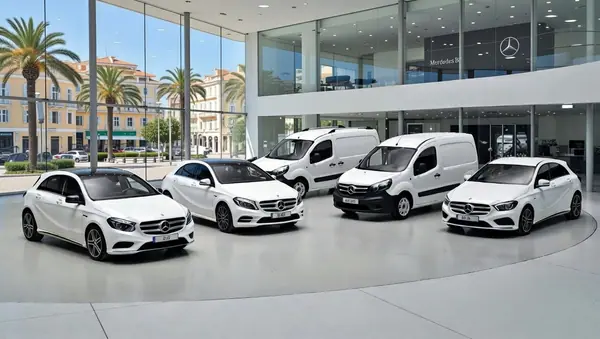
In practice, the vast majority of 9-seater vans available in Portugal — Mercedes Vito Tourer, Volkswagen Transporter / Caravelle, Ford Transit Custom Kombi, Renault Trafic Passenger, Toyota Proace Verso and the equivalent Stellantis models — can be driven with a Category B licence. This makes the 9-seater van an extremely interesting solution for large families, groups of friends, small passenger transport companies or anyone looking for a solid base for a future campervan conversion.
There are, however, two points worth highlighting:
- If the van has more than 9 seats or if the gross weight exceeds 3,500 kg, a Category D1 (or C, depending on the case) is required.
- In purely commercial versions (category N1), the registration document indicates “goods”. Even so, as long as the seating capacity is limited to 9 and the weight is respected, Category B remains valid.
Many drivers worry about being stopped by the GNR or PSP for driving a 9-seater van with a Category B licence. In reality, if the registration document is in order, there is no problem. What can cause complications is driving a van that has been converted without the proper endorsement or that exceeds the weight limits.
How to legalise a van as a campervan in Portugal
Converting a commercial van into a legal campervan is perfectly possible, but it requires organisation, some investment and, above all, patience with the bureaucracy. The IMT treats the conversion as a change in the vehicle’s characteristics, so the process is formal. One of the most detailed and up-to-date guides on this subject can be found in the Siesta Campers article on campervan conversion and legalisation in Portugal.
Here is the realistic path in 2026, based on the processes currently being followed:
- Choose the base van carefully Not every van is a good candidate. The ideal is a model with good remaining payload after installing the living equipment, a solid structure and, preferably, sufficient interior height (H2 or higher). The models most commonly used for conversion remain the Ford Transit Custom, Volkswagen Transporter, Mercedes Vito, Renault Trafic and the Stellantis sisters (Peugeot Expert, Citroën Jumpy, Toyota Proace and Opel Vivaro).
- Hire a qualified engineer A technical project signed by an engineer from the Order of Engineers (or a technician recognised by the IMT) is mandatory. The project includes a descriptive report, scale drawings, mass distribution calculations, furniture fixings, electrical installation, gas installation (if any) and ventilation system. The technical project must be signed by a qualified engineer and submitted to the IMT, following the official requirements for changes to vehicle characteristics. More information on this process is available on the Instituto da Mobilidade e dos Transportes portal.
- Carry out the conversion according to the project You can do part of the work yourself (insulation, interior linings, non-structural furniture), but critical systems — gas, 230V electricity, seats and seat belts, structural cuts to the bodywork — must be carried out or certified by authorised entities. At the end, a responsibility certificate issued by a company in the automotive sector is mandatory.
- Submit the process to the IMT Book an appointment through the SIGA system, submit the project and Form Modelo 9. After submission, in many cases it is possible to drive the vehicle while waiting for the inspection (which can take several months, sometimes up to eight).
- Tax adjustment (ISV) Changing the category from goods to passenger vehicle / special purpose normally requires payment of the difference in Vehicle Tax (ISV). In 2026 the tax benefits for commercial vehicles are in the final phase of elimination, so the amount payable tends to be higher than in 2023 or 2024.
- Inspection and final endorsement After project approval and ISV payment, the IMT carries out the inspection. If everything is in order, the endorsement is made on the Single Vehicle Document and the vehicle is legally registered as a campervan (or special-purpose vehicle for living accommodation).
Some practical warnings from people who have been through this process several times:
- Do not install fixed equipment before the project is approved.
- Keep all component certificates (especially seats, seat belts and gas installation).
- The total cost of legalisation (project + IMT fees + possible ISV difference) varies considerably, but rarely falls below €1,800–3,000, depending on the vehicle and the complexity of the conversion.
- There is the “special dormitory” classification, with lower requirements, but also with less residual value on the resale market.
Which is the most economical van in 2026?
When we talk about “most economical”, we have to look at three factors: real-world consumption, maintenance costs and residual value after a few years.
In the medium van segment (the most popular in Portugal), 2.0-litre diesel engines continue to dominate. In real mixed-use conditions (city + motorway + some load), consumption typically sits between 6.5 and 8.5 litres/100 km.
The options that currently stand out for efficiency:
- Toyota Proace (and the sister models Peugeot Expert, Citroën Jumpy and Opel Vivaro) — generally regarded as among the most moderate in consumption and with a particularly generous warranty, which reduces medium- and long-term costs.
- Ford Transit Custom (new generation) — the 2.0 EcoBlue engine, especially in the 110 and 136 hp versions, achieves very interesting averages on the motorway. The plug-in hybrid and fully electric versions (E-Transit Custom) can be even more economical for those who mainly do urban journeys and charge at home or at work.
- Renault Trafic — continues to be one of the options with the best price/consumption ratio, especially in the used commercial vehicles market.
Fully electric versions are starting to make sense for those who travel less than 200–250 km per day and have easy access to charging. The cost per kilometre drops significantly, but the purchase price is still higher and real-world range with a load remains a decisive factor.
If the budget is tighter, the used commercial vehicles market currently offers excellent opportunities. A commercial van that is 4 to 8 years old with documented maintenance can represent a very significant saving compared with the price of a new unit, without sacrificing too much reliability.
Which is the best commercial van in 2026?
There is no single answer, because “the best” always depends on the specific use. Nevertheless, after analysing sales, reliability, versatility, feedback from professional users and the Portuguese market, one model stands out consistently:
Ford Transit Custom
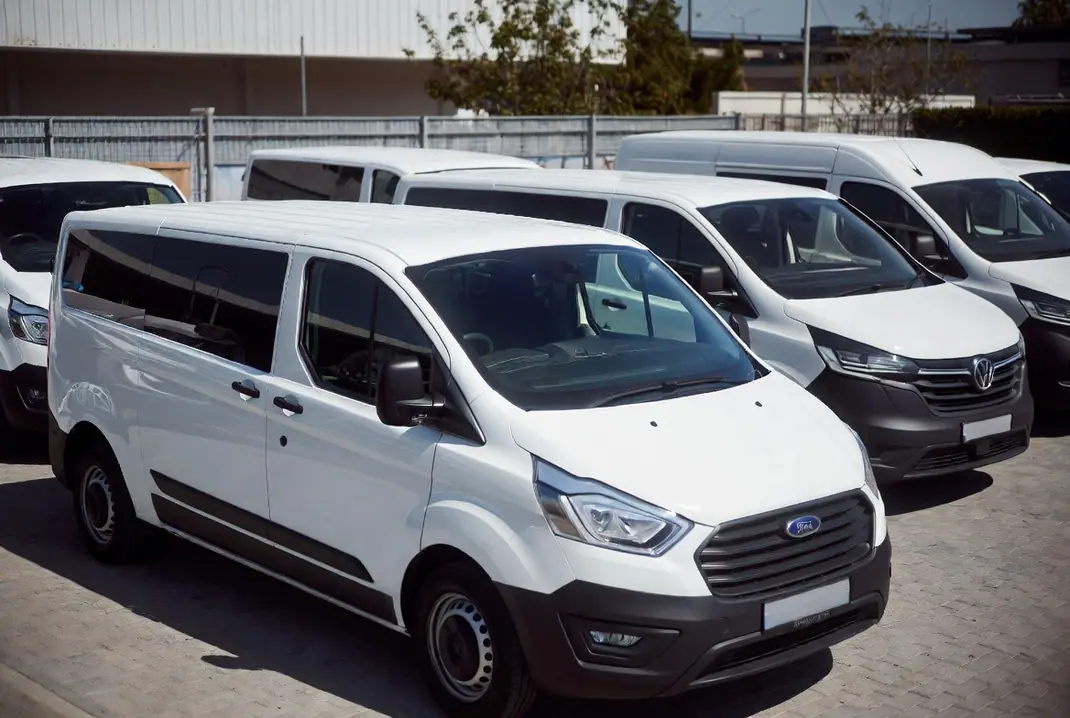
The new generation has consolidated its leading position. It offers a wide variety of configurations (length, roof height, double cab, passenger versions), excellent on-road behaviour, up-to-date technology and connectivity, diesel, plug-in and electric options, and a very extensive service network throughout the country. The Ford Transit Custom has consistently stood out in European medium van rankings in 2025/2026 for its versatility and balance between consumption, load capacity and running costs, as reported by several specialist publications in the sector, including recent comparative analyses from What Car? and Carwow.
Next, according to specific needs:
- Volkswagen Transporter — the choice for those who value comfort, build quality and brand image. It remains one of the favourites for leisure conversions.
- Toyota Proace — the option for those who prioritise long-term reliability and predictable maintenance costs. Toyota’s warranty continues to be a strong argument.
- Mercedes-Benz Vito — the premium option. More expensive to buy and maintain, but with finishes and image that appeal to many service companies and those who value status.
- Renault Trafic — continues to offer one of the best quality/price ratios on the market, especially when looking at the used market.
For those looking for a commercial van for mixed use (work during the week and leisure at the weekend), the Transit Custom and the Transporter are currently the most balanced. If the main objective is load capacity and low running costs, the Stellantis/Proace family and the Trafic deserve serious attention.
Practical tips before buying your van
Before closing any deal, always check:
- The complete maintenance history and the real number of previous owners
- Whether the vehicle has endorsements or unauthorised conversions
- The condition of the timing belt (or chain) and the particulate filter on diesels
- The real payload — the advertised figure often does not match reality after installing living equipment or work shelving
- The condition of the bodywork and underbody, especially on examples that have circulated in areas with high humidity or salt
The Portuguese used cars market is currently well supplied with good commercial vans. With some patience and research, it is possible to find examples in excellent condition at values significantly lower than those of a new unit.
Conclusion
In 2026, owning a van in Portugal continues to make complete sense. With a Category B licence you can drive a 9-seater van without any problem (as long as it respects the 3,500 kg limit). Legalising it as a campervan is bureaucratic and requires investment, but it is perfectly feasible with the correct technical project and some organisation. When it comes to choosing the best and most economical commercial van, the Ford Transit Custom leads the overall ranking for balance, closely followed by very competent options from Toyota/Stellantis, Volkswagen and Renault.
Whether for working every day, travelling with the family or converting into a true “home on wheels”, the right van is waiting for you. The most important thing is to define your priorities clearly — budget, type of use, intention to convert or not — and move forward with up-to-date information. That is exactly what this guide has tried to give you.