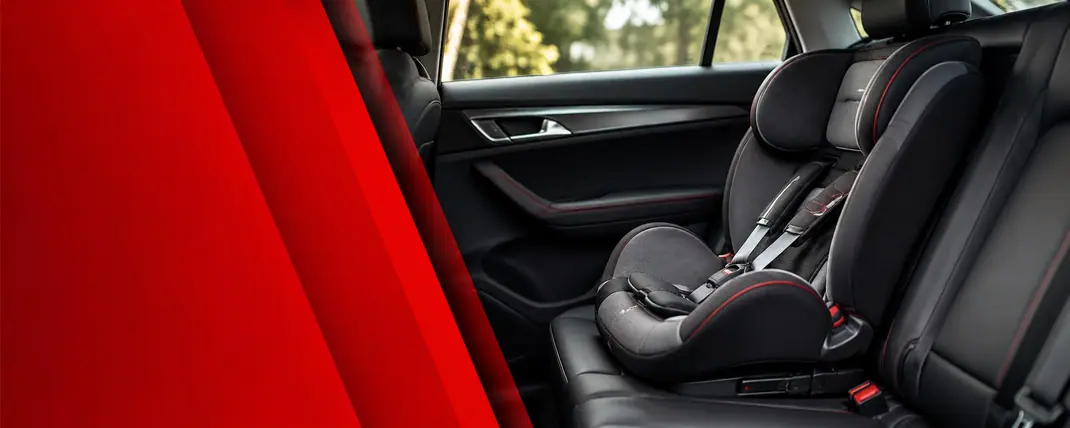
Kinetic energy in a motor vehicle collision does not respect parental good intentions. When a vehicle decelerates from 50 km/h to zero in 150 milliseconds, an unrestrained child weighing 10 kg generates forward forces exceeding 300 kg. The physics are absolute. A child restraint system is the only mechanical barrier between survival and catastrophic blunt-force trauma. Marketing brochures sell peace of mind. Physics demands structural rigidity. A child restraint system is a highly calibrated deceleration chamber.
Operating a family vehicle in Portugal demands strict administrative and physical compliance. You register the vehicle chassis with the IMT and carry valid DUA documentation to satisfy bureaucratic mandates. You satisfy physical safety mandates by locking your child into a crash-tested restraint shell. Portuguese traffic law dictates that all minors under 135 cm in height or under 12 years of age must travel in approved restraint systems. Bypassing this law risks a 600-euro fine and severe kinetic injury.
This guide eliminates marketing noise. We dissect the 2026 market using independent crash-test telemetry. We analyze shell deformation, expanded polystyrene density, and anti-rotation mechanics. You will understand precisely how hardware saves lives.
How to Properly Choose a Child Car Seat
By Age, Weight, and Height: Understanding Seat Groups
Historically, manufacturers sorted seats by gross mass. Group 0+ covers infant carriers up to 13 kg (the classic ovinho). Group 1 handles toddlers up to 18 kg. Group 2/3 encompasses high-back boosters up to 36 kg. This weight-based system causes dangerous user behavior. Parents routinely graduate infants to forward-facing seats prematurely when they hit a weight milestone, ignoring skeletal maturity.
The modern UN R129 (i-Size) protocol eliminates this fundamental engineering flaw. It classifies seats strictly by standing height in centimeters. Height-based parameters ensure the child's cranium remains fully contained within the protective lateral walls. A child's head must never protrude above the upper rim of the structural shell. Using height rather than weight guarantees that the harness shoulder straps align precisely with the child's clavicle. Proper shoulder strap geometry prevents submarining. Submarining occurs when the pelvis slides beneath the lap belt during a frontal impact. Internal organ crushing follows. Height limits dictate mechanical fit.
Safety Standards: i-Size / R129 versus Legacy R44
The older ECE R44/04 standard evaluated frontal crashes at 50 km/h and rear impacts at 30 km/h. It completely ignored lateral intrusion. Manufacturers could legally sell seats that provided zero side-impact protection. Side impacts account for roughly 25 percent of all collisions. They generate the highest fatality rates due to minimal vehicle crumple zones between the bumper and the passenger cabin.
UN R129 changes the engineering baseline. It mandates violent side-impact crash testing. The test uses an intruding door fixture striking the seat at 24 km/h. Engineers use advanced Q-series anthropomorphic test devices (crash dummies). These dummies are equipped with multidirectional accelerometers. These sensors measure precise loads across the head, neck, thorax, and pelvis. UN R129 homologation demands structural survival. The shell must deflect the intruding mass. Neck tension must remain below fatal thresholds. Old standards guessed. Modern sensors prove it.
ISOFIX versus Seatbelt Installation Mechanics
Routing a three-point adult seatbelt through narrow plastic guides introduces massive potential for human error. Twisted webbing or loose retractor tension introduces deadly slack during deceleration. Slack allows the child seat to move independently of the vehicle chassis.
ISOFIX eliminates flexible webbing. Rigid steel claws extend from the child seat base. They clamp directly onto welded 6mm steel anchor bars bolted to the vehicle's unibody chassis, spaced exactly 280 mm apart. An audible click and green mechanical indicators verify a locked connection. To prevent forward rotation during a crash, ISOFIX bases deploy secondary anti-rotation devices. A top tether strap anchors to the trunk floor. Alternatively, a vertical support leg extends downward, bracing against the cabin floor pan. The connection is rigid metal-to-metal. It transfers kinetic energy instantly from the seat to the vehicle chassis, allowing the car's primary crumple zones to absorb the shockwave.
Rear-Facing versus Forward-Facing Physics
Infant cervical spines consist of soft, unossified cartilage. An infant's head accounts for 25 percent of their total body mass. In a forward-facing frontal impact, the five-point harness locks the torso in place. The massive head snaps forward unrestrained. This exerts lethal tensile force on the spinal column. Internal decapitation occurs. The spinal cord separates from the brain stem.
Rear-facing travel flips the physics. The entire back of the restraint shell absorbs and distributes the kinetic shockwave. Deceleration forces spread evenly across the infant's skull, neck, and broad back. Cervical spine loads drop by 73 percent. UN R129 mandates rear-facing travel up to a minimum of 15 months and 76 cm. Prolonged rear-facing up to four years maximizes survival. Scandinavian countries mandate rear-facing up to age four. Their child fatality rates are the lowest on the planet.
Critical Hardware Parameters: Side Protection, Recline, and Fabrics
Premium shells feature deployable linear side-impact protection pods. These mechanical outriggers extend toward the adjacent vehicle door. They make initial contact with an intruding door panel milliseconds before the main shell. They channel kinetic energy directly into the high-density Expanded Polystyrene (EPS) or Expanded Polypropylene (EPP) foam liner. The foam fractures microscopically. It absorbs the kinetic spike.
Newborn inserts require multi-stage recline angles. If an infant sits too upright, their heavy head slumps forward. The chin rests on the chest. This compresses the narrow trachea and causes positional asphyxia. The seating angle must remain perfectly flat. Thermal regulation matters. Breathable OEKO-TEX certified fabrics prevent thermal overload during brutal Portuguese summers. Synthetic mesh channels heat away from the child's back. Seat covers must be easily removable and machine washable at 30 degrees Celsius. Sweat and spilled milk degrade cheap polyurethane foam.
Portuguese and European Legal Framework: The 135 cm and 12-Year Rule
Portuguese legislation strictly enforces child passenger safety under the Código da Estrada. Any child under 135 cm in height and under 12 years of age must use a homologated restraint system adapted to their specific size and weight.
Children must sit in the rear seating rows. Front-seat travel is strictly prohibited with three highly specific exceptions: the vehicle lacks rear seats (e.g., a two-seater sports car), the rear seats are completely occupied by other restrained children under 12, or the child is in a rear-facing seat with the passenger airbag physically disabled via the dashboard key switch. Active airbags deploy at 300 km/h. An active airbag will shatter a rear-facing shell. It drives the fractured plastic directly into the infant's skull. Check the airbag indicator light twice.
Top Rated Car Seat Models for 2026
Best Newborn Car Seats (0 to 13 kg / Ovinho)
The infant carrier dictates the first 15 months of mobility. These seats clip into stroller frames and vehicle bases. Every model evaluated here represents the pinnacle of newborn crash telemetry.
Joie Sprint: Scores a massive 1.8 in ADAC spring 2025 tests. Built-in ISOFIX connectors deploy directly from the infant carrier shell itself. No separate bulky base required. Rated for 40 to 75 cm. The Tri-Protect headrest features memory foam density. Retails at 215 euros.
Pros: Eliminates the need to buy an expensive secondary ISOFIX base. Extremely fast transfer between multiple vehicles.
Cons: Outgrown quickly at 75 cm compared to 83 cm rivals. Slightly heavier carrier weight due to integrated steel ISOFIX prongs.
Best for: Urban parents relying on rideshares, taxis, or multiple family cars where swapping a traditional base is physically impossible.
Maxi-Cosi Pebble S + FamilyFix S: Scores a 1.8 ADAC rating. Extended use up to 83 cm. The shell utilizes G-CELL side-impact hexagonal matrix geometry. The matrix flexes to absorb lateral force. Click-and-go visual indicators on the base ensure locked installation. Retails at 330 euros.
Pros: Fits taller infants up to 83 cm. Exceptional side-impact energy absorption. Seamless stroller ecosystem integration.
Cons: High total cost when combining the carrier and the mandatory base. The base occupies significant rear seat space.
Best for: Families seeking maximum longevity from a Group 0+ seat and everyday compatibility with premium travel systems.
Avionaut Pixel Pro 2.0 C: Weighs an astonishing 2.5 kg. ADAC safety rating of 1.7. The EPP composite shell reduces mass while maintaining high-impact rigidity. Requires the IQ Orbit base for optimal stability.
Pros: The lightest premium seat on the global market. Reduces physical strain on parents carrying the seat. Exceptional frontal crash telemetry.
Cons:The ultra-light EPP foam shell feels superficially less robust than traditional injected plastics. Mandates a specific, costly base.
Best for: Parents recovering from C-sections or dealing with physical lifting restrictions who demand absolute top-tier safety.
Nuna Pipa Lite + Base Next: ADAC score 2.0. Tailor tech memory foam absorbs energy. Weighs 2.8 kg without the hood. Excellent TUV aircraft certification.
Pros: Premium aerospace-grade aluminum carry handle. Merino wool fabric inserts regulate temperature. Certified for commercial airline flights.
Cons: Cannot be installed with a vehicle seatbelt. You must carry the ISOFIX base if changing cars. High retail price.
Best for: Frequent flyers and families wanting luxury textiles combined with rigorous impact testing.
Best 0 to 36 kg All-in-One Convertible Seats
All-in-one seats attempt to cover birth to 12 years. They inherently compromise specific geometries to accommodate vast height ranges. Dedicated stage seats always outperform all-in-one hardware in raw crash metrics. Purchase these models only if severe financial constraints demand a single purchase for a decade of use.
Graco Turn2Me DLX i-Size R129: A budget-friendly rotating seat. Rated for 40 to 105 cm. Scores a 2.4 ADAC rating. A steel-reinforced frame provides massive rigidity. Bulky base footprint. It handles rear-facing up to four years at a very accessible price point of 149 euros.
Pros: 360-degree rotation saves parental back strain. Exceptional price-to-performance ratio. Sturdy steel chassis.
Cons: The base is massive, severely restricting front passenger legroom. Heavy to move between cars.
Best for: Budget-conscious buyers who refuse to sacrifice safety but have large cabin vehicles to accommodate the footprint.
Lionelo Braam i-Size: Covers newborns up to 12 years (40 to 150 cm). ADAC rating of 3.6 due to higher risk loads in frontal crashes. Multistage seats stretch engineering limits. Heavy neck loads occur in booster mode.
Pros: One single purchase covers the child until they no longer need a seat. Includes a stabilizing support leg.
Cons: Poor ADAC 3.6 safety score reflects the inherent danger of jack-of-all-trades engineering. Elevated neck tension during frontal impacts.
Best for: Families operating under extreme financial limitations where buying one seat for the entire 12-year legal requirement is the only viable option.
Chicco Seat3Fit i-Size: Integrated side safety system and 360-degree rotation. Covers up to 125 cm. Heavy chassis weight. Difficult to transfer between vehicles.
Pros: Excellent side-impact pods. Built-in sun canopy. Smooth rotation mechanism.
Cons: Extremely heavy unit. The harness requires tedious manual rethreading as the child grows.
Best for: Grandparents needing a single permanent seat installed in their vehicle to handle grandchildren of varying ages.
Best Value for Money Car Seats
Mid-tier pricing with top-tier ADAC crash scores.
Joie i-Pivot 360: Rotates fully on its integrated ISOFIX base. Scores a 2.4 ADAC rating. Covers 40 to 105 cm. Retails at 270 euros. The SmartRide lock-off switch prevents accidental forward-facing rotation before the child reaches 15 months.
Pros: Foolproof lock-off prevents illegal early forward-facing. Smooth one-hand rotation. High-quality breathable fabrics.
Cons: Non-detachable base makes cleaning difficult. Takes up substantial lateral space on the back seat.
Best for: Everyday commuters wanting premium 360-degree rotation features without paying flagship luxury prices.
Joie i-Trillo FX: High-back booster for 100 to 150 cm. Scores a 2.3 ADAC rating. Retails at 100 euros. Lowest price in class with excellent side stability. ISOFIX latches keep the empty seat from becoming a lethal projectile during heavy braking.
Pros: Unbeatable price point for i-Size homologation. Lightweight frame. Deep side wings for head protection.
Cons: Minimal padding on the seat base. No recline function for sleeping children.
Best for: Older children who have outgrown their 5-point harnesses and need a safe, inexpensive transition to vehicle seatbelts.
Osann Flux Isofix: Covers 76 to 150 cm. ADAC 3.2 rating. Basic side impact padding. Cost-effective secondary seat for grandparents. Lacks advanced EPS foam layering.
Pros: Very affordable. Fits a wide age range. Hybrid installation allows seatbelt routing if ISOFIX is unavailable.
Cons: Subpar ADAC crash telemetry. Cheap polyurethane foam degrades quickly.
Best for: Secondary vehicles or short, infrequent trips where spending three hundred euros is economically unjustifiable.
Best Premium Performance Car Seats
Maximum engineering. Maximum price.
Cybex Anoris T2 i-Size: Forward-facing only. Rated 76 to 125 cm. Integrates a full-body airbag directly into the abdominal impact shield. The airbag deploys in milliseconds, cradling the head and preventing neck snap. Rated 2.8 ADAC due to handling complexity, but crash protection remains phenomenal. Retails at 750 euros.
Pros: Unmatched forward-facing crash physics. Active airbag technology reduces neck strain by 50 percent. Massive legroom for the child.
Cons: Strictly forward-facing only. Absolutely forbidden for newborns. High initial purchase price.
Best for: Tech-obsessed parents of toddlers over 76 cm who physically refuse to ride rear-facing but require maximum head and neck protection.
Thule Elm RWF + Alfi Base: Premium rear-facing toddler seat. Rated 2.2 ADAC. Thule Impact Protection System handles lateral forces efficiently. It features a digital display confirming correct base installation. Retails at 720 euros.
Pros: Foolproof digital installation feedback. Sleek Scandinavian design. Exceptional lateral crash deflection.
Cons: The Alfi base adds significant cost. The seat fabric is difficult to remove for washing.
Best for: Design-conscious parents willing to pay a premium for digital installation safety verification and extended rear-facing capability.
BeSafe Beyond 360: Extended rear-facing up to 125 cm. Exceptional Swedish Plus Test clearance. Incredible neck load reduction metrics.
Pros: Passes the brutal Swedish Plus Test. Allows rear-facing up to six years of age. Unrivaled structural integrity.
Cons: The shell is monstrously large. It forces the front passenger seat completely forward.
Best for: Safety purists demanding the absolute highest survival metrics regardless of cost or cabin space sacrifices.
Parents must verify cabin dimensions. A massive rear-facing BeSafe demands heavy front-seat adjustment. Buyers researching how much does a Peugeot 2008 cost must physically measure the B-SUV rear legroom before purchasing a massive rotating base. B-segment crossovers offer high rooflines but extremely restricted longitudinal seat pitch. The front passenger will eat the dashboard. Measure before you buy.
Best Budget-Friendly Safe Options
Safety without the luxury tax.
Britax Römer Kidfix Pro: High-back booster for 100 to 150 cm. Exceptional ADAC score of 1.8. The V-shaped backrest expands to fit growing shoulders. SICT side-impact technology reduces lateral forces. Universal fit geometry.
Pros:Flawless crash test scores. Expanding V-shape backrest accommodates broad-shouldered children. Advanced SICT pods.
Cons: Expensive for a booster seat. Bulky width makes fitting three across the back seat impossible.
Best for: Parents of older children who want flagship safety technology in a final-stage booster configuration.
Axkid Up: High-back booster with a height-adjustable seat surface. Directs crash forces down into the footwell. Adjusts depth for proper femur support. Prevents knee joint strain on long journeys.
Pros: Adjustable seat depth prevents leg numbness. Swedish engineering focus. Highly durable fabrics.
Cons: Heavier than competing boosters. Lacks aggressive side-impact outriggers.
Best for: Tall children who suffer from leg cramps in standard boosters during long highway journeys.
Never sacrifice structural integrity to save cash. If you're looking at used cars, don't apply the same financial logic to child car seats. Pre-owned child seats hide microscopic EPS foam fractures from previous impacts. Degraded nylon harness webbing snaps under load. Plastic shells undergo thermal degradation after sitting in baking Portuguese parking lots for five years. Buy new.
Comparative Specification Matrix
Infant Category
- Joie Sprint | Height Limit: 40–75 cm | ISOFIX: Integrated | Rotation: No | ADAC Score: 1.8 | Approx. Price: € 215
- Maxi-Cosi Pebble S | Height Limit: 40–83 cm | ISOFIX: Base Required | Rotation: No | ADAC Score: 1.8 | Approx. Price: € 330
- Avionaut Pixel Pro 2.0 C | Height Limit: 40–86 cm | ISOFIX: Base Required | Rotation: No | ADAC Score: 1.7 | Approx. Price: € 280
- Nuna Pipa Lite | Height Limit: 40–83 cm | ISOFIX: Base Required | Rotation: No | ADAC Score: 2.0 | Approx. Price: € 300
Toddler Category
- Joie i-Pivot 360 | Height Limit: 40–105 cm | ISOFIX: Integrated | Rotation: 360° | ADAC Score: 2.4 | Approx. Price: € 270
- Graco Turn2Me DLX | Height Limit: 40–105 cm | ISOFIX: Integrated | Rotation: 360° | ADAC Score: 2.4 | Approx. Price: € 149
- Cybex Anoris T2 | Height Limit: 76–125 cm | ISOFIX: Integrated | Rotation: No | ADAC Score: 2.8 | Approx. Price: € 750
- Thule Elm RWF | Height Limit: 67–105 cm | ISOFIX: Base Required | Rotation: No | ADAC Score: 2.2 | Approx. Price: € 720
High-Back Booster Category
- Britax Römer Kidfix Pro | Height Limit: 100–150 cm | ISOFIX: Integrated | Rotation: No | ADAC Score: 1.8 | Approx. Price: € 200
- Joie i-Trillo FX | Height Limit: 100–150 cm | ISOFIX: Integrated | Rotation: No | ADAC Score: 2.3 | Approx. Price: € 100
- Axkid Up | Height Limit: 100–150 cm | ISOFIX: Integrated | Rotation: No | ADAC Score: 2.0 | Approx. Price: € 180
Common Installation Mistakes to Avoid
Loose harness webbing causes catastrophic deceleration injuries. Parents fail the pinch test daily. Buckle the child into the five-point harness. Place your thumb and index finger on the shoulder webbing at the child's collarbone. Attempt to pinch a vertical fold in the fabric. If you can gather any slack between your fingers, the harness is too loose. The child will ramp up the seat back during a frontal impact and strike the harness with excessive kinetic force. Pull the central tension strap until the webbing lies completely flat against the clavicle.
Twisted shoulder straps reduce the surface area of the webbing. The harness distributes crash forces across the strong bones of the chest and pelvis. A twist narrows the belt path. The nylon edge cuts into soft tissue like a knife under impact loading. Flatten the straps every time you buckle the child.
Incorrect crotch buckle placement crushes the pelvis. The buckle must sit flush against the child's body, never routing under the thighs. Improper support leg contact ruins anti-rotation geometry. The vertical leg must rest firmly on the structural steel floor pan. It must never sit atop hollow floor storage compartments found in many family minivans. Hollow plastic lids shatter under vertical impact loads. The seat dives forward. The child's neck takes the strain.
Premature removal of newborn inserts destroys ergonomic alignment. The insert provides vital lumbar support. Without it, the infant's spine curves into a C-shape, dropping the chin to the chest. Oxygen desaturation begins immediately. Keep the insert installed until the child hits the manufacturer's exact height limit.
Frequently Asked Questions
Do car seats expire? Yes. Polypropylene shells and EPS foams degrade rapidly due to extreme UV exposure and cabin temperature fluctuations. A vehicle parked in the Algarve summer sun reaches 70 degrees Celsius internally. This bakes the plasticizers out of the shell. The plastic turns brittle. Most manufacturers mandate a strict expiration of six to ten years from the date of manufacture. The date clock stamp is embossed directly into the underside of the plastic shell base.
Must I replace a seat after a minor collision? Yes. Kinetic energy stretches the five-point harness webbing permanently. The internal EPS foam absorbs impact by fracturing microscopically. These stress fractures are completely invisible to the naked eye. The structural integrity is permanently compromised. A compromised seat will fail catstrophically in a secondary collision. Cut the harness straps with a knife before throwing the seat in the trash to prevent someone else from salvaging it.
Are all seats airplane approved? No. Only seats bearing a specific TUV Rheinland aircraft certification sticker are legally permitted on commercial flights. These seats lack support legs and route via standard two-point lap belts. The Nuna Pipa series frequently carries this specific certification.
Can my child wear a winter coat in the car seat? Never. Thick down jackets compress instantly under crash forces. A snug harness over a puffy jacket leaves three inches of slack during deceleration. The child ejects from the shell. Remove the coat. Tighten the harness over indoor clothing. Place a heavy blanket over the buckled straps.
What is the Swedish Plus Test? It is the most brutal crash test in the world. Run by the VTI institute in Sweden, it measures neck loads exclusively during high-speed frontal impacts with shorter braking distances. Forward-facing seats cannot pass it. Only pure rear-facing models survive the telemetry requirements.
Conclusion
A child car seat is not a disposable consumer accessory. It is a highly calibrated medical device designed to manage fatal kinetic energy. Its performance dictates whether a child walks away from crumpled metal or suffers permanent neurological trauma. Do not guess. Read the technical manual. Measure your vehicle's cabin space.
Portuguese highway speeds generate massive deceleration forces. Do not rely on luck. Verify the mechanical locking jaws of your ISOFIX base before shifting into drive. Pull the harness tension strap until it bites hard. Grab the child seat at the belt path and push laterally. If the base moves more than two centimeters, rip it out and reinstall the hardware. Listen for the distinct metallic click of the harness tongues locking into the central buckle mechanism.