The Mercedes GLC 300 is one of those SUVs that manages to combine several things that normally appear separate.
It has a premium image, plenty of space, all-wheel drive, and powerful enough engines that it never seems like a car made only for slow city driving. But there's another detail that makes the GLC 300 especially interesting in Portugal.
The used car market already has several different versions, including Mercedes GLC 300 e 4MATIC, GLC 300 de 4MATIC, and Coupé versions. And prices can also vary considerably. That's not the case. And the difference between them isn't just in fuel consumption.
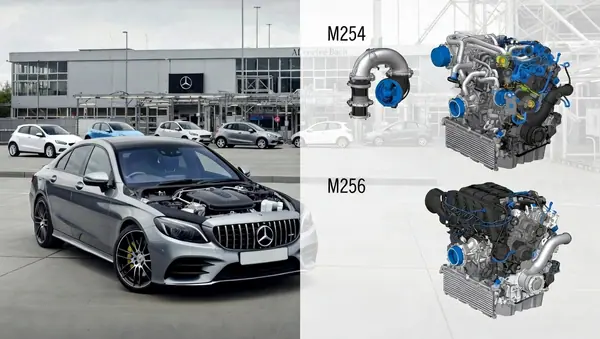
The GLC 300 4MATIC combines a 2.0-liter gasoline engine with a mild hybrid system. The advertised power reaches 258 hp, with 400 Nm of torque, a 9G-TRONIC automatic transmission, and 4MATIC all-wheel drive. It's a fairly traditional configuration for those looking for a powerful premium SUV without directly entering the world of plug-in hybrids.
The acceleration from 0 to 100 km/h is achieved in approximately 6.2 seconds, and the top speed reaches 240 km/h. (Mercedes-Benz Portugal In other words, we're not exactly dealing with an SUV that needs excuses when it gets on a faster road.
GLC 300 e: when gasoline meets electricity
Then we have the Mercedes GLC 300 e 4MATIC.
It's probably one of the most interesting versions for those who can charge their car regularly.
The system combines a 2.0-liter gasoline engine with a 100 kW electric motor. The total announced power is 313 hp and the torque reaches 550 Nm.
The acceleration from 0 to 100 km/h is 6.7 seconds. (Mercedes-Benz Portugal)
But the power figures aren't the most important part.
The real selling point of the GLC 300 e is the possibility of doing a significant portion of daily commutes in electric mode.
Depending on the version and homologation conditions, Mercedes has announced electric ranges in the order of 119 to 131 km WLTP for this generation of the GLC 300 e.
In practice, this can completely change how the car is used.
For those who drive few kilometers during the week and can charge at home, the combustion engine can go several days without being called upon to do most of the work. Then, when a longer trip comes along, there's still the gasoline engine.
It is precisely this flexibility that makes plug-in hybrids so interesting.
And the Mercedes GLC 300 de?
Here the story gets even more curious. The GLC 300 de 4MATIC uses a diesel engine in conjunction with an electric system.
It's a combination that makes a lot of sense for those who like the idea of a plug-in hybrid but still drive many kilometers on the highway.
The GLC 300 version can reach 335 hp of combined power and an impressive 750 Nm of torque. Acceleration from 0 to 100 km/h is around 6.4 seconds.
And there's a reason these numbers are so impressive.
An SUV of this size with 750 Nm doesn't need much effort to gain speed. But the real interest lies in its use.
Those who drive many kilometers can take advantage of the diesel engine on longer trips and use the electric component for shorter journeys. It's a very different solution from the gasoline-powered GLC 300.
GLC 300 diesel or plug-in hybrid?
You need to be able to charge the battery regularly.
Without this possibility, part of the logic of buying a plug-in hybrid starts to lose its appeal.
For those who drive many kilometers, especially on highways, the GLC 300 de might be more interesting.
Diesel continues to have a significant advantage in this type of use.
There's also a third possibility: the gasoline-powered GLC 300 4MATIC.
It's probably the simplest choice for those who don't want to depend on recharging and prefer a more conventional hybrid system.
Ultimately, it's not a question of finding the best engine.
It's about understanding which one best suits the lifestyle of the person who will be driving the car.
The GLC 300 remains a fairly large SUV.
One thing that is sometimes forgotten when talking about the Mercedes GLC is its size.This is not a compact SUV.
The current generation is approximately 4.72 meters long and 1.89 meters wide. The wheelbase reaches 2.888 meters. (Mercedes-Benz Portugal) This translates into a clear advantage in the interior There is enough space to use the GLC as a family car, take long trips, and transport luggage without turning every journey into a kind of Tetris game. The GLC 300 4MATIC's trunk reaches 620 liters and can increase to 1,640 liters with the rear seats folded down. (Mercedes-Benz Portugal But there is also a less positive side.
Almost five meters of bodywork are not always easy to manage on the narrower streets of Lisbon, Porto, or other historic areas of Portuguese cities. It's one of those things you only really notice after living with the car for a while
The GLC is comfortable. But it's still a large SUV.
Mercedes GLC 300 Coupe: is it worth paying more?
There's another decision to make.
Regular SUV or Coupe?The Mercedes GLC 300 Coupe has a steeper roofline and a considerably sportier look.For some buyers, it's precisely this image that makes the car interesting.
For others, the traditional GLC makes more sense. The point is that the Coupe doesn't magically transform the GLC into a completely different car. It remains a premium SUV, continues to have a similar configuration, and continues to have operating costs that should be considered before purchase.Therefore, if space and practicality are the priority, the conventional GLC is probably the more rational choice.
If appearance plays a significant role in the decision, the Coupe may justify the difference.
And in the used car market, several units of these versions are already appearing. How much does a used Mercedes GLC 300 cost in Portugal?
This is where the research starts to get interesting. There is no single price for the Mercedes GLC 300.
The difference seems enormous. But just look at the cars more closely to understand why.
A 2023 GLC 300 with around 21,000 km is advertised for €59,999, while there are older units with considerably more kilometers in the €36,000–€40,000 range. There are also 2020 and 2021 GLC 300 versions with different prices depending on mileage, body style, and equipment. Therefore, searching only for "GLC 300 price" may be of little use.
It's much more important to compare equivalent cars.
- Year. Mileage. Engine.
- Hybrid type.
- Equipment.
- History.
And, of course, whether it's domestically produced or imported.
What to check in a used Mercedes GLC 300? There are no miracles here A Mercedes GLC 300 can be a great second-hand purchase, but it's still a technically complex premium SUV. Before buying, the maintenance history should be at the top of the list. Then comes the mileage.
This doesn't mean that a GLC with 150,000 km is automatically a bad purchase. Similarly, 60,000 km doesn't guarantee the car is perfect. How the kilometers were accumulated is much more important.
A car used mainly on highways may show very different wear and tear than one that has spent years making short urban trips. It's also worth carefully checking tires, brakes, and suspension. In the case of 4MATIC versions, the all-wheel drive deserves attention. In plug-in hybrids, there's another element that can't be ignored: the electrical system and the battery. The actual range, charging history, and operation of the hybrid system should be confirmed before purchase.And there's a rule that still applies to practically any used Mercedes. If the price seems very low compared to other similar cars, you might want to understand why.
Used GLC 300: buying cheap can be expensive
A premium SUV loses value over time. This is good news for those buying used. But it can also be a trap. A GLC 300 that cost significantly more when new might reappear a few years later at a much more affordable price.
The problem is that maintenance costs don't necessarily decrease proportionally.
Large tires, brakes, suspension, electronic components, and hybrid systems can make repairs much more expensive than on a conventional SUV. That's why comparing only the purchase price isn't enough. A GLC 300 for €38,000 might end up being a worse buy than another for €43,000 if the latter has a better history, fewer miles, and more careful maintenance.
In the used car market, a few thousand euros difference can make a lot of sense.
So, which is the best Mercedes GLC 300?
This is where the answer completely depends.From the driver's perspective.
For those looking for a premium gasoline SUV and who don't want to worry about recharging, the GLC 300 4MATIC is probably the simplest solution.
It has 258 hp, all-wheel drive, automatic transmission, and quite strong performance for daily use.
For those who make many short trips and can charge at home, the GLC 300 e is much more interesting.
The possibility of using the car in electric mode significantly changes the experience.
And for those who drive many kilometers and want to combine diesel and electrification, the GLC 300 de is perhaps the most curious configuration of all.
It's also the one that best shows how premium SUVs have changed in recent years.
It's no longer simply a matter of choosing gasoline or diesel.Now there are several possible combinations.Is the Mercedes GLC 300 a good car to buy used?
Yes, but with one condition.
You need to buy the right car.The GLC 300 has practically everything you'd expect from a modern premium SUV: comfort, space, technology, performance, and an image that continues to hold considerable weight. But there are huge differences between a well-maintained GLC 300 and one bought simply because it looked cheap. The variety available on the Portuguese market is, in this case, an advantage. It allows you to compare several versions and understand how much each one is really worth. In the end, new or used GLC 300?
For those with the budget to buy new and who want the latest technology, the choice is relatively simple. But the used market can be much more interesting for those seeking value.
A GLC 300 with a few years of age continues to offer an experience quite close to that expected from a premium SUV, but at a significantly lower price than a new car. And that's precisely where this Mercedes starts to make sense.
The GLC 300 is not cheap. That was never its intention.
It's an SUV designed for those who want comfort, performance, and build quality without venturing into the even larger and more expensive territory of models like the GLS.
The real question is different.
Which GLC 300 makes the most sense for you? Gasoline, plug-in hybrid, or diesel? SUV or Coupé? New or used?
With so many different cars appearing on the Portuguese market, it's worth comparing before deciding.
Because, in the case of the Mercedes GLC 300, choosing the right version can be as important as choosing the car itself. And that's precisely what makes this SUV so interesting in the used car market.A GLC with 120,000 km and a complete service history may be a much safer purchase than another example with 80,000 km and very little information about how it was maintained. Look at how the kilometres were accumulated as well. A car that spent most of its life travelling on motorways may have experienced less mechanical stress than one used for thousands of short urban journeys.
The interior can provide a few useful clues. Check the driver's seat, steering wheel, pedals and buttons for excessive wear. Again, none of this proves that the mileage is wrong, but it can help you build a more complete picture of the car.
The same approach makes sense when comparing other Mercedes models. Our guide to the used Mercedes C220 covers mileage, engines, maintenance and the main things to check before buying, and many of the same principles apply to the GLC.
Petrol, diesel or plug-in hybrid?
The engine choice becomes much more important when the GLC is going to be your daily car.
A petrol GLC 300 is the simpler answer for someone who does a mixture of urban driving, weekend trips and longer journeys. It does not depend on charging infrastructure and can be used without changing your routine.
The plug-in hybrid versions are more interesting if your normal journeys are relatively predictable. If you leave home with a full battery and most of your daily driving fits within the electric range, you can spend a large part of the week driving without regularly using the combustion engine.
But there is another side to that equation. A plug-in hybrid makes much more sense when you can charge it conveniently. If there is no easy place to charge at home or work, some of the technology that makes the car attractive becomes less useful.
Diesel versions remain worth considering for drivers who regularly cover long distances. This is especially true for motorway-heavy driving, where the combination of strong torque and good cruising efficiency can make the GLC a very relaxed long-distance car.
The Portuguese used-car market currently shows just how different these versions can be. Available GLC 300 examples include petrol plug-in hybrids as well as 300 d and 300 de models, with prices varying significantly according to year, mileage and specification.
Don't overlook the previous owner
There is another factor that rarely appears in a specification sheet: how the previous owner treated the car.
The same goes for the brakes. The GLC is a heavy vehicle, so replacing pads and discs is not something you want to discover immediately after buying the car.
Is the GLC 300 still worth buying used?
For the right buyer, absolutely.
The GLC works because it manages to combine several things that are difficult to get together in one vehicle. It is comfortable enough for long trips, practical enough for family use and, in the stronger versions, quick enough to remain entertaining when the road opens up.
It also has the advantage of offering different powertrain solutions rather than forcing every buyer into the same engine.
The key is choosing the car rather than simply choosing the badge.
Take your time with the history, compare several examples and look beyond the headline price. If the mileage makes sense, the maintenance records are convincing and the specification suits your needs, a used GLC 300 can still be a very attractive premium SUV.