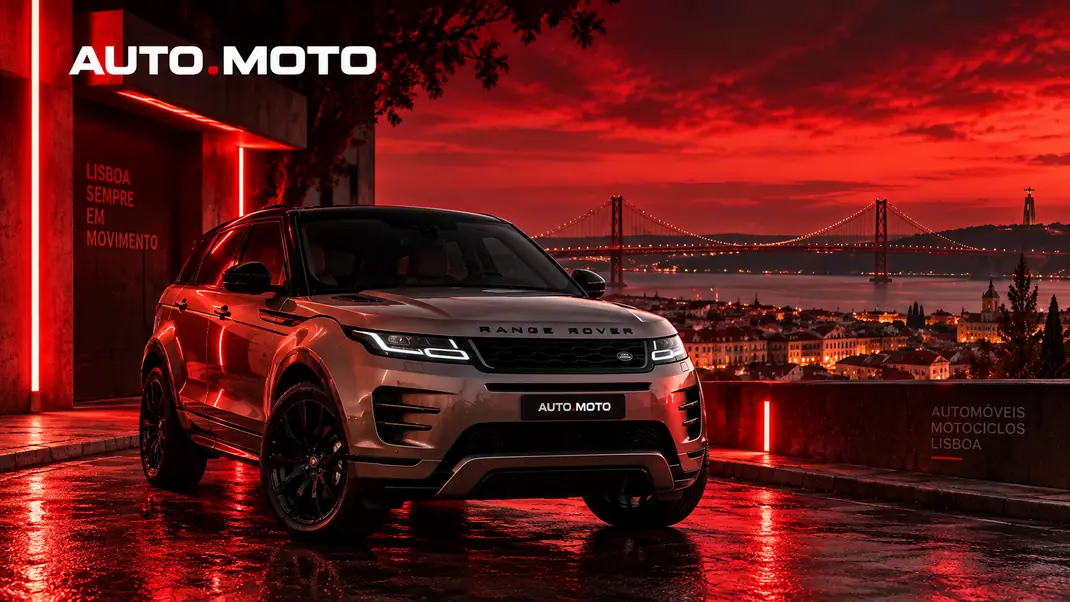
The Range Rover Evoque remains one of the most recognisable premium compact SUVs on the used-car market.
The recipe was relatively straightforward. Take a compact body, give it a high driving position, add a premium interior and then apply the visual language of the larger Range Rover models.
Its design is probably its strongest advantage. Even an example that is more than ten years old can still look surprisingly modern, while the elevated driving position, premium interior and familiar Range Rover styling give the car a much more expensive appearance than its current market price might suggest. There is, however, another side to the Evoque that every potential buyer should understand.
Range Rover Evoque: A Premium SUV That Has Aged Well
The first-generation Range Rover Evoque arrived in 2011 and quickly became one of the most important models in the Land Rover range.
It worked. The formula was simple: use a relatively compact body, add an elevated driving position, a premium interior, and the signature design of the Range Rover family. The Evoque attracted buyers who wanted the image of a luxury SUV without moving into a much larger vehicle. The relatively compact dimensions also made it easier to use in urban areas, where a full-size Range Rover can quickly become inconvenient.
The second generation was introduced in 2018 and went on sale from 2019. It kept the same basic philosophy but brought a more modern platform, additional driver-assistance systems and considerably more technology. The important thing is that the design philosophy barely changed.
This is why an older Evoque can still look contemporary when parked next to much newer cars. Safety has also remained one of the model's stronger points. The Euro NCAP-tested Evoque received a five-star rating in 2019, including a 94% score for adult occupant protection. Euro NCAP – Range Rover Evoque
But there is an important distinction.
Safety and reliability are not the same thing.
Diesel Engines: 2.2 or 2.0?
This is probably one of the most important questions when looking at an older Evoque.
The 2.2 diesel can still be an interesting option when its maintenance history is convincing. But buyers should inspect the EGR system, diesel particulate filter, clutch, dual-mass flywheel and the general condition of the turbo and exhaust system.
The DPF deserves particular attention.
A diesel Evoque that spends most of its life making short urban journeys may not reach the operating conditions required to complete regeneration properly. Over time, this can result in warning messages, repeated regeneration attempts and potentially expensive repairs to the emissions system.
There are numerous owner reports covering this type of problem on the Evoque.
The 2.0 Ingenium introduced newer technology, but newer does not automatically mean simpler.
Do not simply ask: How many miles are on the odometer? Ask: How were those miles accumulated? A diesel Evoque with 150,000 km mostly covered on motorways can be a more attractive mechanical proposition than another car with only 90,000 km that has spent its entire life travelling two or three kilometres at a time through town. Mileage is information.
Usage pattern is context. You need both.
What About the Automatic Gearbox?
The automatic transmission deserves its own inspection.
Many Evoques were equipped with a nine-speed automatic gearbox. In normal operation, it suits the vehicle well. The ratios allow relaxed cruising, and the gearbox helps preserve the refined character expected from a premium SUV.
But a test drive should never consist of simply checking whether the car moves. Start with the transmission cold. Select reverse.
Wait for the engagement. Then select drive. Pay attention to any delay before the vehicle starts moving. Listen for knocks. Feel whether the transmission engages smoothly or produces a noticeable impact. Once moving, accelerate gently. The gearbox should not repeatedly hesitate between ratios or allow engine revs to rise disproportionately without a corresponding increase in road speed. Some transmission faults can be electronic and relatively straightforward to resolve. Others can involve actuators or internal components and become significantly more expensive.
This is why a transmission warning on the dashboard should never be treated as something that can simply be cleared later. If the message appears during a test drive, the correct next step is a proper diagnostic inspection, not a discount negotiation.
Electronics: When a Small Fault Becomes an Expensive One
The Evoque's interior creates a strong premium impression.
But premium equipment also means more electronics. Navigation, climate control, cameras, parking sensors, electric seats, steering-wheel controls and multiple control modules all add functionality.
They also add potential failure points.
A failed sensor may be cheap. A control module can be a very different story. This is why the inspection should include every piece of equipment in the car. Turn the air conditioning on. Test all the windows.
Check the reversing camera. Activate the parking sensors. Try the infotainment system. Operate the steering-wheel controls. Check the electric seats if fitted. Look for warning messages on the dashboard. Do not assume that everything is fine simply because the engine starts and the vehicle moves normally. The objective of the inspection is to discover problems before signing the purchase agreement.
For buyers without much experience in assessing used cars, our guide on how to tell if a car has engine problems can also be useful during the inspection and road test.
Suspension, Steering and Four-Wheel Drive
The Evoque looks like an SUV, but many examples have spent most of their lives on urban roads.
That does not mean the underside can be ignored.
Suspension play, knocking over potholes, unusual vibrations and uneven tyre wear can all indicate problems that are difficult to see from the outside. The steering also deserves attention. Some first-generation vehicles have been associated with electric power-steering and steering-rack problems. Owner reports also include issues involving transmission, DPF, EGR and clutch components. That is why the diagnostic scan is not an optional extra on an older Evoque.
It is part of the inspection.
What Changes If the Evoque Is Used Mainly in the City?
This is one of the questions that receives surprisingly little attention when people compare used SUVs.
The Evoque's compact dimensions make it look like an excellent urban vehicle.
And physically, it is. The problem is that not every engine is equally well suited to urban driving. Diesel engines are the obvious example.
If the car spends most of its time travelling two or three kilometres at a time, the engine may rarely operate for long enough at the required temperature. The exhaust system also needs suitable conditions for particulate-filter regeneration. A vehicle can therefore be driven every day while still having a usage pattern that is mechanically unfriendly. The consequences may not appear immediately. One warning message appears. Then another. Fuel consumption can increase. Eventually, the owner may be looking at an emissions-system repair that could have been avoided with a more appropriate usage pattern. For someone who intends to use an Evoque mainly around town, a petrol engine or one of the newer electrified versions may therefore make more sense, depending on budget and annual mileage.
The cheapest engine on paper is not necessarily the cheapest engine to own.
What About Fuel Consumption?
Fuel economy is another area where expectations should remain realistic. That is the number that matters. Is Four-Wheel Drive Worth Having?
It depends entirely on the owner. Four-wheel drive makes sense for someone regularly driving on mountain roads, low-grip surfaces or in conditions where additional traction is genuinely useful. For someone spending almost all of their time in a city or on motorways, the practical benefit can be considerably smaller. There is also a simple mechanical consequence. More drivetrain components mean more components that require inspection and maintenance. A four-wheel-drive Evoque has additional transmission hardware compared with a two-wheel-drive version. Differentials, shafts and other components work throughout the vehicle's life and should therefore form part of the pre-purchase inspection.
This does not mean that four-wheel drive is a weakness. It means it should be bought for a reason. If the additional capability will never be used, there is little point in paying for the extra mechanical complexity.
Equipment Can Hide the True Age of the Car
This is one of the most impressive aspects of the Evoque. That is exactly when the buyer needs to slow down. The more equipment the vehicle has, the more individual systems need to be checked. A panoramic roof is a great feature when it works properly. If it leaks, however, the same roof can become a source of water damage, electrical faults and an unpleasant repair bill. The same applies to electric seats, powered tailgates, cameras and parking sensors. Open the boot. Operate the tailgate several times.
Check whether the roof opens and closes correctly.
Test the seats.
Look carefully for signs of moisture around the interior. Spend a few extra minutes on equipment that you might normally ignore. That is often where poor previous maintenance begins to reveal itself.
Should You Buy From a Private Seller or a Dealer?
With a used Evoque, this decision can matter more than it initially appears.
Buying privately can produce a lower asking price, particularly when the owner has maintained the vehicle properly and can provide a complete history. A professional seller, meanwhile, may provide additional legal protection and guarantees depending on the conditions of the sale and the applicable legislation.
But one rule does not change. Do not let the seller choose the mechanic who inspects the car. If possible, take the Evoque to an independent workshop before completing the purchase. A professional inspection can identify oil or coolant leaks, suspension play, stored diagnostic errors, signs of previous accident repairs and other issues that are difficult to identify during a normal test drive. Spending money on an inspection can feel unnecessary when the vehicle looks perfect. In reality, that is exactly when the inspection becomes most valuable. The better the car looks for the price, the more important it is to understand why it is being sold for that price.
How Much Money Should You Keep for Maintenance?
There is no universal figure.
The appropriate reserve depends on the engine, mileage, age, equipment and condition of the vehicle.
But one principle is useful for every buyer:
Do not spend your entire budget on the car itself.
If your total budget is €20,000, that does not automatically mean that you should search for a €20,000 Evoque. A car costing €17,000 or €18,000, combined with a financial reserve for maintenance, can be a much smarter purchase.
The first months of ownership may bring tyres, brakes, fluids, a full service or smaller repairs that the previous owner simply decided not to carry out.
On a premium SUV that is already several years old, this financial margin is part of the real purchase price. It can also be the difference between enjoying the vehicle and spending the first few months worrying about the next warning light.
Which Range Rover Evoque Years Are the Most Interesting?
There is no single model year that automatically turns the Evoque into a safe purchase.
The first generation received several updates throughout its production cycle, and later examples benefited from revised engines and equipment. From 2015 onwards, the 2.0-litre diesel became an important part of the range.
What Car? considers the post-2015 2.0-litre diesel, particularly the TD4 versions, among the more interesting choices within the first generation. What Car? – Range Rover Evoque used review
But there is a more important rule than the year printed on the registration document.
A well-maintained Evoque is generally a better purchase than a newer one with an unknown history.Paying slightly more for a car with complete documentation, proven servicing and an independent inspection is often a better decision than buying the cheapest example available. The registration year tells you when the vehicle was built.
The service history tells you what happened to it afterwards.
How Much Does a Used Range Rover Evoque Cost in Portugal?
Prices vary considerably depending on the year, engine, gearbox, mileage and specification.
Current listings on AUTO.MOTO.pt range from approximately €14,000 to more than €48,000, covering older high-mileage examples as well as newer and electrified versions. Range Rover Evoque used cars on AUTO.MOTO.pt. That price difference makes comparison essential. A 2017 Evoque can cost considerably less than a recent example, but the difference should not be evaluated simply by looking at the registration year.
Compare the mileage.
Compare the engine.
Compare the transmission.
Compare the equipment.
And above all, compare the maintenance history. A premium car can be cheap to buy and expensive to own. The first major repair can erase a large part of the saving made at the time of purchase.
What Should You Check Before Buying an Evoque?
A pre-purchase inspection should be considerably more thorough than a quick drive around the block. Start with the service history.
Ask for invoices.
Check whether maintenance intervals were respected. Look for evidence of previous gearbox work, oil changes and repairs. On a diesel model, pay particular attention to DPF, EGR and signs of oil dilution. On manual versions, test the clutch and dual-mass flywheel. On automatic cars, observe the gearbox carefully from the first moment the engine is started.
The inspection should also cover:
- oil or coolant leaks;
- suspension noises;
- uneven tyre wear;
- steering operation;
- infotainment system;
- parking sensors and cameras;
- air conditioning;
- electrical equipment;
- four-wheel-drive operation, where fitted;
- warning messages on the instrument panel.
And there is another check that buyers often forget:
recall campaigns.
The official UK recall database lists campaigns affecting different Range Rover Evoque model years. The correct approach is to check the vehicle identification number with the manufacturer or an official recall service and confirm whether any outstanding campaigns have already been completed. GOV.UK – Range Rover Evoque recalls
Is the Range Rover Evoque Worth Buying?
Yes.
But it should not be an impulsive purchase.
The Evoque still has strong arguments in its favour.
The design remains attractive. The driving position is excellent. The interior provides the premium atmosphere buyers expect from a Range Rover, while the relatively compact dimensions make the car easier to use in an urban environment than a much larger luxury SUV. The problem is what happens when all that technology gets old. A premium interior does not become a basic interior simply because the vehicle is ten years old.
A complex automatic gearbox does not become a simple gearbox. A four-wheel-drive system does not stop needing maintenance. And an electronic control module does not become cheaper simply because the vehicle has depreciated.
For anyone looking for a used SUV, the Evoque can therefore be a very good choice — provided the individual example is selected according to its condition rather than its appearance.
There are currently several versions to compare on the Portuguese market, and the best strategy is to look at multiple cars before making a decision. It is also worth comparing the model with other used cars available in Portugal, particularly if the main priority is keeping long-term running costs under control. The most sensible approach is to compare several examples, inspect the service history, check the VIN, scan the electronics and arrange an independent mechanical inspection.
The Evoque is not necessarily a bad used car.
It is simply a car that rewards careful buying. And that distinction matters. A well-maintained Evoque can still offer the combination of design, comfort, equipment and premium image that made the model successful in the first place. A neglected example can turn exactly the same features into a long list of repair invoices. In the end, the rule is simple: Do not buy the cheapest Range Rover Evoque you can find. Buy the example whose maintenance you can prove.
That difference can separate an attractive premium SUV from a permanent source of unexpected expenses. A premium SUV fitted with four very different budget tyres is not necessarily a problem, but it may tell you something about how the previous owner approached maintenance.A good Evoque should not only look expensive. It should also show signs that someone has been willing to maintain it properly.