Introduction: The Market Reality of the Supermini
Depreciation curves violently reshape the secondary automotive market, leaving millions of aging superminis dumped onto dealership lots for absolute fractions of their original MSRP. Buyers navigating the modern used vehicle landscape face an overwhelming barrage of choices within the B-segment. Budget-conscious drivers inherently seek out compact hatchbacks under the strict assumption that smaller dimensions automatically translate to rock-bottom maintenance bills. Reality dictates a far harsher truth inside the service bay. Modern superminis pack incredibly dense layers of electronic architecture and complex emissions hardware into microscopic engine bays, turning simple preventative maintenance into labor-intensive nightmares.
Scanning the classifieds reveals a saturated landscape completely dominated by one specific European hatchback. Buyers seeking budget transportation immediately gravitate toward the Opel Corsa, assuming a familiar badge equates to infinite reliability and cheap parts availability. Dealerships actively exploit this brand familiarity, pushing decade-old stock onto naive drivers without disclosing the severe mechanical backlog hiding beneath the bonnet. Polish and wax cannot fix stretched timing chains, clogged diesel particulate filters, or disintegrating dual-mass flywheels.
Fleet operators abused these vehicles endlessly during their primary leasing lifecycles, treating them as disposable urban appliances. Delivery drivers, rental agencies, and corporate reps ground the synchronizers into metal shavings and ignored dashboard warning lights until catastrophic failure forced a tow truck intervention. Second-hand buyers usually inherit the consequences of delayed oil changes and deferred mechanical maintenance. Finding genuine, well-maintained used carsin this specific segment requires absolute diagnostic paranoia—relying solely on visual inspections and a stamped service book guarantees financial ruin. Plugging an OBD2 scanner into the CAN-BUS port remains the only legitimate way to verify a vehicle's true mechanical past.
Powertrain Architecture: The GM and Fiat Partnership
Corporate alliances dictated the exact mechanical DNA of this entire generation, permanently blurring the lines of automotive nationality. General Motors partnered aggressively with Italian automotive giant Fiat to engineer the SCCS [Small Common Components and Systems] platform during the early 2000s. Engineers from both conglomerates pooled their research and development budgets to design a universal chassis capable of underpinning multiple global models. Purchasing a used Opel Corsa D means you are essentially acquiring a Fiat Grande Punto wearing distinct, angular German sheet metal.
Beneath the exterior styling sits a chassis heavily reliant on shared, cross-border engineering solutions. Suspension geometry utilizes a highly conventional MacPherson strut configuration on the front axle, paired with a basic, cheap-to-manufacture torsion beam in the rear. Rear shock absorber mounts on this specific SCCS platform notoriously rot out prematurely due to poor factory weather-sealing [causing severe, metallic clunking noises over urban speed bumps that buyers frequently misdiagnose as failing rear axle bushes].
Mechanically dissecting the engine bay requires understanding exactly which conglomerate built what hardware. Drivers confused about the intricate relationship between the transmission, the internal combustion block, and the drive axles should consult our technical breakdown explaining - Grupo propulsor o que é? before attempting DIY diagnostics. Staring into the engine bay of this specific hatchback reveals a highly fragmented parts bin depending entirely on the fuel type chosen. General Motors supplied the petrol technology, while Fiat exclusively handled the heavy-oil diesel variants.
Petrol variants [specifically the Z12XEP 1.2-liter and Z14XEP 1.4-liter Twinport engines] were purely GM-derived Ecotec designs, utilizing dual overhead camshafts and highly sensitive variable intake manifolds. General Motors utilized Delphi engine management systems to govern these petrol blocks, requiring specific diagnostic software to properly read real-time misfire counters. Twinport technology relied on tiny plastic swirl flaps inside the intake manifold to increase low-RPM torque—flaps that inevitably become glued shut by carbon deposits past the 80,000-kilometer mark.
Diesel variants—particularly the ubiquitous 1.3 CDTI [engine codes Z13DTJ and Z13DTH]—were strictly Fiat Multijet units wearing General Motors plastic acoustic engine covers. Fiat engineers completely dominated the small-displacement diesel market with this specific block, utilizing high-pressure Bosch EDC16 common-rail fuel injection. Base models producing 75 horsepower utilized a simple, fixed-geometry turbocharger from BorgWarner. Upgraded 90-horsepower variants bolted a highly fragile Variable Geometry Turbocharger (VGT) to the exhaust manifold, which constantly suffers from jammed internal vanes caused by excessive urban soot buildup.
Gearboxes mated to these powerplants heavily dictate the long-term survivability of the entire vehicle. Standard 1.2 and 1.4 petrol models received the F17 five-speed manual transmission—a relatively robust unit, provided the gear oil gets flushed every 60,000 kilometers. Diesel and high-output petrol models suffered a far worse fate. The infamous M32 six-speed manual transmission—found bolted to the 1.6 Turbo OPC/VXR and the 1.3 CDTI (90hp variants)—suffers from catastrophic end-case bearing failure. Poor factory shimming and insufficient oil capacity cause the 6th gear bearing to overheat rapidly [requiring a mandatory 1,200 Euro gearbox rebuild when the gearstick physically starts vibrating violently during highway acceleration].
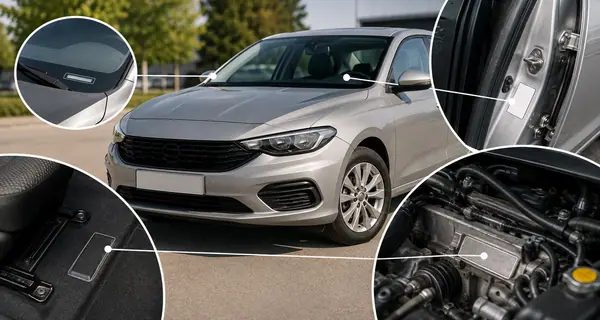
Evaluating the Opel Corsa D demands strict adherence to identifying the exact alphanumeric engine code stamped onto the block before transferring any funds. Buying blindly based on exterior trim levels or interior options invites mechanical disaster. Buyers must cross-reference the VIN (Vehicle Identification Number) with factory build sheets to confirm exactly which transmission, engine block, and emissions control systems rolled off the assembly line in Zaragoza, Spain, or Eisenach, Germany.
The General Rule: Timing Belt Intervals Across the Board
Rubber synchronous belts degrade geometrically based on thermal cycles, oil vapor exposure, and sheer mechanical tension. Automotive timing belts consist of high-tensile fiberglass cords encased in heavily molded nitrile rubber, engineered specifically with trapezoidal or curvilinear teeth to perfectly match the camshaft and crankshaft sprockets. Heat generated by the internal combustion process slowly bakes the elastomers within the belt, transforming flexible rubber into brittle plastic over thousands of hours of operation.
Manufacturers historically printed highly optimistic replacement schedules in their factory owner's manuals to appease fleet buyers. Corporate leasing managers loved seeing 150,000-kilometer or 10-year service intervals printed in the brochures because it kept the theoretical running costs artificially low on paper. Factory engineers knew these belts would barely survive the warranty period, shifting the massive liability of sudden engine failure directly onto the second or third owner in the secondary market.
Engineers designing interference engines—where piston crowns physically share the exact same combustion chamber space as fully opened intake and exhaust valves—know that a snapped belt guarantees absolute catastrophic valvetrain collision. Piston heads traveling upward at 3,000 RPM instantly smash into immobile steel valves the millisecond a degraded rubber timing belt snaps. Cylinder heads crack, valves bend at 45-degree angles, and camshafts snap completely in half, effectively totaling the engine block and requiring a full, multi-thousand-Euro replacement.
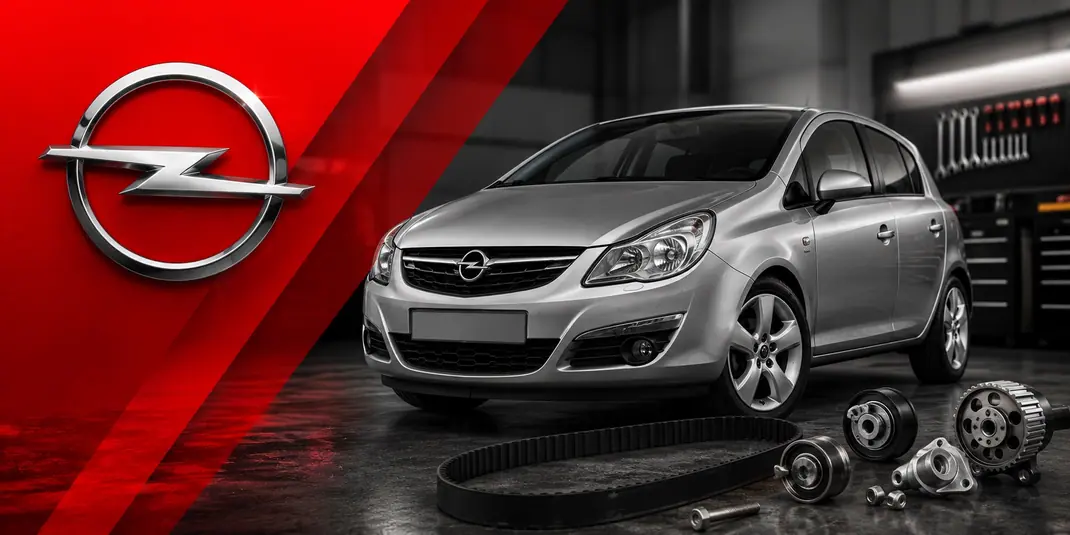
Answering the specific query regarding when to change timing belt Opel Corsa requires entirely ignoring the factory owner's manual and adopting a severe-duty maintenance schedule. Dealerships operating in real-world conditions quickly realized that the original GM and Isuzu factory intervals were completely unrealistic for vehicles enduring heavy stop-and-go urban traffic. Idling at traffic lights accumulates zero kilometers on the odometer but continuously wears out the timing belt via heat saturation.
Independent mechanics unilaterally agree that reducing factory intervals by a minimum of 30% prevents sudden, catastrophic engine death. Relying on visual inspections of the belt remains a fool's errand; microscopic micro-fractures deep within the fiberglass cord structure remain entirely invisible to the naked eye until the exact moment of failure. The hydraulic or mechanical tensioner pulleys applying pressure to the belt also suffer from internal spring fatigue and bearing wear, meaning the belt might be perfectly intact but will slip right off a seized tensioner pulley.
Deciding to buy Opel Corsa models without concrete, paper-trail proof of a recent, professional timing belt replacement means you must budget for a full timing service immediately upon transfer of ownership. Sellers frequently lie about maintenance history, claiming "the belt was done recently by a friend" without offering a physical parts invoice. Smart buyers automatically subtract the cost of a full timing belt job from the seller's asking price unless presented with an official, stamped garage receipt containing a verifiable date and mileage record.
The Corsa D Specifics: Belts vs. Chains
Misinformation plagues automotive forums regarding the specific valvetrain architecture of this exact chassis generation. Buyers constantly search frantically for belt replacement intervals for engines that physically do not possess a rubber timing belt. Differentiating between chain-driven and belt-driven blocks remains the absolute most critical diagnostic step any potential buyer must take before evaluating a prospective vehicle.
General Motors outfitted the vast majority of standard, mass-market petrol engines in this generation with metal timing chains. Identifying these engines requires looking for the specific Ecotec Twinport designations: the 1.0-liter three-cylinder [Z10XEP], the 1.2-liter four-cylinder [Z12XEP], and the 1.4-liter four-cylinder [Z14XEP]. Engineers chose metal chains for these high-volume units to reduce scheduled maintenance for budget-conscious buyers, sealing the chain entirely inside the engine block behind a massive aluminum timing cover bathed in pressurized engine oil.
Chains provide zero guarantees of infinite longevity, despite what dealership salesmen claim. The single-row, simplex roller chains used in the Ecotec petrol lineup stretch aggressively past the 100,000-kilometer mark. Ignoring strict oil change intervals causes the hydraulic chain tensioner to clog with carbon sludge, failing to apply proper tension to the chain guides. A loose chain physically slaps against the aluminum engine casing during cold starts—producing a terrifying "rattle" for the first three seconds after turning the ignition key [a symptom that mandates an immediate 800 Euro chain replacement before the chain jumps a tooth and destroys the engine].
Fiat's legendary 1.3 Multijet diesel [branded universally across the GM lineup as the 1.3 CDTI] also utilizes a metal timing chain rather than a rubber belt. Oil starvation—caused directly by owners ignoring the strict 5W-30 Dexos2 synthetic oil requirement and using cheap, thick semi-synthetic blends—destroys the hydraulic chain tensioner on the diesel block even faster than on the petrol models. Replacing a stretched chain on the 1.3 CDTI requires removing the engine mount, dropping the oil pan, and utilizing specific camshaft locking tools [EN-46781] to keep the engine timed perfectly.
Belts belong exclusively to a few very specific, high-torque powerplants in this generation. The heavy-hitting, highway-cruising 1.7 CDTI [engine code Z17DTR, engineered originally by Japanese manufacturer Isuzu] utilizes a highly stressed, external rubber timing belt. Isuzu designed this robust, cast-iron block specifically for heavy pulling, but relied on a traditional toothed belt to keep NVH (Noise, Vibration, and Harshness) levels manageable inside the cabin.
Addressing the exact mandate of timing belt Opel Corsa D when to change: if you own the Isuzu-derived 1.7 CDTI block, the rubber belt, hydraulic tensioner pulley, and smooth idler pulleys must hit the scrap bin every 100,000 kilometers or every 6 years [whichever occurs first, with absolutely no exceptions for low-mileage vehicles]. Rubber dry-rots based on time just as much as it wears down from mileage. A six-year-old belt with only 40,000 kilometers on the clock is just as dangerous as a two-year-old belt with 100,000 kilometers.
Shopping for used Opel Corsa cars equipped with the high-performance 1.6 Turbo VXR/OPC engine [engine code Z16LER] also dictates strict adherence to rubber belt intervals. These high-heat, high-stress turbocharged petrol engines require mandatory belt replacement every 80,000 kilometers or 5 years. The massive thermal load generated by the turbocharger physically bakes the timing belt cover, accelerating rubber degradation exponentially compared to a standard naturally aspirated engine.
Maintenance Economics: True Cost of Replacement
Garages operate strictly on fixed labor time manuals provided by industry software giants. Mitchell, Autodata, and ElsaWin dictate exactly how many fractional hours a professional mechanic can legally bill to strip the front end of the engine, lock the camshafts, and replace the synchronous belt. Labor rates heavily dictate the final invoice; an independent garage in a rural area charging 45 Euros per hour will present a vastly different final bill compared to a city-center dealership charging 120 Euros per hour for the exact same physical procedure.
Parts pricing varies wildly depending directly on the manufacturer listed on the cardboard box. Genuine, dealer-stamped GM parts command a massive, unjustified premium. Smart mechanics utilize Tier-1 OEM suppliers [brands like Gates, INA, SKF, and Continental] who actually manufacture the belts and pulleys for General Motors on the assembly line, providing the exact same high-quality components to the aftermarket for less than half the dealership retail cost.
Calculating exactly how much does it cost to change timing belt Opel Corsa requires merging these regional hourly labor rates with comprehensive aftermarket kit prices. A full, premium-grade timing belt kit from INA or Gates [containing the belt, tensioner, and guide pulleys] costs roughly 110 to 140 Euros on the parts counter. Labor for the 1.7 CDTI takes approximately 3.5 hours for an experienced technician equipped with the correct locking pins.
Invoices for a 1.7 CDTI belt replacement at a reputable independent specialist currently average between 350 and 450 Euros total, including tax. High-performance 1.6 Turbo OPC variants run slightly higher [averaging 450 to 550 Euros] due to tighter engine bay clearances and the mandatory removal of additional turbocharged intercooler piping just to access the plastic timing covers.
Dealerships routinely charge upwards of 700 to 900 Euros for this exact procedure, heavily inflating both the per-hour labor rate and the markup on the cardboard GM-branded parts box. Factory-trained technicians offer peace of mind and strict warranty guarantees, but the financial premium simply cannot be justified on a heavily depreciated, decade-old hatchback worth less than 4,000 Euros on the secondary market.
Water pumps driven physically by the timing belt absolutely must be replaced simultaneously during this procedure. Ignoring the water pump [typically a cheap 45 Euro cast-aluminum component] just to save a few Euros on the final invoice risks bearing failure later. A seized water pump bearing instantly derails the brand-new timing belt, destroying the engine anyway. The Z17DTR relies on the timing belt to spin the water pump, making its replacement absolutely non-negotiable during the major service interval.
Evaluating a used Opel Corsa based purely on its maintenance backlog is the only mathematical way to survive secondary market economics. Buying a vehicle for 500 Euros less than market value means absolutely nothing if the car requires an immediate 800 Euro timing chain or 450 Euro timing belt service the following week.
Conclusion: The Final Buyer's Verdict
Diagnostic data points toward very specific safe havens within this massive, convoluted generational lineup. The SCCS platform offers genuinely fantastic driving dynamics, incredibly cheap suspension components, and a highly practical interior footprint, provided you navigate the powertrain minefield successfully. General Motors and Fiat created a few incredibly durable configurations, severely offset by several catastrophic engineering failures that will bankrupt a second-hand buyer overnight.
Choosing to buy Opel Corsa Dmakes absolute financial sense only if you target the naturally aspirated 1.4-liter petrol block [Z14XEP] paired explicitly with the conventional five-speed F17 manual gearbox. This specific configuration utilizes a metal timing chain that generally outlasts the 1.2-liter version, produces enough torque to comfortably merge onto modern highways, and completely bypasses the catastrophic six-speed M32 gearbox bearing failures that plague the higher-output models. Check cold starts for chain rattle, verify regular oil changes, and you secure a highly reliable urban commuter.
Avoid the 1.3 CDTI diesel entirely unless your daily commute consists strictly of high-speed, long-distance highway driving. Urban crawling physically destroys the Diesel Particulate Filter (DPF), permanently clogs the Exhaust Gas Recirculation (EGR) valve with thick carbon sludge, and snaps the metal timing chains due to severe oil dilution caused by aborted DPF regeneration cycles. The financial penalties of maintaining a modern, emissions-choked diesel in stop-and-go city traffic wildly exceed any theoretical savings calculated at the fuel pump.
Purchase strictly based on verified, stamped service histories, completely ignore cosmetic perfection like alloy wheels or touchscreen radios, and prioritize structural and mechanical integrity above all else. Demand concrete invoices for timing belts or timing chains, check the cooling system for pressure leaks, and never sign a purchase agreement without conducting a full, 30-minute test drive encompassing both slow urban maneuvers and high-speed highway merging.