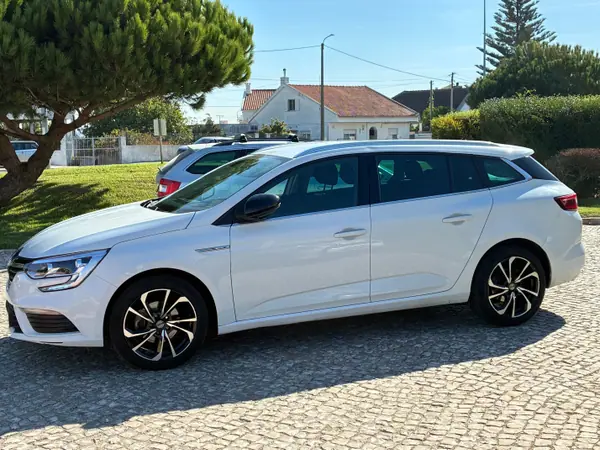
The Renault Clio has undeniably been an unavoidable, dominant presence on the roads of Portugal for over three highly successful decades. From the vast, high-mileage fleets of commercial enterprises to the young, newly-licensed drivers seeking their very first vehicle, its highly proven mechanical reliability, constantly attractive exterior design, and exceptionally low fuel consumption make this French hatchback a true, undisputed national best-seller. The local automotive market reflects this immense popularity with striking clarity. Whenever Portuguese drivers actively begin their search for used cars, the Clio invariably and consistently appears at the very top of search engine queries and transaction volume charts across all major platforms.
However, the impressive longevity and the famous resilience of this specific vehicle are strictly and umbilically tied to rigorous, preventative, and timely mechanical maintenance. If you are currently evaluating the market offerings and are seriously planning to buy a Renault Clio, whether you are targeting a unit from the third, fourth, or the latest fifth generation, there is one absolutely critical mechanical aspect you must master and fully understand: the timing belt replacement procedure and its associated financial costs.
What exactly is the timing belt and what is its vital function?
To truly comprehend the sheer importance of this specific maintenance operation, it is vital to know exactly how your car's engine breathes and ultimately produces mechanical power. The timing belt, as detailed by leading automotive transmission manufacturers like Gates, is a heavy-duty, extremely robust toothed ribbon, manufactured from highly resistant rubber compounds and frequently reinforced internally with high-tension materials such as fiberglass cords or Kevlar strands. Its primary function, which is absolutely vital for the very survival of the engine block, is to perfectly and precisely synchronize the high-speed rotation of the crankshaft (the lower heavy axis that moves the pistons rapidly up and down) with the camshaft (the upper axis that controls the precise millisecond opening and closing of the intake and exhaust valves).
The vast and overwhelming majority of internal combustion engines fitted to the entire Renault Clio line are technically categorized in automotive engineering as "interference engines." This technical classification means, in very simple terms, that the intake/exhaust valves and the heavy metal pistons physically occupy the exact same space inside the engine cylinder's combustion chamber, but at distinctly different fractions of a second. If the rubber timing belt suddenly snaps, breaks, or even if it merely skips a single tooth due to excessive age wear or a sudden loss of tension, this delicate mechanical synchronization is immediately and violently lost. The resulting outcome is nothing short of catastrophic: the heavy pistons, traveling at thousands of revolutions per minute, will violently crash directly into the open valves. Repairing this absolute nightmare scenario forces the complete reconstruction or replacement of vital, highly expensive engine parts such as the cylinder head (as explained in-depth by Hella Tech World engineering portals), bent valves, and sometimes even punctured engine blocks. You are looking at an unavoidable repair bill that can easily and quickly exceed €1,500 to €2,000.
Symptoms of dangerous wear: What should you look for and listen to?
Unlike other common automotive wear items, such as brake pads that emit a very loud, high-pitched squeal when they are running low, the timing belt very rarely gives the driver clear, obvious warnings before it fails catastrophically. Because the belt is hidden and safely protected behind a sealed plastic or metal cover, direct visual inspection is highly complex for the average, everyday driver. However, there are some crucial warning signs to be aware of:
- Ticking or squealing noises from the engine bay: A heavily worn belt tensioner or failing idler bearings can emit atypical, cyclical squeaking or ticking noises when the engine is running at idle speed.
- Visible oil leaks at the front of the block: If the internal crankshaft or camshaft oil seals fail and begin leaking hot engine oil directly onto the rubber belt, the chemical composition of the belt will rapidly degrade, swell, and snap prematurely.
- Difficulty starting the car or severe power loss: If the timing belt has stretched and skipped a timing tooth, the engine will completely lose its optimal ignition timing, resulting in very rough idling, abnormal vibrations, and engine misfires.
When exactly must the replacement be carried out? Renault's official deadlines
The precise answer to this expensive question depends entirely on the specific engine code fitted to your vehicle. Renault establishes incredibly strict deadlines based on a dual-variable system: either a specific mileage limit or a hard time limit in years.
- 1.5 dCi Engines (Diesel): The legendary and ultra-efficient K9K engine is the absolute pillar of Renault's sales in Portugal. For the vast majority of Clio III and Clio IV versions, the brand's official recommendation is to replace the complete timing belt system every 150,000 km or every 6 years.
- 1.2 16v Engines (Petrol): This naturally aspirated engine (code D4F) demands greater owner attention: it must be fully replaced every 120,000 km or every 5 years.
- TCe Engines (0.9 and 1.0): If your purchasing goal is aimed at a newer Clio IV or Clio V equipped with modern turbocharged petrol engines, Renault has replaced the rubber belt with a heavy-duty metallic timing chain. Provided that scheduled oil changes are performed precisely on time, the metallic chain is designed to last the entire operational lifespan of the vehicle.
The detailed cost breakdown of the intervention in Portugal
Changing the timing distribution requires a complete system replacement. The final quote clearly reflects two major financial components:
- The Complete Kit (The Parts): A properly executed service strictly requires the replacement of the belt itself, the tensioner bearings, the idler pulleys, the water pump, and fresh engine coolant. A premium aftermarket kit will typically cost between €90 and €150.
- Specialized Labor: A professional replacement takes an average of 3 to 4 hours of solid labor. At a highly qualified independent garage, the hourly rate varies from €30 to €45. At an official Renault authorized repairer, the hourly rate easily shoots up to €65 to €85.
Therefore, the total estimated cost at a trustworthy independent garage will roughly range between €280 and €400. At an official dealership, the exact same comprehensive service will frequently sit tightly between €450 and €650.
Your next journey starts here
Whether you want to ensure the impeccable maintenance of your current vehicle or you are actively looking to buy your next car with complete transparency and trust, you don't need to look any further. Discover the absolute best opportunities in the national automotive market and browse through a vast, highly curated selection of vehicles. Visit AUTO.MOTO.ptright now, the premier and most trusted platform in Portugal for buying and selling cars and motorcycles. Find the car or motorcycle of your dreams today at AUTO.MOTO.pt and accelerate towards your next great adventure!