Losing a car key is one of those universally stressful experiences that sends an immediate, cold shiver down any driver's spine. In the specific case of Renault, a brand with a massive, historically rooted, and dominant presence on the roads of Portugal, the electronic complexity and advanced technology involved in their vehicle access systems make this issue not only stressful but highly relevant financially. Iconic models like the versatile Clio hatchback, the family-friendly Megane, and the immensely popular Captur crossover completely dominate not only new car sales at dealerships but are also the undisputed champions and the most sought-after vehicles in the dynamic Portuguese used cars market.
However, if you are currently browsing online listings, visiting forecourts, and seriously planning to buy a Renault, there is one critical technical detail you absolutely cannot neglect: the condition and the exact number of keys or keycards provided with the vehicle. Buying a car with only a single key is an immediate financial risk. But if the absolute worst-case scenario happens, how much does it actually cost to create a preventative backup copy or fully replace a coded key from this famous French manufacturer in Portugal?
The Science of the Immobilizer: How does a coded key actually work?
To fully comprehend the steep pricing structure, it is essential to deeply understand the sophisticated technology you are holding in your hand. The days of the 1980s and 1990s, when a simple, cheap metal copy cut at the local corner hardware store could instantly start your car's engine, are long gone. Due to strict European legislation enacted to combat rampant international car theft, all vehicle manufacturers were legally forced to integrate an electronic immobiliser system into their vehicles, a complex mechanism thoroughly detailed by automotive engineering giants like Hella.
A coded Renault key contains a microscopic microchip completely hidden inside its hard plastic casing, technically known as a transponder (a portmanteau of transmitter and responder). When you insert the physical key into the ignition barrel or bring the modern keycard close to the dashboard reader, a hidden antenna ring emits a low-frequency electromagnetic field that instantly energizes this passive chip. The chip, upon waking up, transmits a highly complex, deeply encrypted alphanumeric code directly to the Unité de Contrôle Habitacle (UCH - Body Control Module) and the Engine Control Unit (ECU). If the transmitted digital code perfectly matches the permanent code registered in the vehicle's memory banks, the ECU authorizes the high-pressure fuel injection and spark ignition systems, allowing the starter motor to fire up the engine. If a thief attempts to use a mechanically identical key without the properly programmed chip, the engine will crank endlessly but will never actually start. This invisible digital handshake revolutionized global automotive security, a fact heavily documented and praised by vehicle security research institutions like Thatcham Research in the United Kingdom.
The Evolution of Access: From Traditional Blades to Smart Keycards
The exact replacement costs vary drastically depending on the specific type of technology and the exact generation your Renault model utilizes. The French brand was an absolute global pioneer in introducing keyless access systems to the European mass market, which effectively divides their keys into three main technological and pricing categories:
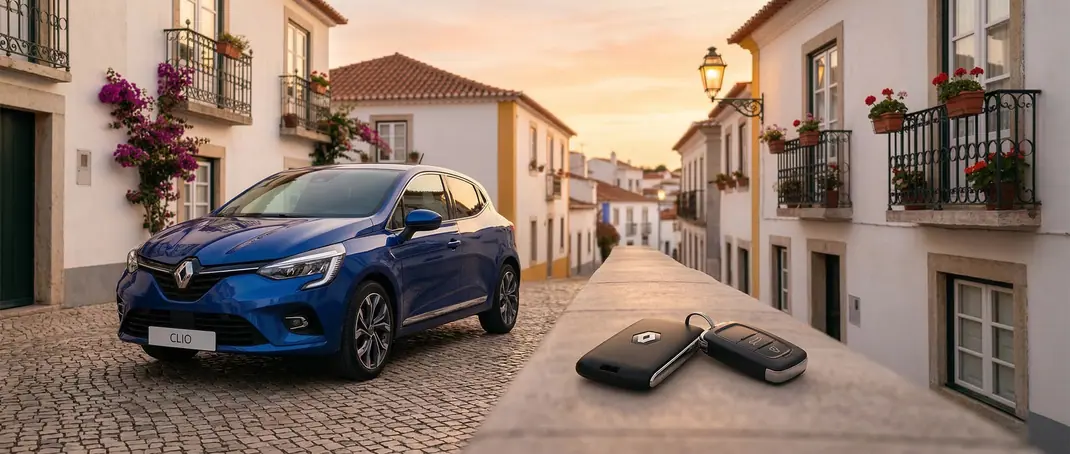
- Traditional remote key (Metal Blade): Extremely common in older models or entry-level trims (such as the early generations of the Renault Clio, Kangoo vans, and Twingo). They feature a standard, often retractable metal blade (switchblade style) and physical rubber buttons for central locking. Their replacement and programming cost is inherently the lowest in the range.
- Renault Keycard (Slot Insertion): Introduced in the early 2000s with the technologically ambitious Renault Laguna II and widely popularized by the Megane II, this sleek, credit-card-sized plastic fob entirely replaced the traditional physical metal key. To start the vehicle, the driver must physically insert the card into a dedicated dashboard slot and manually press the "Start/Stop" button. These specific cards are notorious for suffering internal micro-cracks on the solder joints if accidentally bent while sitting in tight pockets.
- Hands-Free Card (Keyless Entry & Drive): This represents the latest, most secure, and highly convenient technology. The driver never actually needs to take the card out of their jacket pocket or handbag. Advanced proximity sensors and multiple antennas distributed around the car detect the authorized card as you approach, automatically unlock the doors when you grab the exterior door handle, and allow you to fire up the engine merely by pressing the start button. Because it incorporates active radio-frequency technology and accelerometers, it is naturally the most expensive piece of hardware to replace.
The Final Bill: How much does it actually cost to make a new key in Portugal?
If you have lost a key or, very wisely, want to create a preventative backup copy while living or traveling in Portugal, you generally have two distinct routes available in the national market: visiting the official Renault dealership network or hiring an independent, highly specialized automotive locksmith.
1. At the Official Dealership Network: This is the most traditional, guaranteed, and highly bureaucratic route, but also invariably the slowest and most expensive. The local dealership cannot simply manufacture and cut a key on-site in their workshop; they must digitally order a pre-cut key directly from the main factory in France based on your car's exact Vehicle Identification Number (VIN). This international logistical process usually takes between 1 to 2 full weeks. When the virgin key finally arrives in Portugal, you must physically bring the car to the workshop so it can be hooked up to their proprietary diagnostic machines (Renault CLIP). Only then can they code the new transponder and safely wipe any lost keys from the car's central memory to prevent theft.
- Traditional Key Cost: €130 to €190
- Insertion Keycard Cost: €190 to €260
- Hands-Free Card Cost: €260 to €380 (frequently exceeding €450 on flagship luxury models like the Renault Espace, Talisman, or the new Austral SUV).
2. At Specialized Independent Auto Locksmiths: Over the last decade, a strong industry of independent specialists has grown in Portugal, investing tens of thousands of euros in advanced, licensed third-party diagnostic equipment (such as Abrites or Zed-Full machines). These dedicated professionals usually keep blank Renault keys, blades, and virgin cards in permanent stock. This means they can laser-cut the blade and program a brand-new key on the very same day, often in under an hour of labor.
- Traditional Key Cost: €70 to €130
- Insertion Keycard Cost: €120 to €170
- Hands-Free Card Cost: €160 to €240
Security Warning: Be extremely wary of suspiciously cheap "cloned" cards advertised on massive Asian e-commerce websites or unverified local classifieds. The vast majority of these aftermarket cards use highly unstable, extremely low-quality chips that can easily lose their security programming due to simple summer temperature fluctuations, leaving you stranded and unable to start your car when you least expect it.
The Absolute Nightmare Scenario: Losing "All" the Keys (AKL)
If you made the critical mistake of only possessing one single key and you happen to lose it in the ocean or drop it on the street, brace yourself for a massive logistical headache and a substantial financial hit. No legitimate professional can simply "clone" a radio signal from a key that no longer physically exists. The vehicle will be completely immobilized and must be towed to a workshop. The recovery process (known in the locksmith industry as All Keys Lost) involves physically removing dashboard panels to access the car's security modules (like the UCH). The highly trained technician must extract the deeply encrypted data directly from the ECU's EEPROM memory chip via micro-soldering or pin cables, decrypt Renault's master security PIN code, and only then generate a new key profile completely from absolute scratch. This time-consuming and highly specialized engineering process heavily inflates all the prices mentioned above, factoring in the heavy towing fees and hours of complex computer labor.
The Bureaucracy: What documents do you need to order a new key?
For glaringly obvious national security reasons and to avoid facilitating organized car theft rings, no legitimate professional will create a car key for you based on a simple verbal request. Whether at a main central dealership or a local independent specialist, you will be legally obligated to present the vehicle's registration document (Livrete / Documento Único Automóvel) registered in your exact name, alongside your valid Passport or Citizen Card. If the vehicle is officially registered to a corporate fleet or company, legal corporate certificates and signed management authorizations will be strictly required before any work begins.
It is precisely because of this immense technological complexity and these steep associated costs that, when exploring the highly dynamic carros usados market, you must always aggressively question the seller about the exact number of original keys provided. Buying a vehicle delivered with only one keycard represents an immediate, hidden financial risk of hundreds of euros to your wallet. Absolute transparency in this transaction process is fundamental. If you are looking for the safest, most professional automotive marketplace with the absolute best national selection to find your next vehicle with a fully documented history and no nasty surprises, visit AUTO.MOTO.pt today. This is the premier and most trusted platform in Portugal for securely buying and selling cars and motorcycles. Accelerate towards your perfect next deal at AUTO.MOTO.pt!