Dipped beams are the normal lights for driving at night and in well-lit places; full beams are only for dark roads with no traffic ahead; sidelights are for a parked car, not for driving. Using full beams when meeting another car brings a fine of €60 to €300; not switching your lights on when the law requires it, €30 to €150.
This guide explains, according to the Highway Code, when to use each light, the daytime exceptions (tunnels and motorcycles), what to do with a faulty light and the fines.
Dipped, full beam and sidelights: what each light is
Article 60 of the Código da Estrada (the Portuguese Highway Code) defines the lighting and signalling lights. The three that cause most confusion are:
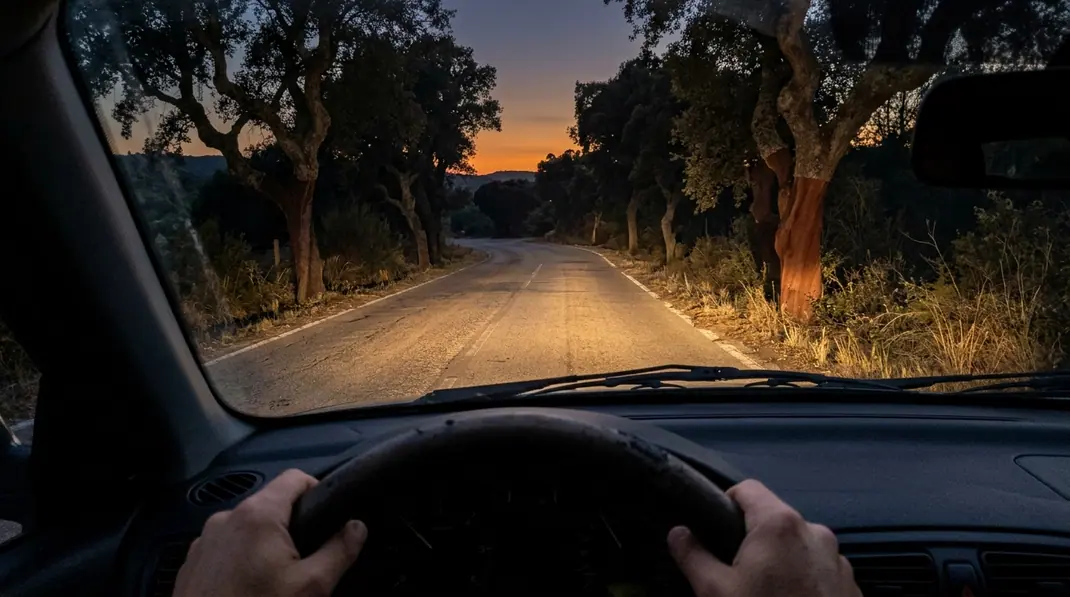
- Full beam (luz de estrada, «máximos»): lights the road ahead for a distance of at least 100 metres.
- Dipped beam (luz de cruzamento, «médios»): lights the road up to 30 metres, without dazzling oncoming drivers.
- Sidelights (luzes de presença, front ones called «mínimos»): show the presence and width of the vehicle. They do not light the road, they only make the car visible.
Fog lights and indicators have their own rules. For fog, see our guide to fog lights.
When to use each light, under article 61
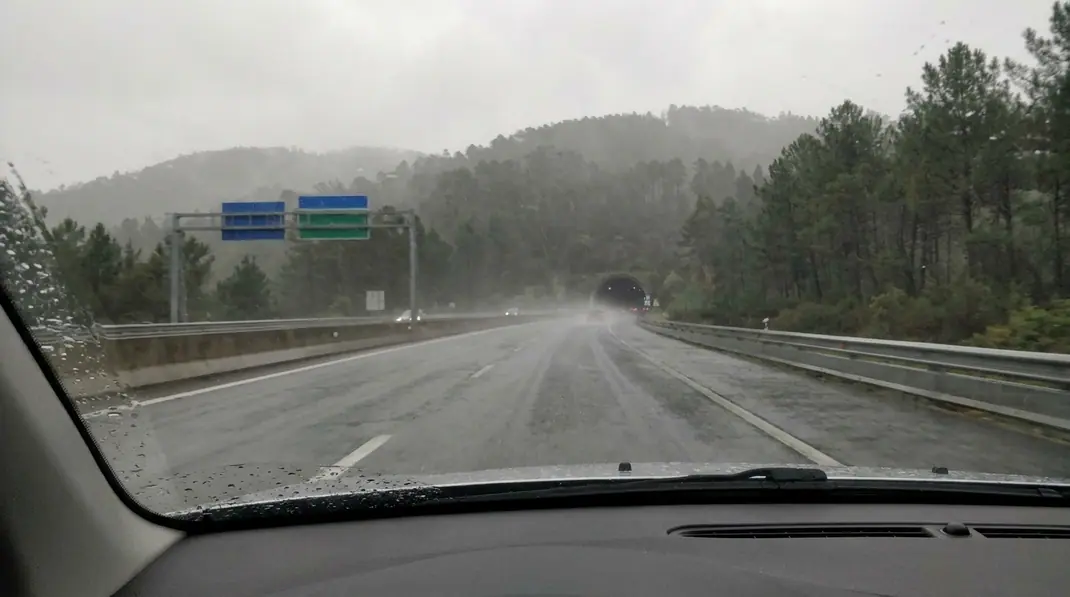
The law requires lights from dusk to dawn and also by day whenever weather or surroundings make visibility insufficient: fog, heavy rain, snow, smoke or dust. Within that, the choice is:
- Dipped: where lighting gives the driver visibility of at least 100 metres, when meeting other vehicles, people or animals, within 100 metres of the vehicle ahead, when approaching a closed level crossing and when stopped.
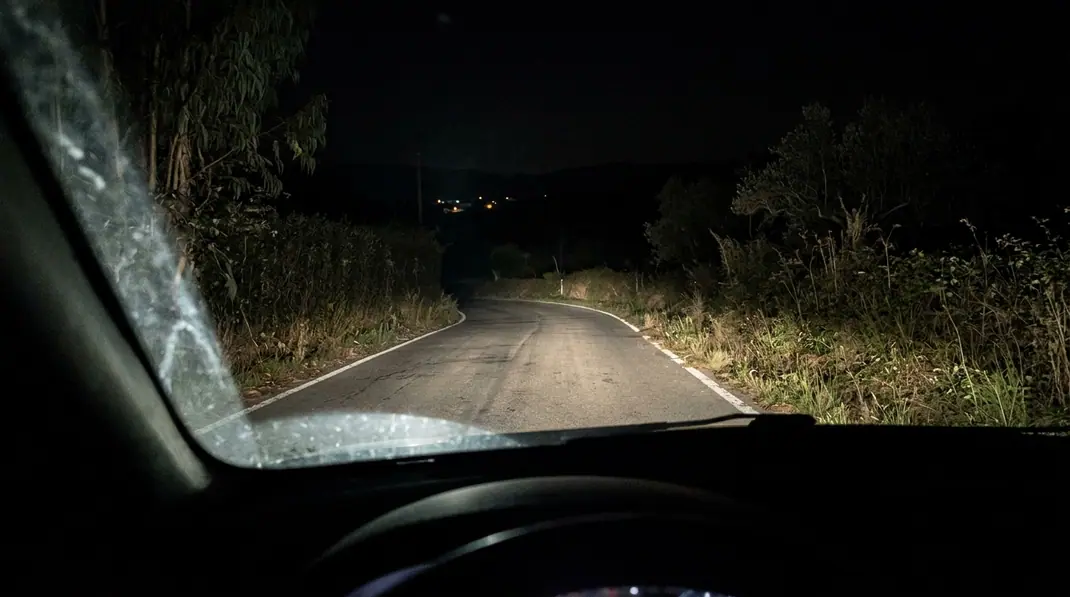
- Full beam: in all other cases, that is, on a dark road with no traffic ahead or close behind.
- Sidelights: while waiting for a level crossing to open and when stopped or parked in places where the lighting does not let the car be recognised at 100 metres.
In short: when moving, the law provides for dipped or full beam. Driving with sidelights only, especially at dusk, is a frequent mistake and is not what article 61 requires.
When to switch from full beam to dipped
This is the most common doubt and the most fined. Dip as soon as:
- you see the lights of an oncoming car, before it reaches you;
- you come within 100 metres of a car ahead;
- you meet pedestrians or animals at the roadside;
- you stop, for example at traffic lights or in a queue.
Full beams dazzle and take seconds of vision from the other driver. After a long day tiredness makes everything worse: see the article on driving sleepy.
Daytime lights: tunnels, reversible lanes, motorcycles and dangerous goods
By day, on a road with good visibility, you do not need lights in most cases. The law provides exceptions:
- Tunnels signed as such and reversible-direction roads: dipped beams compulsory by day (article 61, paragraph 4).
- Vehicles carrying dangerous goods with an orange panel: dipped beams on by day (paragraph 3).
- Motorcycles and mopeds: ANSR lists riding without dipped beams as a serious offence, in its list of Highway Code offences.
On days of heavy rain or fog the general rule applies: switch your lights on. Before a trip, check the IPMA weather warnings.
Automatic lights and daytime running lights
Many cars have an «auto» setting and daytime running lights. They help, but responsibility stays with the driver: in rain or at dusk, check on the dashboard that the dipped beams are really on. On several models daytime lights come on at the front only, and the rear stays dark.
Moving the switch to the dipped-beam position is the safest way to make sure the rear lights come on too. Your car manual explains the exact behaviour.
If the dashboard shows a lighting symbol you do not recognise, see the guide to dashboard warning lights.
Fines: what misusing your lights costs
The amounts below come from the text of the Highway Code. Always check the version in force.
- Not using lights when they are required: fine of €30 to €150 (article 61, paragraph 5).
- Using full beams when meeting other vehicles, people or animals, within 100 metres of the car ahead or when stopped: fine of €60 to €300 (paragraph 6).
- Driving without a required light or with a light fault beyond what article 62 allows: fine of €60 to €300.
ANSR classes driving without the lights of article 61, paragraph 1, in the conditions it sets, as a serious offence. A serious offence takes points off your licence, as we explain in the guide to penalty points.
Faulty light: can you keep driving?
It depends. When lights are compulsory, article 62 bans driving with a fault in the dipped beams or in the signalling lights, but allows two exceptions:
- Two dipped beams, or the left dipped beam with both sidelights, and at the rear the left presence light and one brake light, where required.
- Hazard lights on, only for the time strictly needed to reach a place where you can stop or park.
If the fault happens on a motorway, the rule is to stop outside the carriageway. You may carry on to the nearest service area or exit only if you have the lights of the first exception. The fine is €60 to €300.
Common mistakes
- Leaving full beams on behind another car.
- Driving with sidelights only at dusk.
- Forgetting the rear is dark when daytime lights are on.
- Switching fog lights on for no reason, which article 61, paragraph 2, bans.
- Not noticing blown bulbs: ask someone to check behind the car while you press the brake.
Lights and inspection: what to check before buying a used car
Before buying, switch on every light, dipped, full beam, sidelights, indicators and brake lights, and check whether the headlights are cloudy or misaligned. At the periodic inspection the lights and headlight alignment are checked. If you want to choose between LED and halogen models, compare the listings among the used cars for sale. For the colours allowed, see the article on the colour of full beams.
Frequently asked questions
When should I use dipped beams?
From dusk to dawn, in well-lit places, when meeting other vehicles, within 100 metres of the car ahead and when stopped. By day, in signed tunnels and when visibility is insufficient.
When can I use full beams?
On a dark road, outside lit areas, when there are no other vehicles, people or animals nearby. When meeting someone or within 100 metres of the car ahead, the law says to dip.
What are sidelights for?
To show the presence and width of the car. The law provides for them when waiting at a level crossing and when stopped or parked in poorly lit places, not for driving.
What is the fine for driving with full beams on?
€60 to €300 if you use them when meeting other vehicles, people or animals, within 100 metres of the car ahead or when stopped.
Is it compulsory to drive with dipped beams by day?
As a rule, no, except in signed tunnels, reversible-direction roads, when visibility is insufficient and for dangerous-goods vehicles. Motorcycles and mopeds must always use dipped beams.
Can I drive with a blown bulb?
Only in the cases article 62 allows, such as having two dipped beams, or the left dipped beam with two sidelights, or using hazard lights until you can stop safely. Otherwise you risk a fine of €60 to €300.
Information per the Highway Code and official sources at the date of publication; always check the version in force.