Cleaning a diesel particulate filter usually costs between €150 and €400 at a garage in Portugal, and a new filter costs from about €400 to over €2,000, depending on the car. Removing it is illegal: the car can fail its inspection and risks a €250–1,250 fine and being impounded.
This guide explains what the particulate filter (DPF) does, the symptoms of a clogged filter, how regeneration works, when cleaning or replacing it makes sense and what Portuguese law says, which gets stricter from mid-November 2026 under a decree-law published in September.
What a particulate filter is and what it does
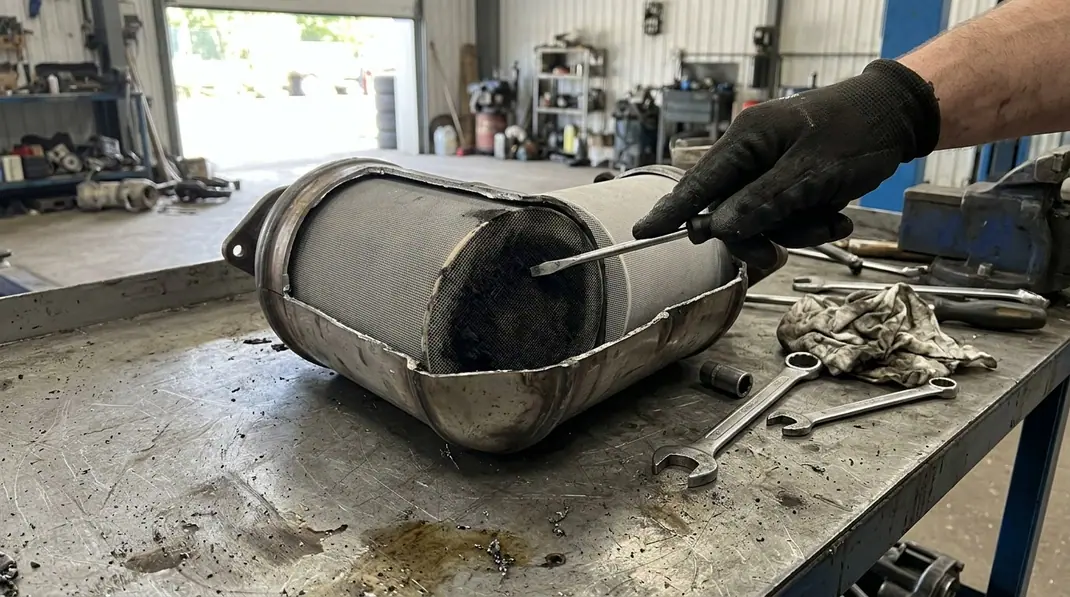
The particulate filter is a part of the exhaust on diesel cars, fitted after the engine. Inside, it has a ceramic honeycomb structure with alternately closed channels: the gases pass through the porous walls and the soot stays behind.
That soot is made of fine particles that are harmful to health. According to the Portuguese Environment Agency (APA), PM2.5 particles reach the lungs' alveoli, and long exposure raises the risk of respiratory and cardiovascular disease and lung cancer.
Practically every diesel car sold new since the Euro 5 standard (mandatory for new registrations since 2011) has a particulate filter. Many recent petrol cars, especially direct-injection ones, now have a similar filter too.
On AUTO.MOTO.PT, on 1 November 2026, half of the cars for sale were diesel: 4,937 out of 9,817. Of these, 4,096 are from 2011 or later, with a median of 159,000 km. In other words, buying a used diesel almost always means buying a particulate filter with a lot of kilometres on it.
Symptoms of a clogged particulate filter
The filter fills up with use and cleans itself by burning the soot. When that does not happen, you get signs:
- particulate filter light on the dashboard: a rectangle with dots inside, usually amber;
- loss of power or limp mode, where the engine will not rev past a certain point;
- fan running after you switch off and a higher idle than usual, signs of a regeneration in progress or cut short;
- higher fuel consumption and a burning smell at the end of a trip;
- rising oil level: failed regenerations can mix diesel into the engine oil, which then needs changing.
The filter light often comes on together with others, such as the engine or glow plug lights. To see what each one means and when you must stop, read our guide to car dashboard warning lights.
Regeneration: how the filter cleans itself
Regeneration means burning off the soot inside the filter at high temperatures (around 600 °C in active regeneration). It happens in two ways:
- passive: on the open road, with a hot exhaust, the soot burns off without the driver noticing;
- active: when the filter is full, the engine computer injects extra diesel to heat the exhaust. It usually takes 10 to 20 minutes at a steady speed.
The problem is short trips. If you only drive in town, 5 or 10 km a day, you interrupt one regeneration after another. The most useful tip is simple: every now and then, take a road or motorway trip at a steady speed. Your car's manual gives the right conditions for your model.
Oil matters too. Oil ash does not burn and stays in the filter for good, so engines with a filter need low-ash oils, as we explain in our article on the best oil for a diesel engine.
Cleaning a particulate filter: options and price
The figures below are indicative, based on typical quotes from Portuguese garages. They vary with the model, the region and the state of the filter, so always ask for a quote:
- forced regeneration with a diagnostic machine: from about €50 to €150. It works when the filter is full of soot but not damaged;
- cleaning additive in the tank or applied to the filter: €15 to €40 for the product. It helps in mild cases, but do not expect miracles;
- off-car cleaning, in a dedicated machine or oven: usually €150 to €400, including removal. It also removes some of the ash;
- new filter: from about €400 for an aftermarket filter for a small car to over €2,000 for an original part on an SUV or premium brand, plus labour.
Before paying for a clean, find out why the filter clogged. A dripping injector, a dirty EGR valve, a turbo leaking oil or a faulty differential pressure sensor will fill the filter again in no time. Some models also use their own additive, in a small tank, which has to be refilled periodically, usually every tens of thousands of kilometres.
Is it legal to remove the particulate filter?
No. In Portugal, removing the particulate filter, hollowing it out or switching it off in software is illegal on a car driven on public roads. The law deals with it in three ways:
- Highway Code: article 114 bans driving without the systems the car was approved with and says that a system that does not work counts as missing. The fine is €250 to €1,250, and the car is impounded until it passes an extraordinary inspection;
- Vehicle Modification Regulation: Decree-Law 184/2026 expressly bans removing, wholly or partly, any part of the emissions control system, or disabling it, where this increases emissions. It also bans selling non-approved parts that increase emissions and advertising these services. Its fines fall on whoever carries out the modification. It was published on 16 September 2026 and takes effect 60 days later, in mid-November 2026;
- inspection: missing or modified emissions control equipment is a defect that leads to a fail.
The text of article 114 is in the consolidated Highway Code. In practice, the quotes for “DPF removal” found online hide the real price: the fine, impoundment and a new filter to make the car legal again.
The same goes for other anti-pollution systems. Switching off AdBlue has the same consequences, as we explain in our article on what to do when AdBlue runs out.
Particulate filter and the roadworthiness inspection: what is checked
Since 1 November 2020, Portuguese inspection centres classify defects under IMT Resolution 723/2020, which applies the defect table of Directive 2014/45/EU and set new maximum smoke opacity values, according to the IMT notice. On a diesel, the inspection checks:
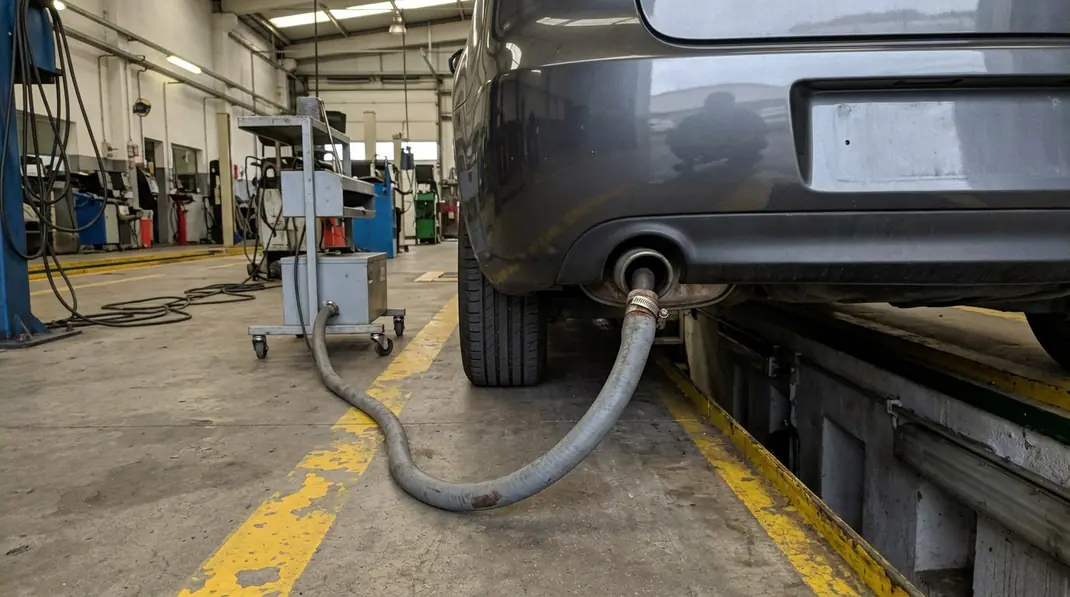
- smoke opacity, measured with a probe in the exhaust while revving;
- whether the factory-fitted emissions control equipment is present and unmodified;
- emissions fault codes read through the diagnostic socket (OBD), on cars where this is done.
A car without a filter emits much more smoke and tends to fail the opacity test. The price of the periodic inspection, deadlines and the most common defects are in our guide to car inspection in Portugal in 2026.
Buying a used diesel: how to check the filter
If you are looking at diesel cars, the particulate filter deserves five minutes of attention:
- ask for invoices: filter cleaning or replacement, EGR, injectors;
- check that the warning lights come on with the ignition and go off straight away;
- take a test drive that includes open road and watch for loss of power or black smoke when accelerating;
- be wary of a diesel with a history of remapping, especially if it puts out black smoke under acceleration or the engine light does not come on with the ignition;
- look at the last inspection report and, if possible, take the car for a diagnostic check before closing the deal.
You can compare prices and mileage among the used diesel cars for sale on AUTO.MOTO.PT, with a median of €15,490 for those from 2011 or later. In the AUTO.MOTO app you can save the search and get an alert when a new diesel within your budget appears.
Frequently asked questions
How much does it cost to clean a particulate filter?
Usually €150 to €400 at a garage, including removal. A forced regeneration with a diagnostic machine costs less, from about €50 to €150.
Is it legal to remove the particulate filter in Portugal?
No. The Highway Code sets a fine of €250 to €1,250 and impounds the car until it passes an extraordinary inspection, and from mid-November 2026 Decree-Law 184/2026 expressly bans removal.
How much does a new particulate filter cost?
From about €400 for an aftermarket filter for a small car to over €2,000 for an original part on an SUV or premium brand, without labour.
How do I know if the particulate filter is clogged?
The most common signs are the filter light on the dashboard, loss of power, the fan running after you switch off and higher fuel consumption.
Does a car fail the inspection without a particulate filter?
It can: missing or modified emissions equipment is a fail defect, and the extra smoke usually fails the opacity test.
How many kilometres does a particulate filter last?
It depends a lot on how the car is used. With plenty of open-road driving and regular servicing it can last much of the engine's life; with mostly town driving, problems show up much sooner.