Fossil fuel prices across the Iberian Peninsula continue to squeeze household budgets mercilessly. Savvy Portuguese drivers are abandoning internal combustion engines entirely. They are transitioning to battery-powered mobility. This shift represents a fundamental transformation in daily transportation logic. Portuguese municipalities are establishing strict zero-emission zones, pushing aging diesel vehicles out of historic city centers. The financial mathematics heavily favor this technological transition. You eliminate volatile gasoline expenses completely. You bypass expensive oil changes, complex transmission fluid flushes, and mechanical timing belt replacements. The national tax infrastructure provides massive financial incentives, including the complete waiver of the annual IUC road tax for zero-emission vehicles.
Purchasing a brand-new vehicle subjects the buyer to severe initial asset depreciation. The smartest financial maneuver involves leveraging the secondary market. Buyers can secure high-performance technology for a fraction of the original showroom sticker price. Platforms like AUTO.MOTO.pt stand out as the premier destination for navigating these transactions. This digital marketplace connects private sellers and commercial dealers with unparalleled transparency. You find thousands of verified listings updated daily. Finding a clean, well-maintained pre-owned vehicle requires diligence, but the financial rewards are massive. The secondary market for used cars offers incredible value, but battery-powered vehicles demand a completely different inspection protocol. Our exclusive guide targets the absolute best models available today. We dissect battery chemistry. We evaluate suspension components. We scrutinize charging curves. This is your definitive blueprint for securing a prime deal on used electric cars.
General Information Evaluating the physical condition of a high-voltage battery demands specialized diagnostic tools. The heavy traction battery represents the single most expensive component within the entire vehicle architecture. You cannot gauge battery health by kicking the tires, checking the oil dipstick, or listening to engine idle. You must interface directly with the BMS. This central processing unit monitors individual cell voltages, temperature gradients, and cumulative charge cycles continuously. It calculates the State of Health percentage. A low State of Health means the battery has permanently lost a significant portion of its original energy storage capacity. You demand a diagnostic scan before handing over any money. A scanner connects to the OBD2 port. It reads the raw data. The truth hides in the data stream.
Internal cell resistance increases naturally over time. Chemical degradation is inevitable. The rate of capacity loss depends heavily on thermal management engineering. The hot Portuguese climate brutally punishes specific battery architectures. Drive through the interior Alentejo region in July, and temperatures easily blast past forty degrees Celsius. Passively cooled battery packs stand zero chance here. They rely completely on whatever ambient air happens to blow under the car. Parked in direct sunlight, they bake. Push them hard on the highway with repeated direct-current fast charging, and they aggressively overheat. Actively cooled systems do the exact opposite. They pump refrigerated liquid glycol directly through cold plates sandwiched between the cell modules. This sophisticated thermal management locks cell temperatures into a safe zone and dramatically slashes chemical fatigue. It works so well that actively cooled packs regularly hold onto more than 90 percent of their original capacity, even after a brutal 100,000 kilometers of driving. Make no mistake: excessive heat outright murders lithium-ion cells. Liquid cooling is the ultimate insurance policy for your investment.
Charging curves also dictate the viability of used electric cars. Direct-current fast charging does not operate at a flat, constant speed. The vehicle accepts peak kilowatts when the battery is empty. As the battery crosses the eighty percent threshold, the BMS intentionally slows the charging rate to a crawl to prevent internal cell damage. Alternating-current charging handles daily commuting duties. You must check the onboard charger specifications. A vehicle with a three-phase eleven-kilowatt onboard charger replenishes its battery much faster at home than a vehicle limited to a single-phase three-kilowatt charger.
Understanding the charging infrastructure is equally critical for daily operational success. You must align your vehicle's onboard charging hardware with the realities of the national Mobi.E public network. Some vehicles prioritize alternating-current charging speeds, excelling at municipal street poles and destination chargers. Others dominate the highway networks with rapid direct-current intake capabilities. Knowing the difference prevents stranded range anxiety. Savvy owners map out strategic charging points across their daily commuting routes. Finding complimentary power drastically reduces operational overhead. We highly recommend reading our comprehensive tutorial on how much does it cost to charge an electric car to maximize your monthly savings while utilizing supermarket chargers, shopping mall stations, and municipal destination points. The combination of smart overnight home charging and strategic public top-ups renders the operational cost of electric cars virtually nonexistent. You drive past the gas stations. You smile at the fuel prices. You keep your money in your pocket.
Top Market Picks The Portuguese secondary market offers a diverse spectrum of zero-emission vehicles. Certain models have proven their mechanical endurance across broken cobblestone streets and high-speed motorways. The following vehicles represent the absolute best investments currently listed on AUTO.MOTO.pt. They offer reliability, efficiency, and strong residual values.
The Renault Zoe dominates European sales charts for a very specific engineering reason. Renault designed this compact hatchback to exploit the existing alternating-current street charging network perfectly. The magic happens inside its patented Chameleon charger. Most competing vehicles cap alternating-current power intake at seven or eleven kilowatts. The Chameleon charger routes incoming alternating current directly through the electric motor stator windings. This brilliant engineering allows the vehicle to pull a massive twenty-two kilowatts from a standard public post. This capability transforms urban logistics entirely. You park in downtown Lisbon. You plug into a standard municipal pole. You recover hundreds of kilometers of range during a two-hour business lunch.
The ZE40 variant arrived with a forty-one kilowatt-hour usable battery pack, delivering a solid two hundred and fifty kilometers of mixed driving range. The updated ZE50 pushed the engineering envelope further. It introduced a fifty-two kilowatt-hour pack paired with a punchy R135 electric motor. The motor options define the driving experience. The Q90 motor, built by Continental, allowed faster charging but offered lower efficiency. The R-series motors, built in-house by Renault, sacrificed peak charging speed for vastly improved energy consumption. The ZE50 also introduced optional fifty-kilowatt direct-current fast charging through a newly integrated Combined Charging System port.
Buyers must exercise extreme caution regarding battery ownership contracts. Renault originally sold thousands of these hatchbacks under a mandatory battery lease program managed by Mobilize Financial Services. The owner paid a monthly subscription fee based on their declared annual mileage. When browsing listings on AUTO.MOTO.pt, you must verify if the battery is fully owned or subject to an active lease transfer. Purchasing a full-ownership model eliminates recurring monthly overhead and guarantees a clean title transfer. The suspension handles urban potholes with impressive compliance. The MacPherson strut front and torsion beam rear setup focuses entirely on ride comfort. The cabin utilizes recycled fabric materials. It feels spacious despite the compact exterior dimensions. The boot holds three hundred and thirty-eight liters of cargo. The Renault Zoe remains the undisputed king of urban electric cars.
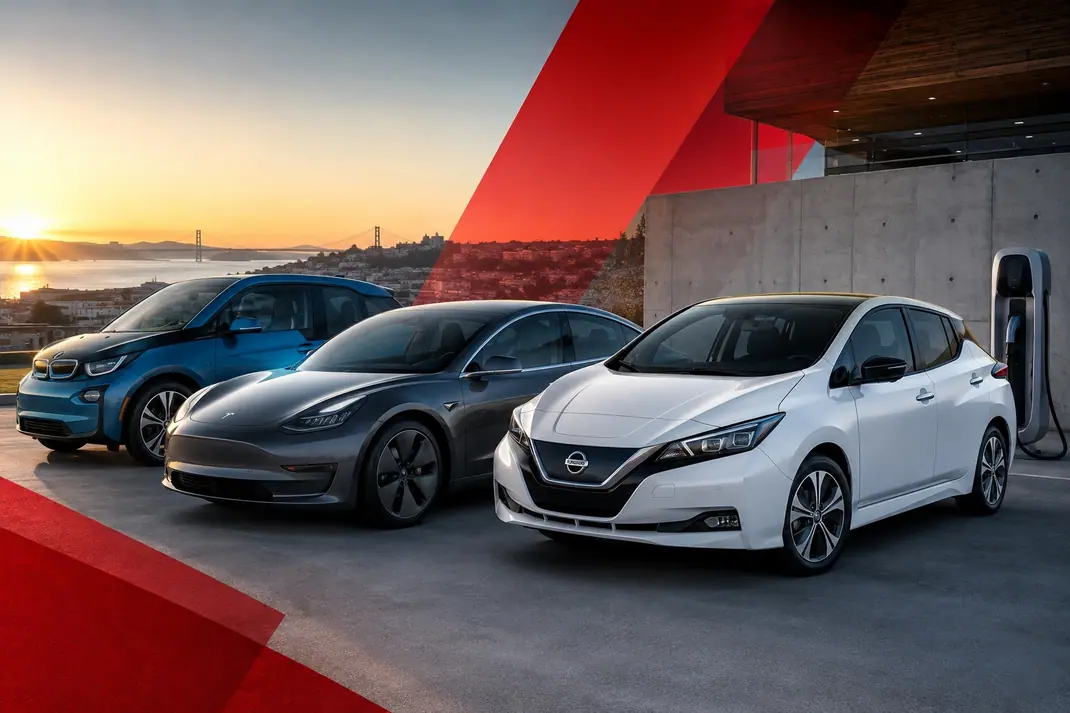
Nissan rolled out the second-generation Nissan Leaf in 2018. It immediately shook up expectations for daily family driving. Drop into the cabin. The seats feel remarkably plush—almost orthopedic—and the massive 435-liter boot completely swallows suitcases, weekly groceries, or a bulky stroller. No Tetris required. Hit the accelerator. Power surges instantly, but it stays flawlessly smooth. Then there’s the e-Pedal. This single-pedal setup completely transforms how you drive, letting you accelerate, brake, and come to a dead stop using only your right foot. Suddenly, inching across the congested 25 de Abril bridge isn’t a chore anymore. Push to go. Lift to stop. Friction brakes barely see any action. As a result, your brake pads will basically last forever.
Highway trips also feel much less exhausting. Nissan’s ProPILOT system expertly blends adaptive cruise control and lane-centering, taking the stress right out of those long A1 motorway runs. Another huge plus? The 2019 infotainment upgrade finally added native Apple CarPlay and Android Auto. But dig under the floorboards, and you expose the car's glaring weakness. Thermal management. Trying to cut weight and lower costs, Nissan abandoned active cooling altogether. They simply crammed lithium-manganese-oxide pouch cells into an airtight aluminum box beneath the seats. Cooling relies entirely on whatever air flows under the car.
Push the car to 120 km/h across the Algarve in peak summer, and those cell temperatures skyrocket. Pull up to a 50 kW fast charger with a boiling battery, and the BMS steps in hard. To avoid catastrophic thermal runaway, the computer slashes incoming power to an agonizing 15 kW. EV veterans call this Rapidgate. Taking long road trips in this car demands serious patience.
Then there is the charging hardware. The Nissan Leaf stubbornly clings to the Japanese CHAdeMO fast-charging standard. Meanwhile, the rest of Europe has moved decisively to the Combined Charging System (CCS). Drive up to a brand-new fast-charging hub in Portugal today, and you might not find a CHAdeMO cable at all. Still, if you mostly stick to regional commuting and rely on a home wallbox for overnight charging, this quirk hardly matters. Whether you choose the 40 kWh battery or the 62 kWh e+ model, you get a phenomenally reliable, whisper-quiet daily driver.
Bavarian engineers threw away the traditional automotive rulebook when they created the BMW i3. This advanced city car utilizes a revolutionary two-part construction methodology. The lower Drive module consists of extruded aluminum. It houses the high-voltage battery. It contains the complex suspension geometry. It holds the rear-mounted electric motor. The upper Life module passenger cell is constructed entirely from carbon-fiber reinforced plastic. This exotic aerospace material eliminates rust concerns permanently. It keeps the vehicle curb weight astonishingly low. The rear-wheel-drive powertrain delivers explosive acceleration off the line. The car jumps forward instantly. It corners like a go-kart.
Inside the cabin, BMW ignored traditional leather and glossy trim. They went all-in on eco-friendly materials instead. You’ll find raw kenaf plant fibers, recycled PET plastics, and unbleached open-pore eucalyptus wood stretching across the dash. The aesthetic feels exactly like a high-end, minimalist Scandinavian design studio. Pop open the rear-hinged suicide doors. Without a central B-pillar blocking the way, getting in and out is incredibly easy. A crisp 10.25-inch iDrive screen sits dead center, effortlessly managing your maps and media. When shopping, ignore the older models. Target the later 94Ah or 120Ah battery variants. BMW packed these versions with ultra-dense, liquid-cooled Samsung SDI prismatic cells. The active, refrigerant-driven thermal management keeps those cells perfectly chilled, effectively pausing battery degradation. Hook a scanner up to a high-mileage BMW i3, and you will routinely pull a State of Health reading well above 92 percent.
You might stumble across models equipped with the Range Extender (REx). This is basically a 647cc Kymco scooter engine hooked to a tiny nine-liter fuel tank. It doesn't drive the wheels; it acts solely as a generator to keep the battery charged. Early adopters loved it for killing range anxiety. But today? It just adds irritating combustion maintenance to an EV. You still have to change oil. You still have to swap spark plugs. Plus, the added weight blunts the car's famously agile handling. Stick to the pure battery-electric version for zero headaches. The car turns on a dime. That ridiculously tight turning radius makes it the absolute perfect weapon for slicing through the narrow, ancient streets of Alfama or Ribeira. Those weirdly skinny 155/70 R19 tires aren’t just for show—they slash rolling resistance and boost your range. Check the inner shoulders carefully, though. Aggressive factory camber and instant electric torque absolutely shred rear tires. A clean BMW i3 gives you a fascinating piece of motoring history. For a style-conscious city driver, it easily remains one of the best used electric cars on the market.
Looking for serious highway endurance without the nerve-wracking range anxiety? The Hyundai Kauai Electric completely dominates here. Korean engineers obsessed over powertrain efficiency. They mated a highly dense 64 kWh lithium-ion polymer battery to a permanent magnet synchronous motor. The result? A massive 395 Nm of torque. That specific hardware combination transforms a compact crossover into a relentless long-distance runner. It routinely shatters the 400-kilometer mark on actual motorway drives without breaking a sweat. Step on the accelerator, and the torque pins you straight back into your seat.
A brilliant standard heat pump does the heavy lifting for climate control. It pulls ambient heat right out of the outside air to warm the cabin, stopping battery drain dead in its tracks on freezing mornings. Grab the steering-wheel paddles. You can instantly adjust the regenerative braking strength on the fly. Down below, a multi-link rear suspension irons out broken, potholed tarmac effortlessly. Sit inside, and a premium Krell audio system blasts crisp sound while ventilated front seats keep your back cool. That cooling feature is a total lifesaver when the Portuguese summer heat kicks in.
Fast charging? Handled perfectly. An active liquid cooling circuit keeps the battery thermally stable during high-power direct-current sessions. You easily pull up to 77 kilowatts at highway stations, slamming an 80 percent charge back into the pack in about 45 minutes. The thermal system dynamically chills the battery during fast charging and warms it up when sub-zero weather hits.
When evaluating a pre-owned 2018 to 2020 model on AUTO.MOTO.pt, buyers must verify the factory recall history. Hyundai executed a massive global recall to replace complete battery assemblies on early production units due to an internal cell separator defect manufactured by LG Chem.
Authorized dealerships replaced these packs entirely free of charge, eventually switching suppliers to SK Innovation. Finding a 2019 model that received a brand-new battery pack in 2021 represents an absolute goldmine. You acquire a depreciated chassis containing factory-fresh energy storage. Test the front reduction gear assembly during your test drive. Accelerate gently and listen for a rhythmic tapping noise from the front axle. This indicates axial bearing wear, a known mechanical flaw requiring a specialized gearbox rebuild. The Hyundai Kauai Electric stands as a remarkably capable long-distance cruiser among electric cars.
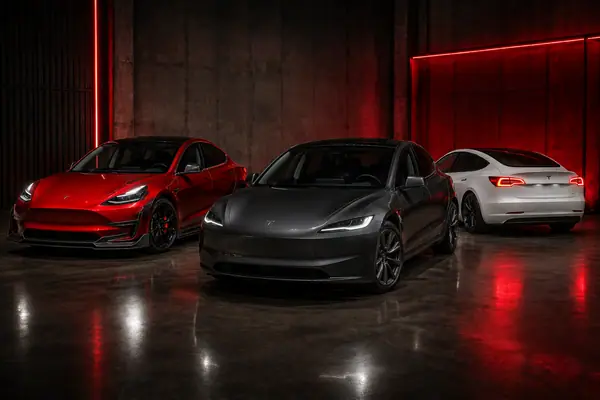
The Tesla Model 3 shattered industry paradigms by combining blistering sports-sedan performance with a highly advanced software ecosystem. Purchasing a pre-owned Standard Range Plus model grants you native access to the proprietary Supercharger network. This plug-and-charge infrastructure remains the most reliable and geographically expansive charging network across the Iberian Peninsula. You navigate to a Supercharger, plug the heavy cable into the taillight port, and the station automatically authenticates your account to initiate high-speed charging up to one hundred and seventy kilowatts. No RFID cards are required. No third-party applications crash. It just works seamlessly every single time.
Early Fremont-built models feature a fifty kilowatt-hour Nickel-Cobalt-Aluminum battery pack. Late 2020 and 2021 models assembled in Shanghai introduced Lithium Iron Phosphate battery chemistry. The LFP chemistry allows owners to charge the battery to a full one hundred percent daily without accelerating cathode degradation. The minimalist interior relies entirely on a central fifteen-inch touchscreen to control all vehicle functions, from adjusting the side mirrors to activating the hidden aerodynamic windshield wipers.
The vehicle receives continuous over-the-air software updates via Wi-Fi. These updates add new features, improve battery pre-conditioning logic, and refine the Autopilot driver assistance suite long after the initial purchase date. The software integrates Sentry Mode, utilizing exterior cameras to record potential vandalism. Dog Mode keeps the cabin cool for pets while you shop. Camp Mode allows overnight sleeping with continuous climate control. You access the vehicle using a phone key app, abandoning traditional physical fobs entirely. The aerodynamic drag coefficient sits at a slippery 0.23 Cd, maximizing highway efficiency.
When inspecting a pre-owned Tesla Model 3, pay close attention to the front suspension components. Water ingress through the upper control arm ball joint seals washes out the factory lubricating grease. This defect causes a loud, metallic creaking noise when turning the steering wheel at low parking speeds. Upgraded aftermarket control arms permanently solve this issue. Examine the rubber window seals around the frameless doors to ensure proper alignment, as early production units occasionally suffered from excessive highway wind noise. Verify that the touchscreen responds instantly to touch inputs without any yellowing discoloration around the screen bezels. Check if the vehicle operates on the newer HW3.0 computer, which supports advanced Autopilot visualizations. The Tesla Model 3 fundamentally rewrote the rulebook for modern electric cars.
Conclusion Closing a deal on pre-owned zero-emission vehicles requires meticulous verification of the physical hardware and the legal documentation. You must confirm that the private seller or the commercial dealership includes the heavy-duty Type 2 Mode 3 charging cable in the trunk. Replacing a missing thirty-two-amp, three-phase public charging cable costs over two hundred euros out of pocket. You must physically inspect the domestic emergency trickle charger for frayed wiring, exposed copper, or cracked plastic control boxes. These accessories represent significant financial value. Do not drive away without them.
Inspect the mechanical wear items carefully. EVs consume tires faster than combustion vehicles due to their immense instant torque and heavy battery weight. Ensure the tread depth exceeds legal requirements. Examine the brake discs for excessive rust. Heavy reliance on regenerative braking means the physical friction brakes are rarely engaged, leading to surface corrosion on the rotors. Check the Inspeção Periódica Obrigatória records to confirm the vehicle passes all mechanical safety checks.
Run a comprehensive background check on the vehicle registration through the IMT portal. You must guarantee that the title is absolutely clear of any outstanding financial liens, unpaid parking fines, or pending legal encumbrances. Ensure that the chassis VIN number stamped into the door pillar matches the physical registration documents exactly. You must secure the Documento Único Automóvel during the ownership transfer process. Request written documentation confirming the remaining duration of the factory high-voltage battery warranty. Most major manufacturers guarantee the traction battery for eight years or one hundred and sixty thousand kilometers. Secure that diagnostic State of Health report. Confirm the warranty status. Execute your purchase of used electric cars with absolute confidence and enjoy the silent, powerful ride into the future of automotive mobility.