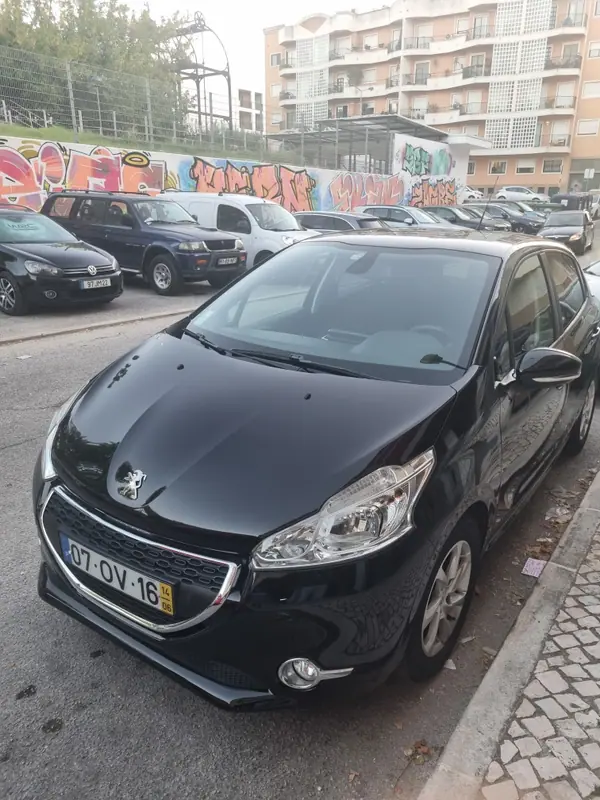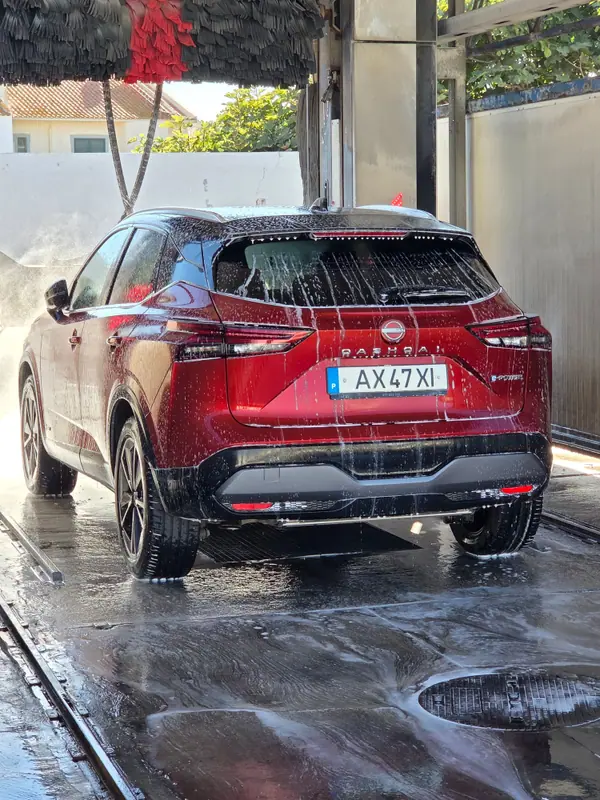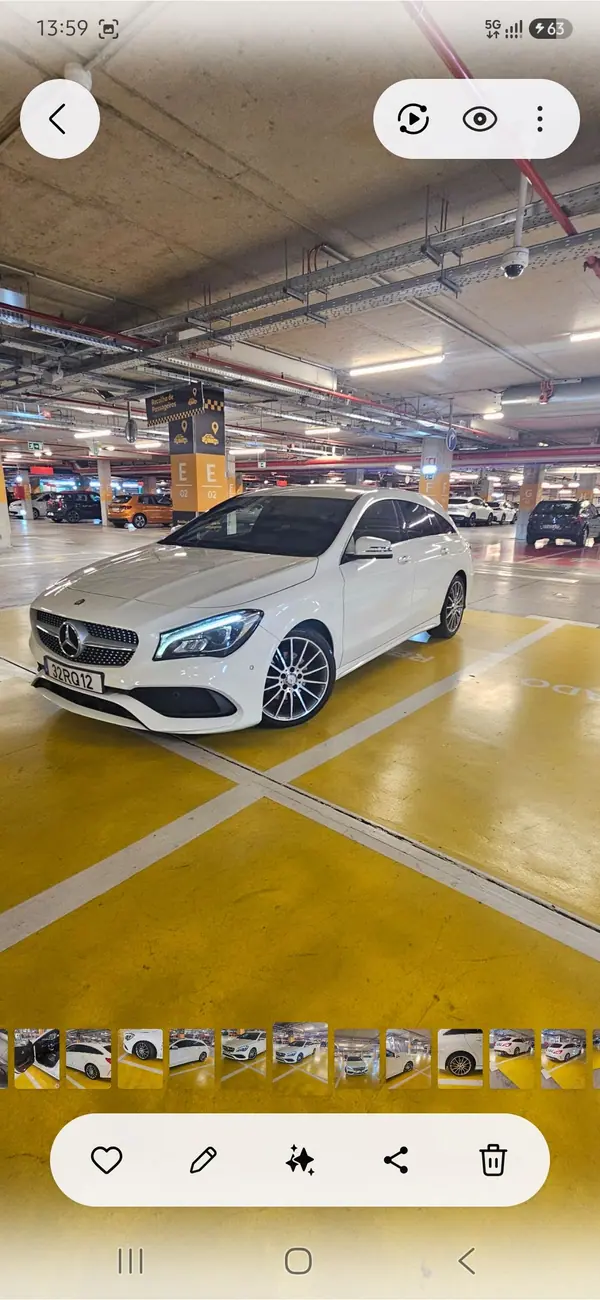
In the highly complex and strictly regulated European automotive sector, a vehicle's license plate (known as a "matrícula" in Portuguese) is immeasurably much more than a simple, random combination of letters and numbers stamped onto a plate of acrylic or aluminum. In Portugal, the license plate functions as the ultimate legal, fiscal, and historical identifier of a vehicle. It is, in its pure essence, the "Identity Card" of the automobile. This alphanumeric sequence grants direct access to a vast, highly detailed governmental database containing the vehicle's inspection history, tax situation, legal encumbrances, and original factory technical characteristics.
For automotive industry professionals, insurance loss adjusters, and informed consumers actively looking for used carson the AUTO.MOTO.pt portal, mastering the art of data extraction and interpretation through the license plate is the most critical step to guarantee the transparency, security, and absolute legality of any commercial transaction. A deep, professional analysis prevents financial fraud, uncovers hidden tax liens, and exposes camouflaged mechanical or structural issues.
In this exhaustive and fluff-free article, we will meticulously dissect the official, technical, and legal procedures required to access both public and confidential information of a vehicle through its identification plate, strictly focusing on Portuguese institutional channels and official government tools.
1. Knowing the car model by the license plate: Technical Data and the VIN
The technical identification and strict validation of a vehicle's factory characteristics is the logical next step in professional automotive due diligence. To know the car model by the license plate—or, using commonly searched terminology, to discover exactly what car it is by the plate—the consumer has access to open primary methods and deep secondary verification methods.
The primary and totally free method relies heavily on the use of online catalogs from auto parts companies or massive garage networks. By entering the license plate into one of these specific platforms, the interface (which communicates directly via API with the database of the Institute for Mobility and Transport - IMT) instantly returns the make, the exact commercial model, the specific engine code, the fuel type, and the year and month of manufacture. Another highly public route is the Tax Authority portal; by accessing the Single Circulation Tax (IUC) simulator and inserting the plate, the government system reveals the exact engine displacement in cubic centimeters (cc) and the official CO2 emissions, which is crucial data for calculating annual running costs.
However, the deeper technical question, and the one that separates the amateur buyer from the rigorous professional appraiser, is: how to find the VIN by the license plate? The VIN (Vehicle Identification Number), commonly referred to as the Chassis Number, is the international 17-digit alphanumeric code, structured according to the strict ISO 3779 standard, that globally and unrepeatably identifies that specific chassis. For reasons of extreme security and the active prevention of organized crime (namely the cloning of stolen vehicles), the complete VIN is never made available on free platforms open to the general public. In addition to the physical and documentary verification of the VIN, there is a practical and quick way to obtain the complete vehicle history. You can VIN check or the Portuguese license plate and receive in seconds a detailed report with mileage records, accidents, theft and the number of previous owners, based on more than a thousand international databases.
To legally obtain the VIN and cross-reference it with the license plate, the buyer must obligatorily consult the physical Documento Único Automóvel (DUA - Logbook) or the aforementioned Permanent Auto Registration Certificate. During an in-person, pre-purchase physical inspection, it is absolutely imperative and non-negotiable to carefully compare the VIN printed on the official State documents with the VIN physically engraved in low relief into the solid metal of the vehicle's chassis. This highly critical number is generally stamped deeply in the engine bay firewall, under a pre-cut flap in the floor carpet on the passenger side, or clearly visible through a tiny window in the lower corner of the front windshield. If the digits do not match millimeter by millimeter, or if the metal plate shows suspicious signs of fresh welding, grinding marks, or chemical tampering, the vehicle's identity has been severely forged and you must walk away.
2. How to check insurance via the license plate: Civil Liability Verification
Verifying the precise status of a vehicle's insurance policy is a paramount procedure, whether it occurs in the highly stressful context of a traffic accident (especially in hit-and-run scenarios) or during the cautious preliminary analysis of a vehicle prior to its potential acquisition. The Portuguese legal framework, strictly governed by Decree-Law No. 291/2007, uncompromisingly dictates that any motor vehicle parked or actively circulating on public roads must possess, at the absolute minimum, an active civil liability auto insurance policy. The absence of this mandatory insurance results in severe financial penalties (ranging from €500 to €2,500) and the immediate physical impoundment of the vehicle by police authorities (PSP or GNR).
To comprehensively answer the critical question of how to check insurance via the license plate, the Portuguese State designed a robust digital solution. Through the Insurance and Pension Funds Supervisory Authority (ASF), a public, completely free, and real-time verification platform is made available to all citizens. The bureaucratic process is highly simplified:
- The user must access the official ASF portal online.
- Navigate directly to the section specifically designated as "Verificar Seguro Automóvel" (Verify Auto Insurance).
- Input the exact alphanumeric sequence of the vehicle's license plate without any spaces or dashes.
Immediately upon submission, the IT system cross-references the inputted data with the central database shared continuously by all authorized insurance companies operating within the national territory. The query result returns the exact corporate name of the insurance entity holding the risk, the active policy number, and the precise start and end dates of the insurance coverage. Due to strict legal privacy imperatives stipulated by the European General Data Protection Regulation (GDPR), the platform is technologically locked from revealing the name, address, or contact details of the actual policyholder.
In the vibrant and dynamic market of used cars, proactively verifying if the vehicle you intend to purchase has an active insurance policy is a vital indirect indicator of its condition. A car with regularized insurance clearly demonstrates that it has not been abandoned, that its documentation has been meticulously kept up to date, and that the seller has been operating well within the boundaries of road legality.
3. Finding out who owns a license plate: Transparency and Legal Encumbrances
The reliable and irrefutable identification of a vehicle's legal titleholder is the most critical, sensitive, and non-negotiable due diligence step when purchasing a second-hand automobile. The rigorous research to find out who a license plate belongs to has the central objective of confirming the absolute legitimacy of the seller (guaranteeing that the person selling the car is actually the legal owner) and certifying, with full legal validity, that the vehicle is totally free of debts, judicial blocks, or financial encumbrances.
Daily, thousands of users input questions into search engines hoping to find out how to know the owner by the license plate, often falling for the fallacy of expecting to find open platforms or free smartphone apps that instantly reveal private names and addresses. However, it is fundamentally crucial to clarify that the absolute only legal, official, and reliable route in Portugal operates securely under the jurisdiction of the Ministry of Justice, through the Institute of Registries and Notaries (IRN). To incontestably discover who the plate belongs to, it is mandatory to request a legal document called the "Certidão Permanente do Registo Automóvel" (Permanent Auto Registration Certificate).
This highly official document can be physically requested at the counter of any Auto Registry Office, or, in a vastly faster and more convenient manner, through the government's official portal, Automóvel Online. Upon the secure payment of a standard administrative fee (usually fixed around 10 euros), the citizen obtains a unique alphanumeric access code. This specific code allows the secure viewing of a dynamic electronic document, updated in real-time, which remains valid for consultation for exactly 6 months. It is exclusively through this official government mechanism that knowing the owner through the license plate is materialized with total legal validity.
Vastly more vital than simply confirming the name and registered tax address of the current owner, the Permanent Certificate exhaustively details the section of "ónus e encargos" (liens and encumbrances). If you are currently analyzing the market and have found excellent used cars under €20,000 on the AUTO.MOTO.pt portal, extracting this registry certificate acts as your ultimate protective shield. It will irrefutably confirm if the vehicle is currently subject to:
- Reservas de Propriedade (Property Reservations): Indicates that the automobile was acquired using auto credit (leasing or ALD) and the full legal ownership still belongs to the financial institution. The seller legally cannot transfer the car without the formal extinction of this reservation.
- Penhoras e Arrestos (Seizures and Attachments): Coercive blocks issued by the Tax Authority (Finanças), Social Security, or by direct order of judicial courts due to massive accumulated debts of the owner. The golden rule of any automotive transaction strictly dictates that the deal should only proceed to the signing of the Declaration of Sale and the transfer of bank funds if the certificate perfectly confirms the seller's identity and reflects a totally clean, blank sheet of encumbrances.
4. Knowing the year by the license plate: The Chronological Evolution
The specific system for assigning license plates in Portugal rigidly follows a strict, uninterrupted chronological sequence. This sequential mathematics allows experienced automotive sector professionals to precisely know the year by the license plate with an extremely high degree of accuracy, simply by visually reading the alphanumeric combination affixed to the vehicle's bumpers.
To truly master the technique of seeing the year of the license plate, it is highly necessary to deeply understand the historical and structural evolution of the Portuguese identification plate system:
- First Generation - 1937 to Feb. 1992 (Format AA-00-00): The two letters were located exactly at the beginning of the series. These were exhausted after more than 5 million registered combinations.
- Second Generation - March 1992 to 2005 (Format 00-00-AA): The letters transitioned entirely to the end of the combination.
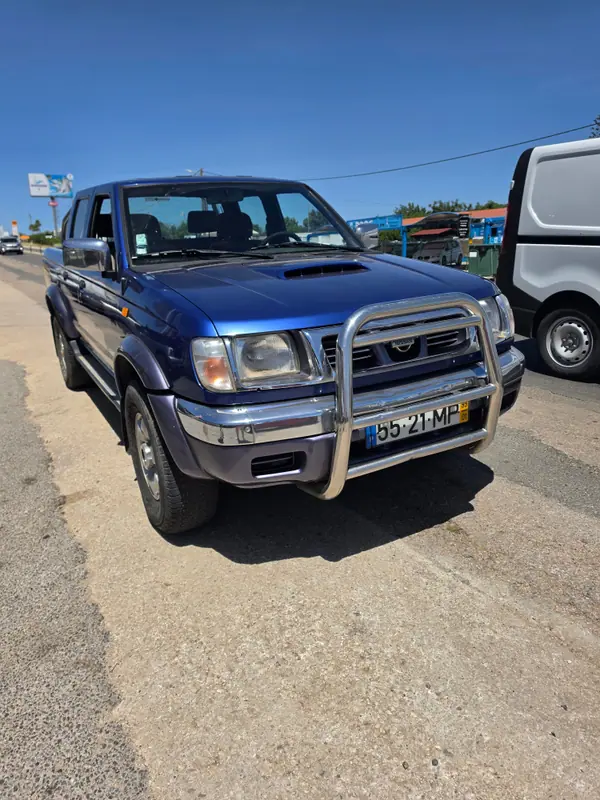
- Third Generation - 2005 to Feb. 2020 (Format 00-AA-00): The letters were isolated directly in the center of the plate.
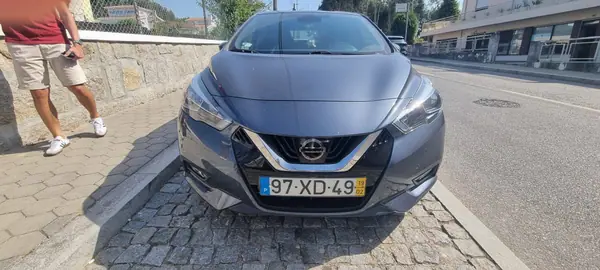
- Fourth Generation - March 2020 to present (Format AA-00-AA): The current, vastly broader format, scientifically designed to harmonize the aesthetics of national plates with the continuous visual standard of the European Union.
The practical ability to immediately know what the year of the license plate is also depended heavily on a classic, highly idiosyncratic visual element of Portugal. Between the years of 1998 and 2020, license plates obligatorily featured a vertical yellow band on the extreme right side. This highly visible band allowed anyone to know the exact month and year of a specific automobile license plate from a significant distance, as it displayed in black numbers the date of the vehicle's very first legal registration. It is crucial to note that, if the vehicle was a used car heavily imported from Germany, the date on the yellow band proudly showed the date of its first registration in Germany, and not the date of its later importation into Portugal.
With the rigid enforcement of the revolutionary Decree-Law No. 2/2020, the controversial yellow band was definitively and permanently removed. The legislator's primary justification was based heavily on the need to actively prevent commercial discrimination and the unfair, artificial depreciation of imported vehicles in the national market, which frequently suffered massive perceived value penalties simply for displaying a visual age different from their plate letters. Currently, to confirm with millimeter precision the exact year and month of a vehicle equipped with the new plates (AA-00-AA format), the direct consultation of the DUA, the registration certificate, or online insurance simulators remains the absolute only correct technical route.
5. Seeing if a license plate is cancelled: The Bureaucratic Limbo
The administrative legal status of the license plate strictly dictates the sovereign capacity of the vehicle to circulate legally on public asphalt. In various complex situations—especially during the negotiation of classic "barn finds," in long-term heavy restoration projects, or when facing automobiles that have not touched the road for several years — the technical need actively arises to see if a license plate is cancelled.
The formal cancellation of an automobile license plate is a strict administrative procedure executed exclusively by the delegations of the IMT. A license plate is primarily found to be officially cancelled for three distinct procedural reasons:
- VFV (End of Life Vehicles): In strict compliance with European environmental norms, the vehicle was legally delivered by its owner to an officially authorized dismantling and recycling center. The center's operator issues the formal "Destruction Certificate" and interacts directly with the IMT to promote the definitive cancellation of the registry, guaranteeing that the specific chassis ceases to exist for all fiscal and legal purposes.
- Permanent Export: The vehicle was legally exported and newly registered in another sovereign country, which strictly requires the return of the Portuguese documents and the immediate annulment of the registry in Portugal.
- Administrative Cancellation: Under the strict provisions of Decree-Law No. 78/2008, the IMT automatically executes the administrative cancellation of license plates for vehicles whose IT records clearly demonstrate that they have not undergone the mandatory periodic inspection (IPO) and, simultaneously, have completely failed to pay the Single Circulation Tax (IUC) for a continuous, uninterrupted period exceeding five years. The State legally presumes, in these specific cases, that the vehicle no longer physically exists or has been dismantled illegally.
If, during your deep market research, you find used cars whose license plate has been administratively cancelled by the IMT, it is highly important to know that the buying and selling transaction remains perfectly legal in the light of the Civil Code (the physical car is legally yours). However, the vehicle is categorically prohibited from circulating, and doing so constitutes a severe traffic infraction subject to immediate impoundment. The complex bureaucratic procedure of "Plate Reinstatement" rigorously requires submitting the vehicle to an Extraordinary Type B Inspection (a deep technical audit that analyzes structural integrity, braking efficiency, and emissions) at a Category B inspection center, followed by the complete regularization of all bureaucratic paperwork and the payment of heavy reinstatement fees at the IMT.
In conclusion, the professional use of reference portals likeAUTO.MOTO.ptto transact automobiles heavily presupposes the deep knowledge and strict compliance with current law. By expertly utilizing the powerful government tools and data cross-referencing methods described here, the user absolutely guarantees that the buying or selling process is not based on mere assumptions or good faith, but rather on concrete, documented, highly factual, and legally irrefutable data. Before finalizing any deal, it is highly recommended to check license plate or the chassis number through a complete history report. This additional verification allows you to cross-reference official data with international information and avoid unpleasant surprises after the purchase.