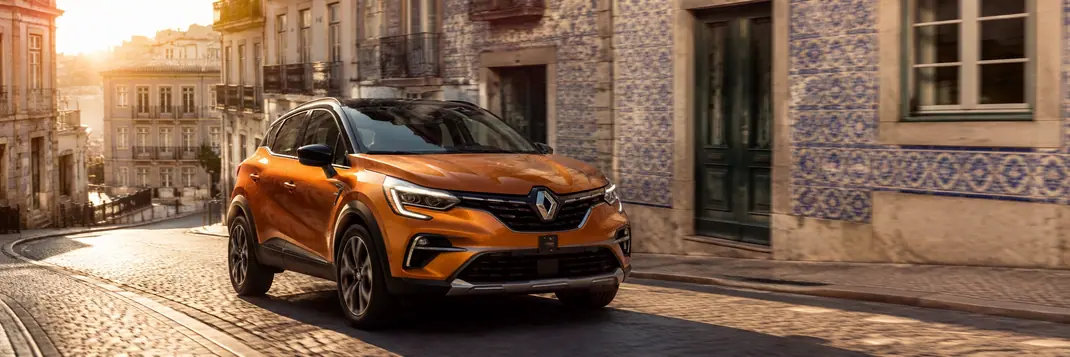
The B-SUV sector completely annihilated the traditional European family hatchback. It is a commercial massacre out there, and the Renault Capturstands at the absolute center of the battlefield. While the bizarre, bug-eyed Nissan Juke technically invented this specific small crossover category, Renault took that fundamental architecture, thoroughly rationalized it, bolted in a sliding rear bench, and subsequently printed billions of euros in pure profit, quietly killing the demand for the Clio estate in the process. Supported by statistical sales data from authoritative entities like the European Automobile Manufacturers' Association regarding the unstoppable growth of the crossover segment, the Captur's market dominance is an undeniable mathematical fact.
Marketing brochures and showroom spotlights do not fix broken timing chains. Glossy PR terminology does not explain aggressive highway wind noise or sluggish infotainment screens. If you are deeply scouring the listings on AUTO.MOTO.pt trying to make a rational, financially sound purchasing decision, you need cold, hard, mechanical, and objective automotive journalism. We are aggressively stripping away the dealership talk to look directly at specific engine codes, brutal depreciation curves, common catastrophic mechanical failures, and exact pricing dynamics. Whether you are actively hunting the market for a solid, reliable used renault captur or contemplating dropping heavy cash on a custom-ordered unit, this is the heavy-duty automotive intelligence you require.
Driving and Living: What do people think of the Renault Captur?
Ask a seasoned, independent mechanic or a cynical motoring journalist about the first-generation Captur (built from 2013 to 2019 under the internal code J87), and you will likely get a tired sigh. It was an absolute masterclass in aggressive corporate cost-cutting. Built directly upon the aging Clio IV architecture, the interior was a vast sea of scratchy, hollow plastics that vibrated in perfect sympathy with the rough diesel engine. The early iterations of the R-Link infotainment system were notoriously prone to completely freezing or rebooting themselves randomly while driving. The sound insulation was minimal. But consumers absolutely adored it. Why? Because it sat high on the road, looked chic with its contrasting two-tone roof colors, and you could actually unzip and wash the fabric seat covers in a domestic washing machine. It was brilliantly, unapologetically pragmatic.
The second generation (introduced in late 2019 and known internally as the JB/JE generation) changed the entire engineering script. Bolted onto the significantly stiffer, modern CMF-B platform, the car finally gained real dynamic maturity. The interior quality took a gargantuan, class-leading leap forward. Dense, soft-touch materials aggressively replaced the cheap, echoing plastics of the past. The switchgear gained a distinctly premium, tactile dampening. The centerpiece, a 9.3-inch portrait-oriented Easy Link touchscreen, finally offered smartphone-level response times and processing power, effortlessly handling Apple CarPlay without frustrating latency.
Behind the steering wheel, the renault captur suv makes zero attempts to be a sporty, canyon-carving machine. The MacPherson strut front and basic torsion beam rear suspension setup is deliberately and unashamedly soft. It eats broken tarmac, aggressive speed bumps, and historic cobblestones with a plushness that completely shames its much stiffer, over-damped German rivals. The electric power steering rack is entirely lifeless and heavily over-assisted. You feel absolutely zero texture or feedback through the leather rim. This intentional numbness makes tight city parking completely effortless, but renders spirited rural driving entirely pointless. Safety, however, is simply not debatable. Benefitting from high-tensile steel construction, it completely crushed the Euro NCAP crash testing protocols, securing a maximum five-star rating with an incredibly rigid structural safety cell.
The undisputed party trick remains located behind the front seats. The entire rear passenger bench slides forward and backward on physical metal rails by exactly 160 millimeters. Slide it all the way back, and six-foot adults actually have ample, comfortable knee room for long journeys. Slide it fully forward against the front seats, and you instantly gain a cavernous, class-leading 536 liters of deep trunk space. It is simple, analogue engineering that solves real-world family logistical nightmares instantly.
The Engine Room: Bulletproof Blocks, Oil Burners, and Complex Hybrids
The powertrain lineup is vastly varied, incredibly complex, and picking the wrong engine block will unequivocally result in severe financial tears.
First, a massive warning for the used cars market: completely avoid the early 1.2 TCe (engine code H5F) four-cylinder petrol engines found in the older Phase 1 models. The European automotive trade knows this specific engine extremely well for its chronic, severe oil consumption issues. The problem is deeply tied to fundamentally faulty piston ring designs and intake manifold pressure management. In worst-case scenarios, the lack of lubrication leads to scored cylinder walls and total catastrophic engine failure, which prompted massive class-action lawsuits in France. Do not buy one, no matter how cheap the listing price appears.
The replacement 1.0 TCe three-cylinder engine is perfectly fine for running basic urban errands. It is highly durable and structurally sound, but it gets obtrusively noisy and noticeably sluggish when attempting to join fast-moving highway traffic with a fully loaded cabin. It lacks low-end torque.
The absolute crown jewel of the combustion lineup is the 1.3 TCe (code H5Ht). Renault heavily co-developed this four-cylinder unit in a massive technical partnership with Mercedes-Benz. Utilizing friction-reducing Bore Spray Coating derived from the Nissan GT-R supercar, it produces either 140 hp or 160 hp and completely transforms the car's character. It is punchy, highly refined, surprisingly quiet, and pairs beautifully with the 7-speed EDC (Efficient Dual Clutch) automatic transmission built by Getrag.
On the diesel front, the 1.5 dCi (K9K) is an absolute titan of the automotive industry. It is loud, unrefined, and incredibly clattery at cold idle, but the core engine block is practically immortal. The only major caveat involves modern European emissions equipment. If you buy this diesel specifically for short, low-speed, three-mile urban grocery runs, the Diesel Particulate Filter (DPF) will inevitably clog with soot, the throttle response will die, and the dashboard will light up like a Christmas tree, requiring expensive forced regenerations at a dealership. Diesel requires long, hot highway runs to survive.
The modern corporate push is now entirely focused on the E-Tech hybrid system. It is a fascinatingly weird, highly complex piece of engineering designed to dodge CO2 fines. It combines a 1.6-liter naturally aspirated Atkinson-cycle petrol engine with two separate electric motors. Crucially, it uses an innovative multimode dog-clutch gearbox, eschewing traditional synchronizer rings—a mechanical trick Renault engineers pulled straight from their Formula 1 racing program. In stop-and-go city traffic, it is utterly brilliant, silently pulling away from traffic lights entirely on battery power with 15 different operational modes seamlessly managing the power flow. On the open highway, however, the illusion breaks. If you demand sudden, heavy acceleration on a steep incline and the tiny 1.2 kWh battery is depleted, the 1.6-liter engine is forced to rev loudly, coarsely, and intrusively to compensate for the lack of electric torque.
Real MPG: The Unfiltered Fuel Consumption Truth
Laboratory figures printed on glossy paper are mostly useless in daily life. The true answer depends entirely on the specific badge glued to the tailgate and how heavily you apply the throttle.
- 1.5 dCi Diesel: This is the heavyweight champion of the long highway commute. The aerodynamics and diesel torque combine to easily sit at 4.5 to 4.8 liters per 100 km (roughly 58-62 MPG) on long motorway stints. A full 48-liter tank feels like it lasts for weeks.
- 1.0 TCe Petrol: Being a tiny engine forced to push a heavy, bluff-fronted SUV, the turbocharger has to work incredibly hard. Expect to average roughly 6.2 to 6.6 l/100 km in mixed urban and extra-urban conditions.
- 1.3 TCe Petrol: The irony of internal combustion is that a larger engine often works less hard. Even packing 140 horsepower, it remains highly efficient, usually floating around a very respectable 6.5 to 6.8 l/100 km, easily justifying the extra purchase cost through sheer drivability.
- E-Tech Full Hybrid: It absolutely dominates in gridlock city traffic. Because aggressive regenerative braking constantly feeds the small lithium battery, urban fuel economy routinely drops to a staggering 4.7 l/100 km. However, independent road testing strictly aligned with WLTP facts mathematically confirms that standard hybrids heavily lose their operational advantage on open motorways, where consumption will quickly climb closer to 6.0 l/100 km as the electric system becomes dead weight at 120 km/h.
The Maintenance Minefield: Timing Belts vs. Timing Chains
Pay very close attention to this section, as it is the single most expensive maintenance mistake you can make as an owner. The approach depends entirely on the specific mechanical architecture you have under the hood. There is no blanket rule.
If you own the 1.5 dCi diesel, the engine timing relies on a reinforced, toothed rubber timing belt. Renault’s official factory service schedule is absolute and legally uncompromising: the belt kit must be replaced at 150,000 kilometers or every 6 years, whichever threshold is crossed first. This is not a friendly mechanic's suggestion; it is a critical mandate. Because the K9K is an interference engine, if that rubber belt snaps at 70 mph, the camshaft immediately stops spinning, the valves drop into the combustion chamber, and the pistons smash violently into them. The engine block is instantly and irreparably destroyed. When paying for this belt change, you must always replace the water pump and the tensioner pulleys simultaneously. Doing a cheap half-job here absolutely guarantees a catastrophic breakdown later.
Conversely, if you bought a modern petrol model (the 0.9, 1.0, or 1.3 TCe engines), the architecture is fundamentally different. These specific engine blocks utilize a heavy-duty metallic timing chain that operates in an oil bath inside the engine. By factory design, this metallic chain is deemed "lifetime" hardware. There is no scheduled replacement interval in the service book. The chain is kept tight and properly synchronized by hydraulic tensioners that operate using high engine oil pressure. If you skip your scheduled yearly oil changes, or attempt to save money by using cheap, non-approved oil that fails to meet Renault's strict RN17 specifications, the oil channels will quickly sludge up. The hydraulic tensioner subsequently fails, the metallic chain stretches, rattles violently against the metal engine casing on cold starts, and eventually skips a tooth, destroying the engine timing. Change your oil strictly on time, every single year, without exception.
Physical Dimensions, Packaging, and the Burden of Mass
To survive the sales onslaught from the Peugeot 2008 and Ford Puma, the second-generation Captur simply had to grow. It now stretches 4,227 mm bumper-to-bumper, sits 1,797 mm wide, and stands 1,576 mm tall. But the only measurement that actually matters for daily life is the 2,639 mm wheelbase. That extra stretch between the axles finally cures the cramped rear quarters that plagued the first generation. You can actually put six-foot adults in the back now without complaints.
Then there is the mass. Modern crash structures and electrification add serious bulk. Keep things simple with the base 1.0 TCe manual, and the car tips the scales at a reasonable 1,198 kg. Tick the box for the 1.3-liter four-cylinder and the EDC automatic gearbox, and curb weight climbs to 1,334 kg. The hybrids, naturally, are dynamically porky. The E-Tech Full Hybrid lugs around a lithium-ion pack and twin electric motors, pushing the mass to 1,438 kg. The older, discontinued PHEV was even worse, breaching the 1,600 kg mark. To stop a crossover that heavy from leaning wildly into corners, Renault had to drastically stiffen the springs—a move that effectively ruined the famously plush French ride quality over broken city streets.
The Used Market and Pricing Reality in Portugal
The secondary market for vehicles in Portugal is highly distorted by massive vehicle taxation policies, but this crossover holds its ground fiercely. It is a highly liquid asset for any dealership. Let's break down the exact transactional values across the most relevant model years currently populating the AUTO.MOTO.pt servers.
How much is a 2019 renault captur worth? The 2019 model year marks the absolute final production run of the first generation. These specific cars are highly desirable in the budget sector because they are mechanically and electronically sorted. Early production faults, such as the catastrophic infotainment crashes, were completely ironed out, and the hardware is proven. Depending on the exact trim level and whether it’s a high-mileage diesel or a small petrol, private buyers and dealers are paying firmly between €13,500 and €16,500. Do not expect to find clean, accident-free, fully documented examples natively sitting as cars under 10,000 euros. The residual demand from young families simply keeps the absolute floor price aggressively higher than that barrier.
What is the value of a 2023 renault captur? Search precisely for renault captur 2023: price and you immediately enter the premium realm of ex-fleet, corporate lease returns, and nearly-new vehicles. These are fully modern, highly equipped CMF-B platform cars. Secondary market values currently sit tightly locked between €21,000 and €26,500. Depreciation is unusually slow here. The factory LPG (Bi-Fuel) versions are incredibly sought after due to the exceptionally low cost of autogas in Europe, and high-spec R.S. Line trims command a heavy premium. Because most of these cars still carry the remaining balance of a factory warranty, buyers happily pay the extra cash to completely avoid the financial risk of potential infotainment or ADAS sensor failures.
How much does a 2025 renault captur cost? The 2025 model year delivered a massive, polarizing visual overhaul. The soft, rounded, friendly front end that defined the Captur for a decade was unceremoniously axed. It was replaced by the sharp, aggressive, heavily geometric styling language lifted directly from the flagship Renault Rafale, complete with a flatter hood and jagged, half-diamond daytime running lights. Furthermore, the mandatory European inclusion of heavy active safety software (under the GSR2 legislation) pushed the baseline manufacturing price up significantly. In the current market, an ex-demonstrator or zero-mileage pre-registered 2025 model will absolutely not change hands for anything less than €25,500.
How much does a new renault captur cost? Building a new renault captur to your exact, bespoke specifications via the factory configurator requires a stark reality check regarding modern automotive pricing inflation. The absolute, stripped-out baseline—the Evolution trim with the meager 90 hp engine—starts around €24,500. But that is merely a bait-and-switch marketing price; nobody buys the base specification with small wheels.
When buyers inevitably select the highly desirable, top-tier Esprit Alpine trim (featuring aggressive aerodynamic styling, stunning 19-inch alloy wheels, and deeply bolstered sport seats) paired with the complex 145 hp E-Tech hybrid powertrain, the final invoice brutally and rapidly blasts past the €34,500 mark. Spending nearly 35 grand on a compact B-SUV was entirely laughable a decade ago. Today, due to the immense costs of battery development and safety tech, it is the stark reality of the renault captur portugal landscape. Yet, despite the heavy price tag, it continues to fly out of showrooms, proving unequivocally that if a manufacturer nails the packaging, ride height, and aggressive exterior design, modern consumers will gladly pay the heavy premium.