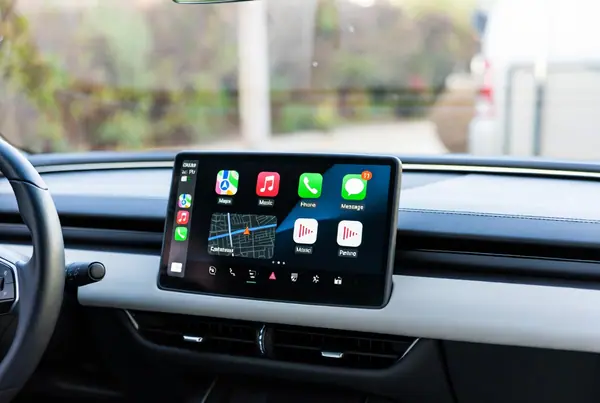
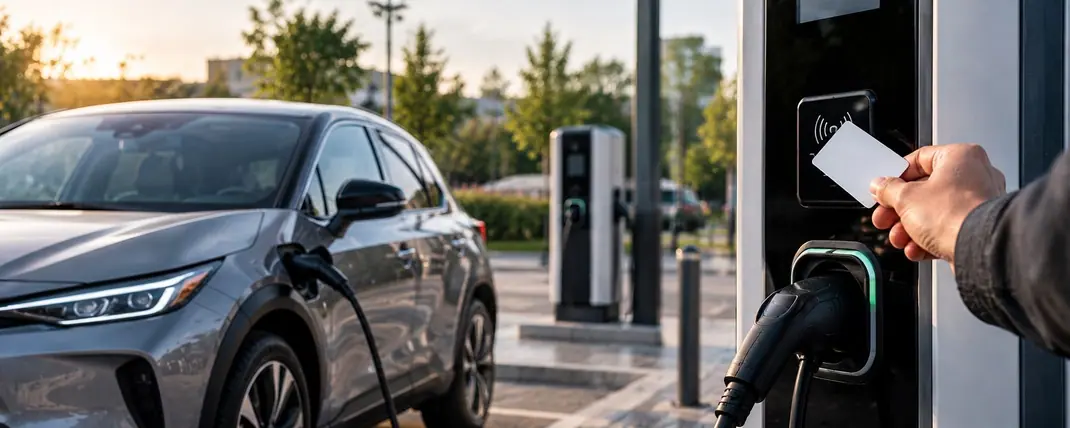
Quick answer: no single charging card is the cheapest at every charger. The final price of each session combines the retailer's tariff (CEME), the charge point operator's tariff (OPC) and VAT, and the weight of each part changes from charger to charger. The sensible choice is one card with cheap energy for everyday use and, if you travel a lot, a second one for the motorway. Before deciding, compare offers in ERSE's electric mobility simulator.
How charging works on the Mobi.E network
In Portugal, the vast majority of public chargers are connected to the Mobi.E network. A single contract lets you charge at chargers run by different operators, something that in Spain or France still means juggling several apps. Two parties are involved in every session:
- OPC (charge point operator): installs and maintains the charger and charges for its use, per minute, per kWh, per session or a mix of these.
- CEME (electricity retailer for electric mobility): the company you sign the contract with. It sells the energy per kWh, issues the card or app and sends the monthly invoice.
There is also the network manager's (EGME) tariff. In 2026 it fell to €0.1088 per session, down from €0.1572 in 2025, according to Mobi.E. It is paid by retailers and operators and ends up, in a small part, in the final price.

How to read a charging invoice
Here is a simplified example, with purely illustrative figures, of 30 kWh charged in 40 minutes at a 50 kW fast charger:
- Retailer's energy: 30 kWh × €0.20 = €6.00.
- Operator's tariff: 40 minutes × €0.10 = €4.00.
- Subtotal: €10.00, plus VAT at the standard rate (23% on the mainland): €2.30.
- Total: €12.30, or about €0.41 per kWh.
In this example the operator takes almost as much as the energy itself. When the tariff is per minute, staying plugged in past 80% gets expensive: the power drops, but the minutes keep counting. To see why, read how long it takes to charge an electric car.
What is the best electric charging card?
It depends on how you use the car. Retailers change their prices several times a year, so a table published today goes out of date quickly. Instead of a ranking, these are the criteria that make a difference to the bill:
- Energy price (€/kWh): the part the retailer controls. Check whether it is fixed or indexed to the market and whether it changes with the time of day.
- Fixed costs: monthly fee, the price of the physical card, a per-session fee or a minimum charge.
- Discounts for home customers: several energy companies lower the price for people who already buy their home electricity from them.
- App: it should show the estimated total price before you start, including the operator's tariff.
- Physical RFID card: in underground car parks with no mobile signal, it is what makes sure the session starts.
- Roaming: if you often drive to Spain, check whether the card works there and at what price.
Mobi.E's official list of retailers has more than 30 companies. It includes utilities such as EDP, Galp, Goldenergy and Iberdrola, fuel companies such as Prio and Repsol, and digital platforms such as Miio and EVIO. Always check each company's current tariff on its website.
Two cards: one for the city, one for the road
If you have no garage and charge mostly on the street, look for the lowest energy price, because at slow chargers the operator's tariff weighs less. If you charge at home and only use public chargers when travelling, focus on motorway fast chargers, where the operator's tariff dominates.
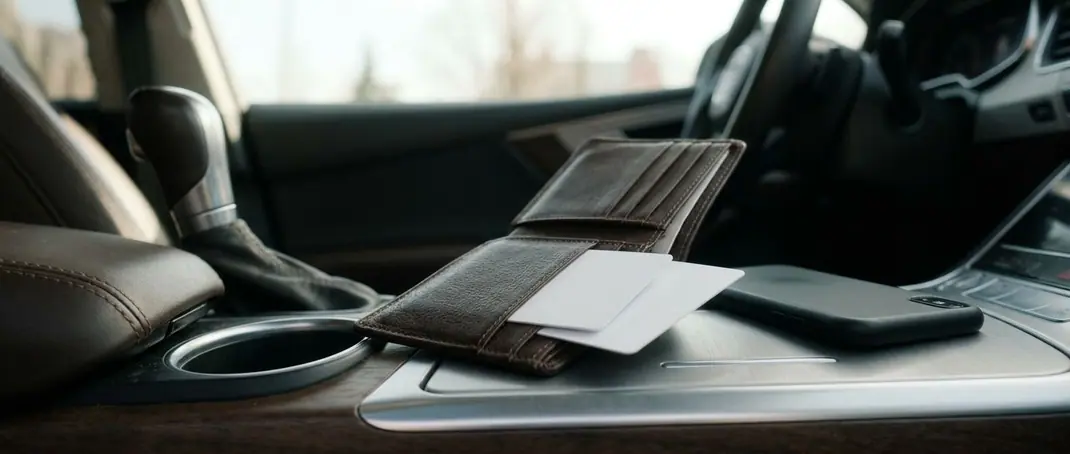
Nothing stops you from having contracts with more than one retailer. Many drivers keep one card with cheap energy and another from a company with discounts at the chargers they use on trips, and choose on the spot. If you don't know yet how much you spend, start with how much it costs to charge an electric car at home and compare it with public charging.
What the new electric mobility law changes
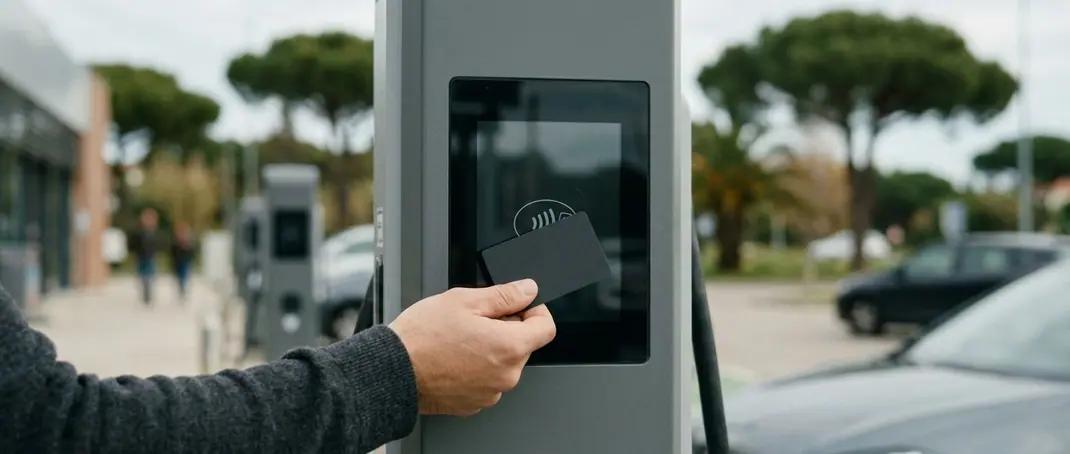
Decree-Law 93/2025 abolishes the electricity retailer for electric mobility and requires chargers to accept one-off payment without a contract: by bank card at chargers of 50 kW and above, and by another electronic method, such as a QR code, at the others. The transition period was extended to 31 December 2027 by Decree-Law 155/2026.
In practice, the current model and the new one coexist until then. Your retailer's card keeps working on the Mobi.E network, and some chargers already accept bank cards. During the transition, it is worth keeping an eye on your retailer's notices about any change in conditions.
Where to charge for less
Besides the card, the location matters. At slow chargers the operator's tariff tends to weigh less, and there are still places where you can charge for free. We gathered the main ones in our guide to where to charge electric cars for free in Portugal.
If you are still choosing a car, AUTO.MOTO.pt currently lists close to 900 used electric cars, with a median price of about €25,500. More than 600 are in the list of electric cars up to €30,000.
Frequently asked questions
Do I need a card to charge on the Mobi.E network?
At most chargers, yes: you need a contract with a retailer, with a physical card or an app. During the transition, more and more chargers also accept one-off payment by bank card or QR code.
Does a charging card cost anything?
It depends on the retailer. Some have no sign-up or monthly fee, while others charge for the physical card or a per-session fee. Check the tariff before signing.
Can I have more than one card?
Yes. There is no limit on contracts, and two cards let you choose the cheaper one at each charger.
How do I know how much I will pay before charging?
Use the retailer's app or Mobi.E's charger map, which show the operator's tariff. To compare energy prices between retailers, ERSE's simulator is the official source.
Does the card work in Spain?
Only if the retailer has roaming agreements. Not every Portuguese card works abroad, so check before you travel.