Handing over cash and receiving the keys to a vehicle does not make you the legal owner in Portugal. The transaction remains legally meaningless until the Portuguese state officially recognizes the transfer of property. The legal framework surrounding automotive ownership demands strict adherence to administrative protocols. You must update the Documento Único Automóvel (DUA). This polycarbonate smart card serves as the ultimate proof of ownership and technical homologation. It replaced the antiquated two-part paper system consisting of the Livrete and the Título de Registo de Propriedade in 2005.
Failing to execute a proper vehicle registration initiates a cascade of severe financial and legal liabilities. The Portuguese Tax and Customs Authority (Autoridade Tributária e Aduaneira) tracks the Imposto Único de Circulação (IUC) based entirely on the active registration database. If you sell a vehicle and the buyer fails to register it, you remain the legal owner in the eyes of the state. You will receive the annual tax bills. You will incur the aggressive financial penalties for non-payment. You will receive the speeding tickets captured by automated radar systems.
Conversely, if you purchase a vehicle and delay the administrative transfer, you operate the machine illegally. Traffic police routinely scan license plates. Finding a discrepancy between the driver and the registered owner during a routine stop without proper documentation leads to immediate fines and potential vehicle impoundment. The law grants buyers a strict 60-day window to formalize the transfer of ownership after a sale. Do not wait for day fifty-nine. Navigating the bureaucracy of the Instituto dos Registos e do Notariado (IRN) requires exact documentation, verified signatures, and precise procedural execution. This guide delivers a forensic breakdown of the physical forms, digital portals, and administrative mandates required to maintain your legal mobility across the Iberian Peninsula.
How to fill out the vehicle registration?
The foundational document for any manual ownership transfer is the Requerimento de Registo Automóvel, formally designated as Modelo 2 by the IRN. You cannot use a generic contract of sale downloaded from the internet to change the legal title. The state only accepts this specific, standardized physical form. Filling it out demands absolute precision. A single crossed-out word, a misspelled surname, or an incorrect digit in the identification numbers will result in immediate rejection by the civil registry clerk.
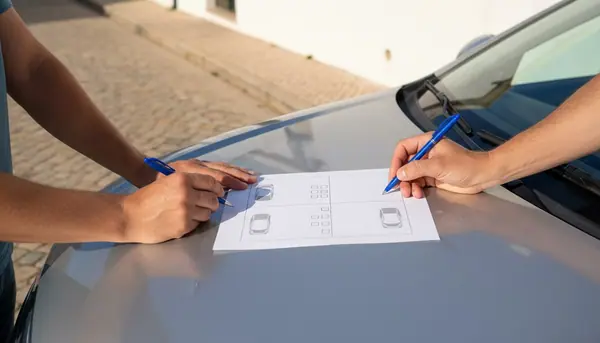
The buyer and the seller must complete the document together. The form acts as a dual-purpose legal declaration. It serves as the official bill of sale and the formal petition to the state to alter the registry. You must use a black or blue ballpoint pen. Write in clear, legible block letters. The most critical data points revolve around the precise identification of the machine and the individuals involved. You must input the vehicle's exact license plate (Matrícula) and the 17-character Vehicle Identification Number (Número de Quadro). Transcribe this data directly from the existing DUA. Do not copy it from memory or an online advertisement.
Signatures represent the most common point of failure in physical transactions. The signatures on the Modelo 2 must exactly match the signatures on the respective identification documents of both the buyer and the seller. Clerks at the registry office will scrutinize the ink against the digital signature embedded in the Cartão de Cidadão (Citizen Card). If the seller is absent during the submission of the document, their signature must be formally recognized and certified by a lawyer, solicitor, or notary public. This legal certification proves the seller actually consented to the transaction. Corporate transactions introduce another layer of complexity. If a company sells the vehicle, the manager signing the Modelo 2 must possess the legal authority to bind the corporation. The registry clerk will verify this authority against the permanent commercial certificate (Certidão Permanente) of the company.
Where to change the vehicle registration?
Drivers hold multiple options for executing this bureaucratic process in the physical world. The traditional and most direct route involves visiting a Conservatória do Registo Automóvel. These specialized regional offices operate under the direct authority of the Ministry of Justice. They handle complex transport logistics, fleet registrations, and difficult title disputes. Because they process massive volumes of administrative data, they suffer from chronic overcrowding.
To alleviate the immense pressure on central registry offices, the government decentralized basic administrative tasks. You can process a standard ownership transfer at any Loja de Cidadão (Citizen Shop) across the country. These mega-service centers house dedicated IRN service desks alongside tax, social security, and health department counters. Many localized Balcões de Atendimento (service desks) in smaller municipalities also possess the authority to process the Modelo 2.
Walk-in appointments are highly inefficient. Showing up without a scheduled time slot routinely results in hours of waiting or immediate rejection at the door by security personnel managing the queues. You must secure a digital appointment ticket via the SIGA platform (Sistema de Informação e Gestão do Atendimento) or the SigaApp mobile application. You select the specific service, choose the location, and book an available time slot.
Some buyers prefer to bypass state counters entirely by utilizing a Despachante Oficial (official customs and registration broker). These licensed professionals handle the entire administrative burden for a premium fee. You hand them the signed Modelo 2 and copies of your identification. They utilize their specialized direct-access portals to update the registry and mail you the final documents. This route proves highly beneficial for expatriates struggling with the Portuguese language or individuals lacking the time to navigate government queues.
How to fill out the vehicle registration application?
A forensic breakdown of the Modelo 2 form eliminates the risk of administrative rejection. The document divides into highly specific sections known as Quadros. You must understand the legal function of each section.
Quadro 1 demands the physical identification of the vehicle. You input the Matrícula (license plate) in the exact format issued by the state. You write the Marca (brand, e.g., Toyota, BMW). The most vital field here is the Número de Quadro (VIN). Check this 17-digit alphanumeric code against the physical stamping on the vehicle chassis. A mismatch between the physical chassis and the paperwork signifies severe legal trouble, potentially indicating a stolen or cloned vehicle.
Quadro 2 identifies the specific legal act requested. You will place an "X" in the box labeled "Transferência de Propriedade" (Transfer of Ownership). If you are purchasing the vehicle through a financing agreement, the bank will require a "Reserva de Propriedade" (Retention of Title) to be registered simultaneously. This prevents you from selling the car until the loan is fully paid.
Quadro 3 designates the Sujeito Ativo (Active Subject). In a standard sale, this is the current owner (the seller). You must provide their full legal name, precise residential address, postal code, and Tax Identification Number (NIF). If the seller is a private citizen, you check the box for "Solteiro" (Single) or "Casado" (Married). Spousal consent rules apply in Portugal depending on the marital property regime.
Quadro 4 designates the Sujeito Passivo (Passive Subject). This is the buyer. You fill in the identical personal data fields required in Quadro 3.
The differences between private sales and commercial transactions manifest heavily in the paperwork flow. When buying from a private individual, you handle the Modelo 2 personally. Dealerships operate differently. Professional automotive merchants utilize automated corporate portals to process the title transfer instantly upon closing the sale. If you are currently researching the market and reading our guide on where to buy used cars in Portugal, you will notice that certified commercial dealerships factor the administrative transfer costs directly into the final purchase price. They hand you a temporary driving permit before you drive off the lot.
How long does the vehicle registration take?
Patience dictates the final phase of the process. The transport authority does not possess the physical hardware to print secure polycarbonate smart cards in their local offices. When you submit the Modelo 2 and pay the mandatory fees, the counter clerk inputs your data into the central IRN mainframe. The legal transfer of ownership executes immediately in the digital database. You are legally the owner the moment the clerk hits enter.
The clerk will print a Guia de Substituição do DUA. This is a temporary paper receipt printed on standard A4 paper. It acts as your legal authorization to drive. You must keep this paper inside the vehicle at all times. Police officers recognize this receipt as a valid substitute for the physical card. The Guia de Substituição typically holds legal validity for 30 days. Do not attempt to drive across international borders into Spain or France with this paper receipt. Foreign authorities require the physical plastic card to verify ownership.
The digital data transfers securely to the Imprensa Nacional-Casa da Moeda (INCM). This state-owned mint manufactures the physical DUA cards. They embed the polycarbonate plastic with anti-counterfeit holographic overlays, UV-reactive ink, and micro-printing. The manufacturing and logistics pipeline generally takes between 10 to 15 business days.
The final product ships via CTT registered mail directly to the address listed in Quadro 4 of your application. The postman requires a physical signature upon delivery to prevent the secure document from falling into unauthorized hands. If you are not home during the delivery attempt, the postman leaves a notification slip in your mailbox. You have six working days to present that slip and your Cartão de Cidadão at your local CTT post office to retrieve the DUA. Failure to collect the envelope results in the document being returned to the central IRN headquarters, forcing you to initiate a frustrating recovery process.
Where to alter the vehicle registration?
A full transfer of ownership represents only one facet of automotive registry law. You must maintain the accuracy of the DUA throughout the entire lifespan of your ownership. The state mandates strict deadlines for reporting simple alterations. You possess exactly 30 days to update the registry whenever a material fact regarding the vehicle or your personal identity changes.
Changing your residential address triggers a mandatory registry update. Previously, drivers had to pay to issue a new physical DUA card simply for moving to a new apartment. Modernization fixed this flaw. Today, you simply update the address embedded in the microchip of your Cartão de Cidadão. This action automatically syncs with the central government database, updating your address across the tax authority, health service, and the IRN vehicle registration files simultaneously. You do not need a new physical DUA for an address change.
Physical modifications to the machine require heavy bureaucratic intervention. You cannot simply repaint your car or install a different engine. If you change the exterior color of the vehicle, you must first secure approval from the Instituto da Mobilidade e dos Transportes (IMT). Once the IMT issues the technical homologation approval, you take that certification to the Conservatória do Registo Automóvel to officially alter the vehicle registration.
The same strict workflow applies to altering tire dimensions not listed on the original factory homologation sheet, swapping engine blocks, or converting a combustion engine to run on Liquefied Petroleum Gas (LPG). Driving a vehicle with a physical color or tire size that contradicts the data printed on the DUA constitutes a serious traffic offense. Police will issue fines ranging from 120 to 600 euros and seize the vehicle documents until you pass an extraordinary technical inspection (Inspeção B) to verify the unauthorized modifications. Process your alterations at the IRN immediately upon completing the mechanical work.
How to do the vehicle registration online?
Digital execution provides the fastest, most financially efficient method to update your credentials. You bypass the physical queues entirely, eliminate the need for paper forms, and interact directly with the state infrastructure via the Automóvel Online platform.
This portal requires high-level cryptographic authentication. You cannot simply create a username and password. You must authenticate using the Chave Móvel Digital (Digital Mobile Key) or a physical smartcard reader utilizing your Cartão de Cidadão. The Chave Móvel Digital acts as a highly secure two-factor authentication token tied to your mobile phone number and the national civil registry.
The digital process demands coordination between the buyer and the seller. The buyer typically initiates the process on the portal. They log in, select the option for a transfer of ownership, and input the vehicle's license plate. The system pulls the current legal status directly from the IRN mainframe. The buyer inputs the seller's taxpayer number (NIF). The system then generates a digital request.
The seller must then log into the Automóvel Online platform using their own cryptographic authentication. They navigate to their pending requests dashboard. They review the digital contract, verify the buyer's details, and digitally sign the transfer using their Chave Móvel Digital PIN or Cartão de Cidadão signature PIN.
The state actively incentivizes this digital bureaucracy through financial discounts. The standard administrative fee for processing a transfer of ownership at a physical government counter sits at 65 euros. Processing the exact same transaction through the Automóvel Online platform triggers an automatic 15 percent discount. The online fee drops to 55.25 euros.
Once both parties digitally sign the transfer, the system generates a Multibanco payment reference. The buyer opens their banking application, inputs the entity, reference, and amount, and clears the payment. The portal registers the financial transaction instantly. A digital PDF receipt is generated, serving as the temporary driving permit until the physical DUA arrives in the mail.
Technical hurdles occasionally frustrate users on this portal. Ensure your browser allows pop-ups from the Ministry of Justice domain. If you opt to use a physical smartcard reader instead of the Chave Móvel Digital, you must install the specific Autenticação.gov desktop software and the middleware drivers for your specific card reader model. Despite these minor technical requirements, the digital route remains the superior choice for private sales of used cars, ensuring instant legal compliance without stepping foot in a government building.
Conclusion Bureaucratic compliance dictates your financial safety on the road. The Portuguese state engineers the vehicle registration process to maintain total visibility over taxation, civil liability, and criminal accountability. Securing the physical machinery represents the easy part of the transaction. Executing the administrative transfer secures your legal standing.
Never exchange money or sign a Modelo 2 form without first checking the legal background of the machine. You must pull a Certidão de Registo Automóvel online via the portal to verify there are no active penhoras (state or private liens) attached to the chassis. A lien transfers directly to the new owner. If the previous owner owes massive debts to the tax authority, the state will seize the vehicle from your driveway, regardless of the money you paid the seller. You must also verify the IUC payment history through the Portal das Finanças.
Respect the 60-day legal deadline. Leverage the Automóvel Online platform to secure the 15 percent discount and bypass the chaotic physical queues. Ensure your authentication tools, specifically your Chave Móvel Digital, remain active and accessible before attempting the transaction. When the new DUA arrives in the mail, verify every single printed digit against your insurance policy. Keep the polycarbonate card secure. Protect your legal mobility, eliminate your exposure to administrative fines, and drive with absolute confidence across the Portuguese highway network.