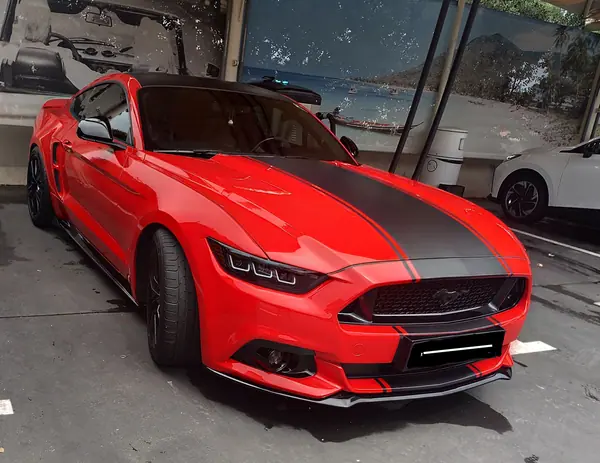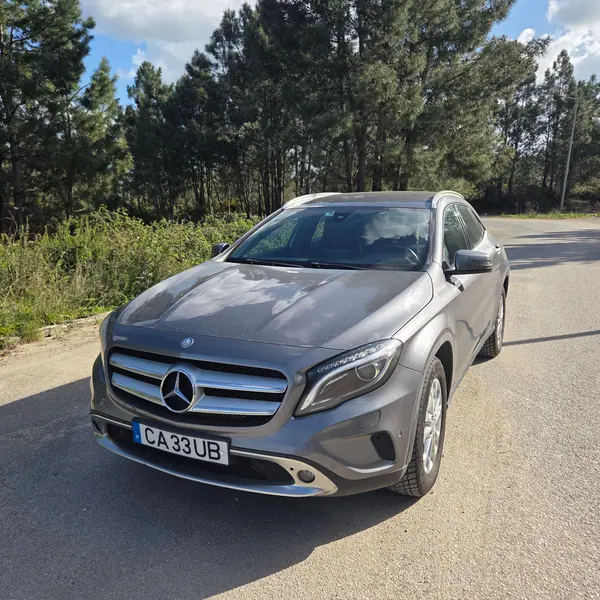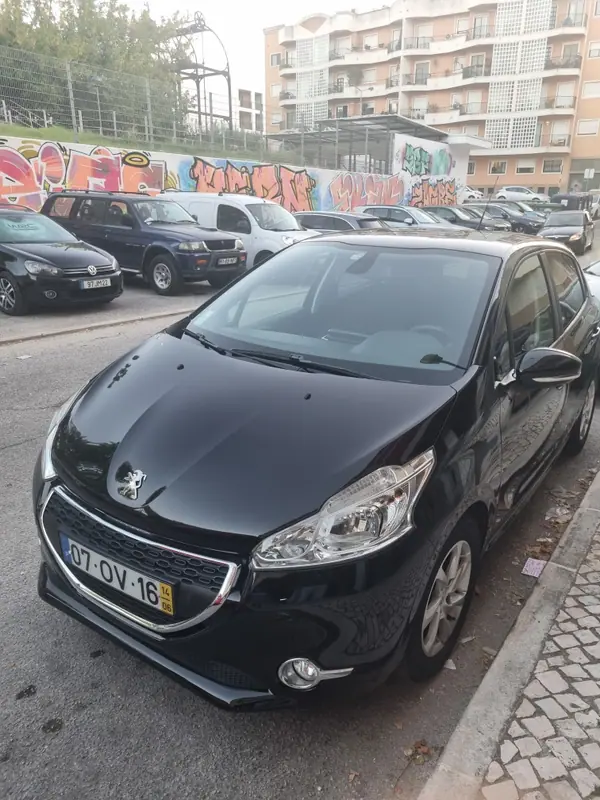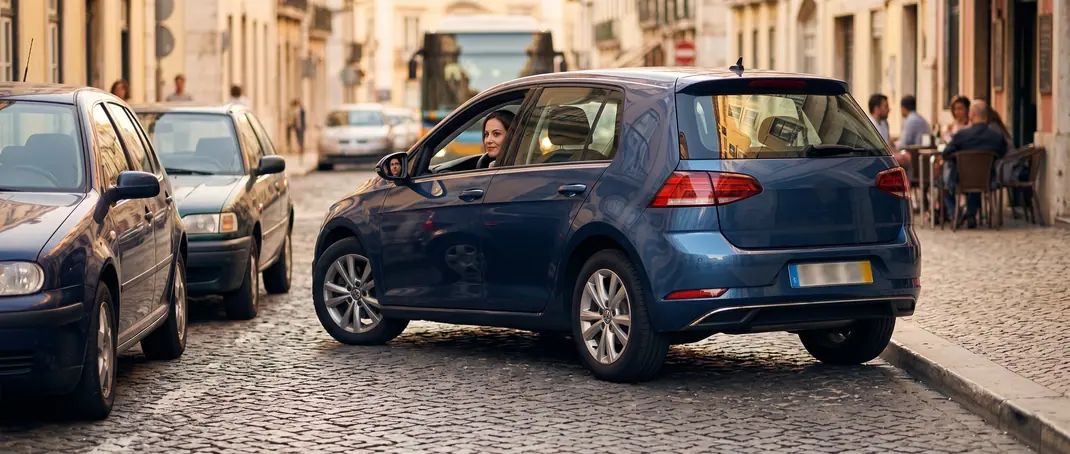
Let’s get completely and brutally real for a moment, from one driver to another. I genuinely don't care if you just got your driver's license last week and still have the new-driver jitters, or if you’ve spent the last thirty years of your life eating up thousands of miles across the most chaotic, stressful highways in Europe. The sinking feeling that creeps up on us is exactly, rigorously the same.
You're crawling down a tight, unforgiving, historic street in the middle of the city center. Traffic is an absolute, predictable mess. There’s a sidewalk café packed with people sipping their flat whites, chatting, but with their eyes glued to the street because, let's face it, human struggle is entertaining and they have nothing better to do. And suddenly, right there. You spot it. The holy grail of urban life. A perfect, empty parking space. But there is one terrifying catch: this wonderful spot is wedged perfectly and tightly between two massive luxury SUVs that cost considerably more than your house.
Your stomach immediately does a little flip, doesn't it?
The stressed-out delivery driver in the van behind you inches forward, practically kissing your rear bumper, clearly losing the will to live. Someone in your passenger seat sighs heavily. A loud, irritating horn blares in the distance from the back of the line. Your palms mysteriously start to sweat, slipping awkwardly on the leather of the steering wheel. In the blink of an eye, the most mundane, everyday, boring chore on earth turns into a high-stakes, sweat-inducing public trial by fire.
Parallel parking is the universal boogeyman of adult life. Sure, we spend dozens of hours practicing it to exhaustion in driving school. But over there, the cones are made of soft, bright orange plastic, and your instructor is sitting shotgun, ready to slam the dual brakes, yelling out memorized, robotic reference points: "When the sticker on the window lines up with the tree, turn the wheel all the way!"
Out here in the real world, there are no helpful stickers. There are no perfectly aligned trees. There are only sharp, cruel, high granite curbs fully prepared to shred your tires in half. And there are other people's bumpers, packed with expensive sensors that beep at everything and nothing.
But you know what? This is precisely the concrete jungle where you prove your actual worth behind the wheel. Gliding a heavy machine into a tight pocket of space in one single, fluid, elegant motion—without hesitating and without holding your breath—is the undeniable, true signature of a good driver. It has absolutely nothing to do with how fast you can take a corner at 80 mph on an empty highway. It’s all about having absolute, surgical, millimeter-perfect control of the spatial footprint that surrounds you.
So, do me a massive favor: throw those robotic, step-by-step mathematical driving manuals straight in the trash. We are going to talk about how this actually goes down in real life, with all its hiccups, the rushing, and a lot of street smarts.
The Mind Game (Or How to Ignore the Idiot Honking at You)
The biggest and most catastrophic mistake you make when trying to park isn't a mechanical one. It’s not about turning the steering wheel too late or letting the clutch slip too early. Your biggest mistake is psychological. You cowardly cave to the pressure of the audience.
When we find that vacant spot, our brain trips a primitive social panic wire. The very first thought is always: I'm holding up the traffic, I need to hurry up. And right there, in that split-second of irrational rushing, is where the monumental tragedy unfolds. You let off the clutch too fast with a shaking foot, the car violently jerks backward, you completely miss your entry angle, your rear end is stranded diagonally blocking the buses, and to top off the total humiliation, your front alloy wheel violently grinds against the stone curb with that harsh, grating sound of metal being skinned alive. It’s a sound that physically hurts the soul.
What is the great secret of the professionals? A very healthy, deliberate dose of selfishness. The road belongs to everyone. Parking your car is not a crime; it is your civic right. If the aggressive taxi driver behind you starts throwing a tantrum, rolling his eyes, and leaning heavily on his horn, let him put on his little gymnastics show. It is absolutely, categorically not your problem.
Take a deep breath. Turn off the anxiety center in your brain. And above all, put your blinker on way before you actually reach the spot, not just when you're already slamming on the brakes. Traffic safety organizations, like RoSPA (The Royal Society for the Prevention of Accidents), constantly publish studies and warnings explaining that early signaling, predictability, and deep inner calm are your only real, effective shields against toxic urban road rage. Let the guy behind you wait. The time he wastes complaining and foaming at the mouth is exactly the time you use to nail this maneuver perfectly on the first try, without breaking a sweat.
Turning Down the Radio and the Physics of It All (Why on Earth Do We Go in Backwards?)
Before we get to the practical steps, let's solve two great mysteries of humanity.
First mystery: why do we all instinctively turn down the volume of the radio when we are looking for a parking spot or performing a difficult maneuver? Because parking demands total, undivided mental focus. Our brain simply cannot process a screaming radio DJ while simultaneously trying to understand spatial geometry and manage three pedals at the same time. Turning down the radio actually helps us "see" better. It’s science (or at least, that’s what we all like to believe).
Second mystery: have you ever genuinely wondered why we don't just shove the nose of the car straight into the parallel spot and be done with it? It would make so much more sense, wouldn't it? Well, you can blame a boring mechanical concept called Ackermann steering geometry. Unlike a warehouse forklift or the wobbly, free-spinning wheels on a grocery shopping cart, the rear wheels of your car do not turn left or right. They are a fixed, useless block when it comes to steering.
If you stubbornly try to drive nose-first into a parallel spot, the long, heavy rear end of your car is always going to be hopelessly left sticking out, dangerously blocking the traffic lane. By going in reverse, we are intelligently using the front wheels (the ones that actually turn with the steering wheel) to physically "sweep" and "push" the nose of the car deep into the pocket at the very last possible second, right after the thick rear end of the vehicle is already nicely and safely tucked against the curbstone.
And pay close attention to a massive detail. If you happen to be driving one of today's modern, luxurious, giant SUVs that have invaded our cities, the margin for error is razor-thin. The blind spots caused by those massive rear pillars are enormous, and the low-profile sports rims are incredibly vulnerable metal plates.
Do you want to know the absolute best trick in the world before you even shift into reverse gear? Reach over and tilt the glass of your passenger-side rearview mirror slightly down, pointing toward the ground. Waste three or four valuable seconds doing this. Being able to see exactly, with your own two eyes, where the concrete curb is and where your black rear tire is sitting completely removes the stressful math from the equation. It is literally the difference between a smug smile of accomplishment and a painful $200 repair bill from the wheel repair shop.
The Four-Step Dance (Explained for Normal Humans)
Forget the complex geometric formulas and confusing diagrams. It’s just this. A slow, controlled dance broken down into four easy steps:
1. The Match-Up (Where the magic begins) Pull forward slowly and stop your car perfectly side-by-side with the vehicle parked in front of the empty spot. You need to be perfectly parallel, about the distance of an outstretched human arm away (maybe two feet). Where exactly should you stop your car? Simple: line up the rear bumper of your car with the rear bumper of the car next to you. This is your foundation. If you fail this first step, trust me, the entire rest of the maneuver is going to end in a disaster.
2. The Break (The famous 45-degree angle) Shift into reverse. Physically turn your head and look over your right shoulder. Yes, turn your entire neck. Digital backup camera technology gets washed out by sunlight, and there is always someone with noise-canceling headphones stepping off the sidewalk while staring at their phone—a high-risk situation that the National Highway Traffic Safety Administration (NHTSA) constantly points out as a leading cause of low-speed urban accidents. Crank the steering wheel all the way toward the curb side (in the vast majority of cases, this will be to the right). Start backing up incredibly, agonizingly slowly, managing the clutch bite point with pure affection. The master visual cheat code here involves your side mirror (the driver's side, facing the center of the road). Stare intently into it. Keep backing up slowly until you can clearly see the entire car parked behind the empty spot reflected in that mirror (you must see both of its front headlights). See them? Stop the car dead. Do not move another inch. You are now sitting at a mathematically perfect 45-degree angle.
3. The Deep Dive With the car completely stopped at that angle, straighten the steering wheel (usually, this means turning the wheel about one and a half turns back to the middle). Now, reverse straight back in a perfect line. This specific movement serves solely and exclusively to "sink" the trunk of your car deeply into the pocket of the parking space. How far back should you go? Just until the front right corner of your bumper safely clears the rear bumper of the car parked next to you. Once you are absolutely sure you aren't going to hit it, stop the vehicle again.
4. The Final Tuck-In Now, for the grand finale, turn the steering wheel all the way toward the open street (to the left). Keep reversing with extreme, feather-light smoothness. You will magically watch the front of your car sweep in, describing a beautiful, perfect arc, and your vehicle will slide beautifully parallel to the sidewalk. When you are aligned and straight, hit the brakes hard. Shift into first gear (or Drive), pull forward just a tiny bit to perfectly center the machine between the two vehicles, and yank the handbrake up firmly.
Exhale. You nailed it.
The Secret Test-Drive and Protecting Your Wallet
Here is a dark, insider secret of the automotive industry that almost no one teaches and very few people actually use in practice. If you are currently wasting hours on the internet exploring the gigantic, treacherous market for used cars with the goal of upgrading your ride, you need to know that a test drive shouldn't just be a joyride to turn up the stereo and see if it sounds good, or to see if the engine pulls hard on an empty highway straightaway.
Parallel parking is, in reality, the most violent, aggressive, and revealing physical and mechanical exam you can put a vehicle through at very low speeds. During the test drive, explicitly ask the seller to let you park the car on a tight street.
When you dry-steer the wheel from one extreme to the other, from full-left lock to full-right lock, while the car is almost completely stopped, does the power steering pump make a weird whining noise that sounds like a dying cat? Do you feel weird clunking or a strange looseness in the steering column? If so, that is a terrible sign. The steering rack might be on its last legs. And when you are slowly reversing, trying to control the clutch bite point on a slight uphill incline, does the clutch pedal violently shudder under your foot? Do you smell acrid, burning friction material in under ten seconds of maneuvering? If yes, run away as fast as you can, or negotiate the price aggressively. You're going to have to drop a small fortune on a new clutch very soon. This simple maneuver strips all the hidden mechanical problems of the vehicle completely bare, without ever needing to take it to a mechanic's shop.
Furthermore, and certainly no less importantly, violently scraping your alloy wheels against the curb doesn't just embarrass you in front of the café crowd watching your struggle. It financially destroys the asset value of your car. In the ruthless, highly competitive market for used cars, a minimally intelligent buyer or a professional appraiser will look straight at four heavily scraped, gouged, and dented rims and immediately think: "This guy didn't take care of this car at all; maybe the engine oil changes were skipped too." The trade-in value of your car plummets in a single second. Protecting your wheels isn't a matter of vanity; it means directly protecting your hard-earned cash in the bank. It’s that simple and that cruel.
Gravity, the Slope, and the Fallacy of Sensors
Depending on where you live in the world—especially if you live in a city with terrible, hilly topography like San Francisco, Lisbon, or Rome—finding a perfectly horizontal, flat parking spot is an absolute rarity. We spend our driving lives trying to park heavy cars on terrifyingly steep uphills and downhills that command deep respect and fear from anyone. On those hills, gravity is the ultimate boss, and it does not forgive silly mistakes.
Official safety guidelines, like those constantly published by the European Transport Safety Council (ETSC), state this very clearly, but people either have a short memory or simply don't care: if you park on a street facing downhill, turn your front wheels sharply so they point completely toward the stone curb. If, by some terrible stroke of bad luck, the handbrake cable snaps or gives out in the middle of the night, the heavy tire will immediately smash into the curbstone and the vehicle will be immobilized right there, preventing a runaway catastrophe that could easily destroy everything in its path. If you park facing uphill, turn the wheels toward the open road, the opposite way (so the back of the front tire forcefully wedges against the curb if the car starts to roll backward). It’s a free, tiny detail that takes one second to do, but it literally saves human lives and expensive sheet metal.
And while we are at it, what can we say about those wonderful, high-definition backup cameras and the miraculous ultrasonic parking sensors that beep at everything? They are fantastic; an invaluable aid provided by modern technology, without a doubt. But, for the love of God, do not become a helpless hostage or a blind slave to them.
On a freezing, dark winter night with heavy rain, the tiny lens of the rear camera quickly gets covered in thick mud and water droplets, and you can see absolutely nothing of value on the bright, glowing dashboard screen. The wet, dirty sensors start beeping hysterically and continuously at harmless puddles of water or tall blades of grass blowing in the wind. Major traffic authorities, like the AAA (American Automobile Association), strongly advise the use of electronic driving assistants, of course, but never, under any circumstances, as a total replacement for human attention, physical vision, and common sense. The glowing screen in the center of the car is merely a backup support tool. Your physical eyes, your neck that actually has to turn, and your correct, brain-powered interpretation of the side mirrors are the true and only masters of this entire operation.
The Next Step on Your Road
The pure, hard, and raw truth is this: dominating the asphalt, having a perfect, innate sense of the three-dimensional space that surrounds you, and controlling a heavy machine at 100% capacity is not some divine gift that a few lucky people are born with. Nobody is born knowing how to drive. It is an art form and a deep muscle memory that is earned with a lot of practice, a healthy little bit of stubbornness, and an industrial amount of patience.
If you have already deeply embedded this art under your skin, if you already feel like the undisputed king or queen of parking in your neighborhood, and you honestly think that your old, tired, and worn-out car just isn't keeping up with your high standards and your mastery behind the wheel anymore... well, maybe it is the exact right time for a change in your life.
Maybe you want something with far more aggressive lines, a much more agile engine for darting around the city, or perhaps you even want to trade your conventional four wheels for the pure, absolute, and electrifying sensation of freedom that comes with a powerful motorcycle. And to make that dream a reality, you absolutely do not need to bounce around from website to website, wasting your precious time, getting frustrated, and dealing with shady, dubious ads from private sellers who don't even exist.
Where a fiery passion for the open road, the distinct smell of fresh asphalt, and inflexible seriousness in the automotive business all meet—that is exactly where we are waiting for you.