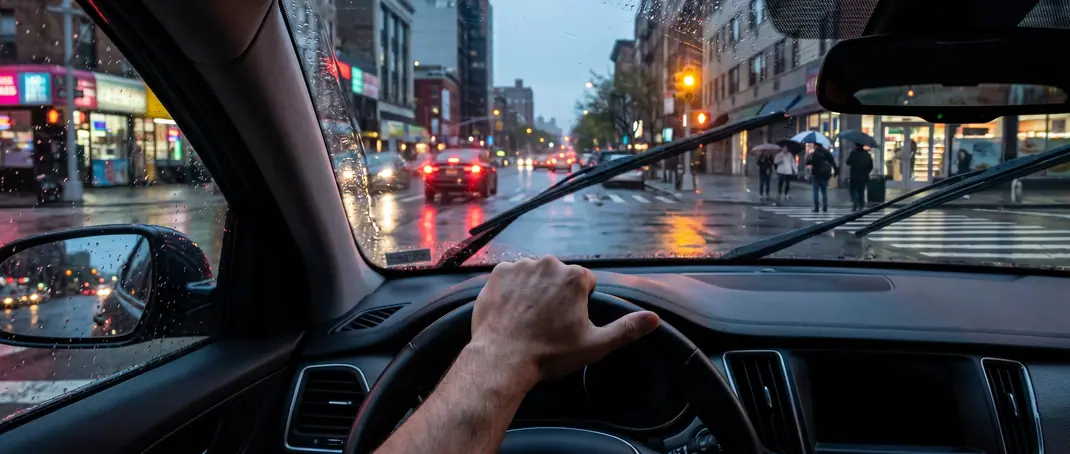
We have all been there. You are driving home at the end of a long, exhausting workday. A light drizzle begins to fall, obscuring the reflections on the dark asphalt. The radio plays softly in the background, a small comfort in the routine. Suddenly, the traffic directly in front of you adopts a chaotic, unpredictable behavior. A car aggressively crosses into your lane without using a turn signal, the traffic light a hundred meters ahead abruptly changes to yellow, and a pedestrian wearing dark clothing hesitates right on the edge of the sidewalk. In a fraction of a second, your brain fires off the inevitable, stressful question: "In this situation should I brake, accelerate, or swerve?"
Driving an automobile is not merely a mechanical skill based on manipulating a steering wheel and pressing three pedals in rhythm. It is, in its absolute essence, a continuous, exhausting exercise in high-stakes decision-making under intense pressure. The specific way our brain successfully processes dozens of variables in mere milliseconds is exactly what separates someone who just holds a basic driver's license from a true, highly skilled good driver.
In this we are going to thoroughly explore the most common, dangerous dilemmas of modern roadways. We will sit in the driver's seat right next to you, carefully analyze the underlying physics, the strict traffic laws, and the complex human psychology behind each demanding scenario, helping you to develop an absolutely infallible driving instinct.
1. The Yellow Light Effect: To Accelerate or to Brake?
It is, without a doubt, the most universally experienced dilemma of modern urban driving. You are swiftly approaching an intersection at 50 km/h (around 30 mph). You are about twenty meters away from the thick white stopping line, and the green traffic light suddenly and unexpectedly changes to bright yellow. What do you do?
The immediate, instinctual reaction of many inexperienced or rushed drivers is to sink their foot heavily onto the accelerator pedal to "try and beat the light." The completely opposite reaction of others, who are suddenly gripped by panic, is to slam on the brakes as hard as possible, dangerously risking a severe rear-end collision with the unaware vehicle closely following them. But the true, correct answer resides in a highly specific decision-making area officially known in traffic engineering circles as the "dilemma zone."
According to the official safety guidelines frequently shared by highly respected European organizations such as the Prevenção Rodoviária Portuguesa (PRP), the yellow light absolutely does not mean "accelerate to pass quickly before it turns red." It strictly means, by law, mandatory stopping, unless stopping safely is no longer physically possible without causing an accident.
So, in this situation should I do what exactly? A driver of true excellence heavily anticipates this exact moment. If you are already so incredibly close to the intersection that a heavy braking maneuver would cause your car to skid and stop dead in the middle of the cross traffic, or if you glance back and realize you have a massive, fully loaded cargo truck "glued" to your rear bumper that could not physically stop in time, the absolute safest decision is to maintain a constant speed and cross the intersection with extreme caution. However, if you are at a reasonable, safe distance when the light turns yellow, the choice is always to use progressive, firm braking to stop safely behind the line. The ultimate secret here is to actively check your rearview mirrors before you even arrive at the intersection. An experienced driver always knows exactly what is behind them, allowing them to make the split-second decision to brake firmly without the crippling fear of being rear-ended.
2. The Aggressive Tailgater (Road Rage)
This is a highly stressful scenario that tests not only your mechanical driving skills but, more importantly, your emotional intelligence and self-control. You are cruising comfortably on the highway, driving in the left lane to execute a legal overtaking maneuver while adhering precisely to the speed limit. Suddenly, an aggressive vehicle appears out of nowhere and aggressively "glues" itself to your rear bumper, flashing its high-beam headlights frantically and demanding you move over immediately.
Road rage is a fascinatingly dark and incredibly dangerous psychological phenomenon. The comforting anonymity provided by the heavy metal box of the automobile actively causes normally rational people to adopt extreme, highly dangerous risk behaviors. The innate human temptation in these specific cases is to give a sudden, sharp "tap" on the brakes (the infamous and highly illegal brake-check) to scare the aggressor backing off, or to simply, stubbornly slow down on purpose just to irritate them even further.
In this situation should I retaliate? Absolutely, categorically not. The human ego has absolutely no place on the open road. A true good driver deeply understands that they gain absolutely nothing from assuming the dangerous role of a self-appointed traffic vigilante. The highly aggressive driver riding your bumper might actually be experiencing a genuine, terrifying medical emergency, or they could simply be a deeply dangerous, psychologically unstable individual. Your single, overriding priority must always be the preservation of your own life and the physical integrity of your vehicle. The correct, mature procedure is to maintain absolute calm, finish your overtaking maneuver safely without either accelerating excessively or braking suddenly, and clearly signal your lane change to the right as soon as there is a safe, open gap. Let the danger physically pass you by and speed away. The Autoridade Nacional de Segurança Rodoviária (ANSR) constantly reinforces the fact that maintaining a safe following distance is one of the absolute greatest mitigators of severe accidents. If the other person refuses to comply, do not stubbornly aggravate the situation; simply facilitate the escape of the danger.
3. The Zipper Merge and Disappearing Lanes
Imagine the frustrating scenario clearly: you are driving comfortably on a two-lane road that is scheduled to narrow down to just one single lane due to heavy roadworks up ahead. The bright orange warning signs clearly indicate the lane drop is 500 meters away. What happens normally? The vast majority of drivers, in a sudden excess of caution and misplaced "politeness," immediately merge tightly into the right lane, instantly creating a mile-long queue of traffic that painfully moves at a snail's pace. The left lane remains completely and utterly empty.
Suddenly, you see a lone car casually driving past everyone in the empty left lane, heading all the way up to the exact point of the bottleneck, planning to insert themselves into the long line at the very last second. Your first, visceral reaction? "What a selfish jerk. I am going to tailgate the car in front of me to make absolutely sure they can't get in."
In this situation should I stubbornly block their passage? Ironically, the scientifically proven answer is no. Modern European traffic engineering, heavily supported by countless extensive studies from the European Transport Safety Council (ETSC), conclusively proves that the driver who utilized the empty lane all the way to the very end is, in reality, doing the exact correct thing. This highly efficient method is called the "Zipper Merge" (or Fecho Eclair in Portuguese). By fully utilizing both available lanes right up to the designated choke point, and by allowing the alternating entry of one car from each lane (exactly like the interlocking teeth of a zipper), the total physical length of the traffic jam is drastically reduced by up to 50%. This brilliantly prevents massive traffic backups from extending backward into previous intersections and blocking city grids.
The correct, educated attitude, therefore, is to be highly cooperative. When you finally reach the choke point, patiently let one car from the closing lane merge in front of you, and then confidently proceed immediately afterward. Completely eliminating the primitive territorial sense in daily traffic drastically reduces road rage and makes the overall flow vastly more efficient for absolutely everyone involved.
4. The Art of Maneuvering and Spatial Dominance
Advanced urban driving is not exclusively composed of high-speed, split-second decisions while in motion. The specific way we approach and conquer the confined, impossibly tight spaces of the modern city says a great deal about our true level of skill. Very often, we find the absolute perfect parking spot on a busy, narrow street in Lisbon or Porto, but the intense social pressure of the impatient cars honking behind us makes us give up in frustration and drive away to look for another, easier spot.
To truly perfect all of your spatial control skills and finally leave those parking nerves firmly in the rearview mirror, we have an essential resource for you. To master this, read our comprehensive introduction on how to parallel park good driver, where we meticulously detail, step-by-step, the geometric technique that simply never fails, permanently transforming your parking anxiety into the purest demonstration of automotive class.
5. Indecisive Pedestrians and Poorly Lit Crosswalks
Driving at night, especially in poorly lit urban environments or under heavy, blinding rain, requires extreme visual acuity and mental focus. You are cautiously approaching a zebra crossing that has no traffic lights. You catch a glimpse of a dark shadow right on the edge of the wet sidewalk: it is a pedestrian intensely looking down at their smartphone, with one foot perilously close to the asphalt, but completely failing to demonstrate any clear, predictable intention to cross the road.
In this situation should I stop completely and wait, or continue driving slowly? The official Highway Code is incredibly clear regarding the absolute priority of pedestrians at crosswalks, but the unpredictable nature of real life often demands interpretive common sense. Braking violently and unpredictably for a distracted pedestrian who ultimately has no real intention of crossing can easily cause a dangerous rear-end collision with the car behind you. Conversely, continuing to drive at your current speed assumes the massive, fatal risk that the distracted pedestrian might suddenly and blindly step out into the road.
The absolute safest, most professional approach involves the advanced technique of "covering the brake." Without physically pressing the pedal to stop immediately, you smoothly take your right foot completely off the accelerator and let it hover gently directly over the brake pedal. This simple action naturally reduces your rolling speed and, crucially, cuts your physical reaction time (latency time) perfectly in half if you suddenly need to execute a violent emergency stop. Actively try to establish clear eye contact with the pedestrian; if that is impossible due to the dark or their phone, the noticeable reduction in the noise and speed of your vehicle will often give the pedestrian the necessary time to realize you are approaching. This is the very essence of driving defensively: acting decisively before the emergency actually happens.
6. The Split-Second Decision at an Unmarked Intersection
You are traveling peacefully through a quiet rural area or a sleepy residential neighborhood and you arrive at a four-way intersection where there is absolutely no vertical signage (no Stop signs, no Yield signs) and no painted road markings. Another vehicle approaches the exact same intersection coming from the road to your right. The driver of that other vehicle looks directly at you and slows down immensely, almost coming to a complete stop, seemingly yielding the right-of-way to you out of pure courtesy, even though the universal law clearly dictates that the priority belongs entirely to them (the Universal Rule of the Right).
In this situation should I accelerate and wave a polite thank you? This is the classic setup for the dangerous "courtesy accident." If you proceed, willfully violating the strict rule of the right simply because the other driver "waved you on," and then they suddenly and unpredictably decide to accelerate as well, resulting in a physical collision, the legal fault will invariably and entirely be yours in the eyes of the law and the insurance companies.
An exemplary driver does not ever depend on the confusing, unpredictable courtesy of complete strangers, but rather on the cold, hard predictability of established traffic rules. Act in a highly assertive manner: stop your car completely, fulfill your legal obligation to yield the right-of-way, and, if necessary, make a clear, unambiguous hand gesture signaling the other driver (who has the actual legal priority) to proceed. Safe traffic flows continuously not because we are all trying to be "nice" to each other, but strictly because we all know exactly what the others are going to do based on universally shared and respected rules, heavily regulated by entities like the Instituto da Mobilidade e dos Transportes (IMT).
7. The Equipment Factor: Older Machines and Contemporary Safety
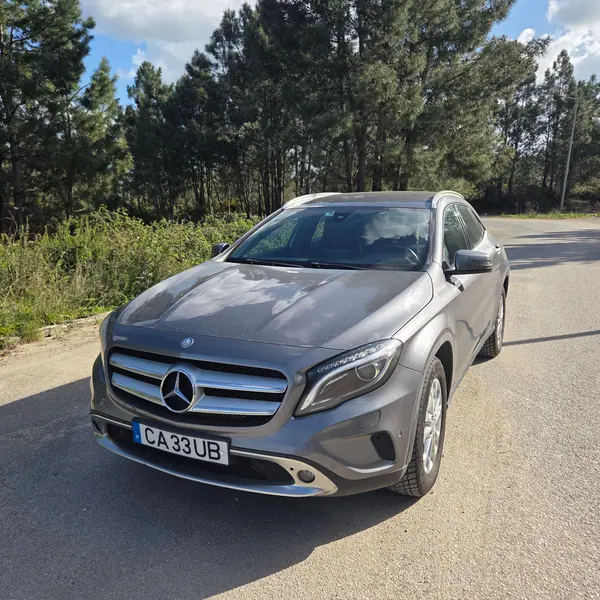
No matter how inherently brilliant, intuitive, or experienced your driving technique may be, the undeniable, cold truth of physics is that you are entirely and hopelessly limited by the physical machine you are controlling. Your mental reflexes could rival those of a professional Formula 1 racing driver, but if you are unfortunately driving on heavily crystallized, rock-hard tires from ten years ago, or driving with completely blown-out suspension shock absorbers, your car simply will not physically stop in time to avoid an obstacle.
This leads us to a highly important reflection on the national automotive fleet. Many rational drivers acquire used diesel cars because they undeniably represent logical financial choices and often constitute excellent, money-saving deals. However, in this situation should I put my strict financial budget ahead of vital active safety? Never.
When actively purchasing vehicles in the second-hand market, a good driver consciously focuses their attention far beyond the shiny, polished paint job or the pleasant smell of a freshly valeted interior cabin. The rigorous, uncompromising verification of the thickness of the brake pads and rotors, the expiration date heavily stamped (DOT code) on the sidewall of the tires, and the structural integrity of the complex suspension geometry are the actual, physical factors that will truly dictate how the car will react in a terrifying emergency maneuver at 120 km/h. It is always vastly preferable to buy a lower-tier, cheaper car with absolutely immaculate, documented maintenance, rather than buying an older, luxury-branded car where the expensive wear-and-tear maintenance has been dangerously neglected. Always remember that advanced electronic systems like ABS (Anti-lock Braking System) or ESP (Electronic Stability Program) are merely computer assistants; the ultimate physical capacity to grip the heavy vehicle to the asphalt resides entirely in the high quality of the mechanical consumables installed on the wheels.
8. Tires Blowing Out at High Speed
This is arguably one of the most terrifying, heart-stopping scenarios that any human being can ever face behind a steering wheel. You are traveling fast on the open highway. Suddenly, you hear a deafening, explosive bang and your car suffers a violent, terrifying jerk to the right or the left. A tire has just suffered a catastrophic blowout.
Primal panic heavily blinds the mind. The immediate, instinctual reaction of the overwhelming majority of people is to stomp on the brake pedal with all their physical strength and yank the steering wheel drastically to try and forcefully keep the car in the lane. This is exactly the deadly behavior that leads to fatal, high-speed vehicle rollovers.
In this situation should I actively fight against my own survival instincts? Yes, you absolutely must. When a tire blows out, the wheel that has lost all its air begins violently dragging raw rubber and bare metal on the ground, instantly creating a gigantic, unbalanced drag force on that specific side of the car. If you hit the brakes, you will violently and suddenly transfer the massive weight of the car to the front axle, heavily aggravating that severe imbalance and almost guaranteeing that the car will spin violently out of control.
The correct, life-saving attitude of a true steering wheel master is to grip the steering wheel with immense, unyielding firmness (using both hands, locking your arms stiff), take your right foot off the accelerator pedal very slowly, and do not touch the brake pedal under any circumstances whatsoever. Allow the massive physical friction of the blown tire dragging on the asphalt and the natural aerodynamic resistance of the air to decelerate the vehicle naturally and smoothly. Only when the car has safely dropped down to slow, urban speeds (around 30 or 40 km/h) should you gently feather the brake pedal and activate your hazard lights to safely pull over onto the hard shoulder.
9. The Psychological Mastery of Defensive Driving
Up until this point, we have talked extensively about physics, braking distances, right-of-way rules, and physical reactions to aggressions. But the true, deep core of all "in this situation should I..." questions is never answered by your muscles or your hands; it is answered solely by your mind.
The truly exceptional driver is the one who rarely, if ever, actually needs to perform a violent, full-force emergency stop, simply because they successfully predicted the emergency ten full seconds before it even materialized in the real world. It is the driver who looks not merely at the bumper of the car immediately in front of them, but actively observes the erratic behavior of the car that is three places ahead in the line. It is the driver who astutely notices the dark shadows of the tall trees on a winter morning to identify if there is dangerous black ice on the road long before the car actually begins to slip. It is the highly proactive driver who automatically assumes that all other road users are inevitably going to make a stupid mistake, planning an escape route in advance.
In this situation should I assume total and complete responsibility? Yes. Defensive driving is not a fearful, timid technique; it is a highly empowering, proactive technique. It is the conscious recognition that, regardless of the foolish mistakes made by third parties, it is firmly within our own capable hands to mitigate the disastrous consequences through intelligent following distance, controlled speed, and constant, unwavering observation.
10. Conclusion: The Ideal Vehicle for Your New Level of Driving
The arduous path to continuous self-improvement behind the wheel requires deep reflection, constant practice, and, above all else, the mature recognition that we drive within a highly dynamic, inherently unpredictable social environment. Answering the stressful question "in this situation should I..." correctly demands emotional maturity and complete detachment from the human ego.
But the vital evolution of your attitude on the open road must also be matched by the technological evolution of the machine you are physically driving. Perhaps you strongly feel that your current, aging vehicle no longer offers the active safety features, the crisp steering responses, or the refined acoustic comfort you desperately need to maintain your newfound zen-like calm in daily, grueling traffic jams. As road safety awareness grows, the desire for a highly reliable, structurally safe automobile naturally accompanies that growth.
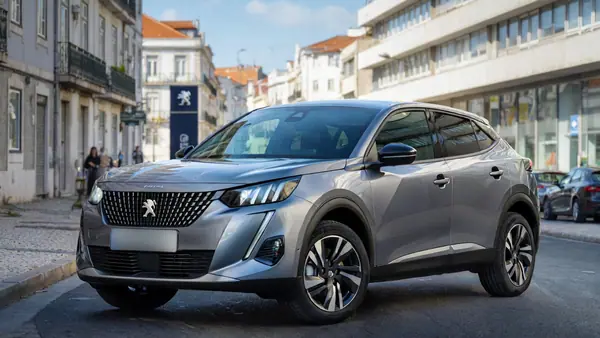
Whether it is finally time to make a highly intelligent upgrade by carefully researching the vast market for used cars, looking for a spacious, safe SUV equipped with distance radar, agile city models like Peugeot 208 cars for relaxed urban driving, or even if you intend to sell your current vehicle fairly and transparently to help finance your next automotive dream, the perfect solution is waiting for you in a highly secure, modern digital environment.