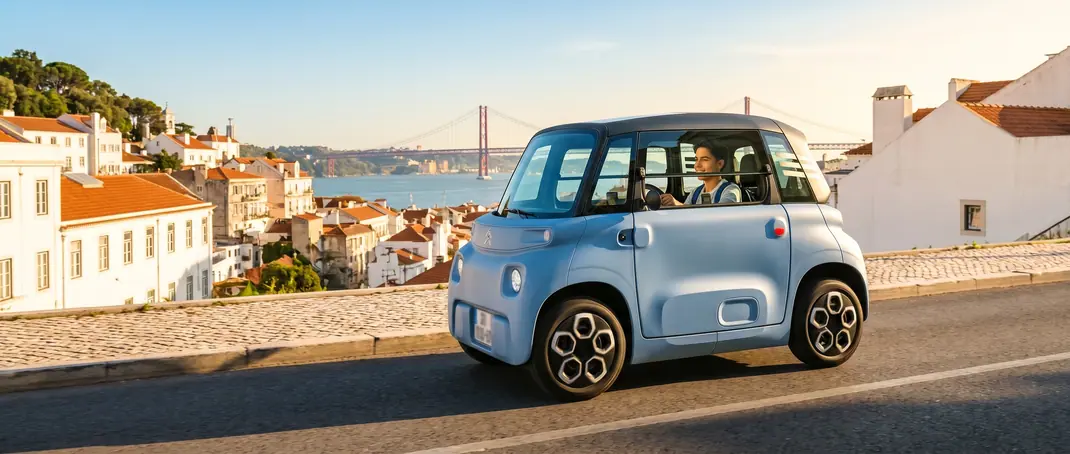
Let’s start by thoroughly debunking one of the oldest, most persistent illusions in the global automotive world. Do you remember that unmistakable sound? That noisy, rattling clatter, sounding somewhat like a miniature tractor or a cement mixer, that used to echo through the secondary roads of small villages and rural towns? That was the classic sound of the old diesel microcar, driven at a peaceful 40 km/h by someone who, according to urban legend, supposedly didn’t need any kind of license or paperwork to be there.
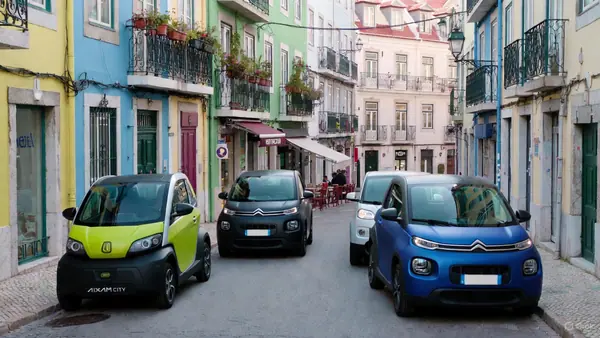
Today, the entire landscape has drastically changed. That vibrating diesel engine sound is rapidly being completely replaced by the silent, futuristic hum of tiny, electric "cubes" that have invaded major cities, parked perpendicularly between two giant luxury SUVs. But the question that continues to actively pop up in coffee shop conversations, at family dinners with teenagers desperate for independence, and in frantic internet searches remains exactly the same: how does this whole "car that doesn't require a license" thing actually work?
In this we are going to completely demystify this entire category of vehicles. We will analyze the strict legal reality, talk very seriously about physical safety, explore the massive impact on household wallets, and figure out if these little quadricycles actually make sense for your daily life, or if they are simply a highly expensive, trendy whim.
1. The Great Illusion: The European Law and the AM License
Let us be absolutely, crystal clear right from the very beginning: there is no four-wheeled motor vehicle that can be legally driven on public roads without some form of official license or habilitation in most of Europe, including Portugal. The widespread phrase "car that doesn't need a license" is a massive error in terminology, a deeply rooted leftover from an older era when law enforcement was lax and regulations were vastly different.
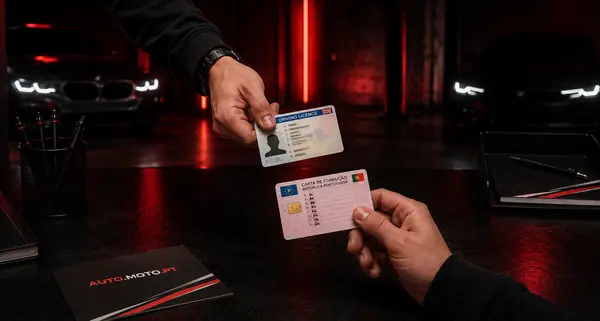
What people genuinely mean when they use this popular phrase is that they do not need the traditional Category B Driver's License (the normal, standard car license that requires you to be 18 years old and pass a highly rigorous driving test).
These specific vehicles are legally classified across Europe as Light Quadricycles. According to the strict, official guidelines set by entities like the Portuguese Institute for Mobility and Transport (IMT), to legally drive one of these vehicles on the road, it is strictly mandatory to possess at least an AM Category driving license (often known as a moped license).
The huge, incredibly seductive advantage of this AM license is the age requirement. It can be legally obtained at 16 years old. This is exactly the magnetic force that attracts so many desperate teenagers. However, it requires attending theoretical traffic classes, passing practical driving lessons, and successfully completing official exams. It is absolutely not a free pass to just grab a steering wheel and accelerate blindly without knowing what a Stop sign is. The law drastically changed to actively protect the users and the pedestrians, ensuring that anyone operating a machine on the road knows the fundamental rules of traffic. Furthermore, the top speed of these specific vehicles is both mechanically and legally restricted to a maximum of 45 km/h (about 28 mph), which strictly prohibits them from ever entering highways, motorways, and similar fast-moving roads.
2. The Paradigm Shift: From Sleepy Villages to the Heart of the City
Twenty years ago, the primary target audience for microcars (from traditional brands like Aixam, Ligier, or Microcar) was incredibly specific and almost exclusively rural. They were older people, citizens who had never had the financial opportunity or the need to get a traditional driver's license in their youth, and who suddenly needed a small, enclosed means of transport to stay out of the freezing rain while going to the local grocery store, the community garden, or the health clinic.
Today, if you look around in bustling cities like Lisbon, Porto, or Braga, you will quickly realize that a fascinating sociological mutation has occurred. The person behind the wheel of these little vehicles is no longer a grandpa going to buy the morning newspaper. It is a 16-year-old teenager, wearing a heavy backpack, listening to Spotify, on their way to a private high school or football practice.
Urban parents began to view microcars not really as "cars," but rather as highly viable (and completely dry) alternatives to buying their kids 50cc scooters. The parental reasoning is purely emotional and heavily focused on basic protection: "I would much rather my child commute to school surrounded by plastic and fiberglass doors, sitting on four stable wheels, than trying to balance on two wheels in the middle of slick, wet November traffic." And just like that, overnight, the humble quadricycle was transformed into the ultimate new status symbol for modern teenagers.
3. The Elephant in the Room: The Reality of Active and Passive Safety
The parents' intentions are genuinely good, without a doubt. But we absolutely must have a very serious, adult conversation about the actual, physical safety that these tiny vehicles offer in the real world.
By law, a light quadricycle must weigh less than 425 kg (excluding the heavy batteries, in the case of electric models). Its internal structure is simply not constructed from high-strength, military-grade steel; rather, it is built upon a very simple, lightweight tubular frame covered in thin plastic or fiberglass panels. This brutally means that in the event of an urban collision with a traditional, one-and-a-half-ton automobile, the laws of physics are absolutely unforgiving.
Independent European automotive safety assessment organizations, most notably the famous Euro NCAP, have repeatedly subjected several of these quadricycles to rigorous crash tests at a mere 50 km/h. The results, quite frankly, are frequently incredibly discouraging. A total absence of programmed crumple zones, basic seatbelts without pyrotechnic pre-tensioners, and the rare (almost completely non-existent) presence of airbags mean that the passenger cabin suffers severe, dangerous intrusions during an impact.
Road safety organizations like the Portuguese Road Safety Authority (PRP) frequently issue warnings that the false sense of security of being "inside a car" leads young, inexperienced drivers to confidently take massive risks that they would never dare to take if they were exposed on a scooter.
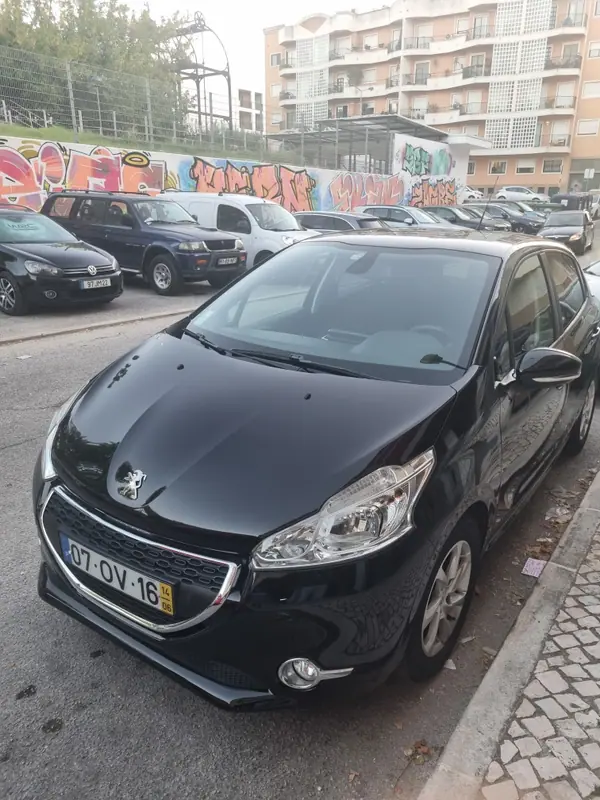
This is exactly where the rational, financial shock hits families the hardest. A brand new, top-of-the-line microcar can easily cost anywhere between €14,000 and €18,000. For the completely absurd price of one of these little plastic "toys", many families sit down at the dinner table and seriously consider if it wouldn't be vastly smarter for the teenager to just wait two more years to get a proper Category B license. With that exact same financial budget, it is perfectly possible to buy an incredibly safe, robust, traditional car—like a lightly used Peugeot 208. A real, substantial car that actively offers multiple airbags, Electronic Stability Program (ESP), anti-lock brakes (ABS), real climate control, and the mechanical capacity to safely drive down the highway to the Algarve on a summer weekend. It is a classic, difficult conflict between the teenager's immediate burning desire for mobility at 16, and the parents' long-term logic regarding financial value and physical safety.
4. The Wallet Shock and the Used Market
As we have just clearly seen, buying a brand-new quadricycle requires a level of financial gymnastics that not all household budgets can comfortably handle. Because it is inherently a transitional vehicle—meaning the young teenager uses it desperately at 16, and the exact second they turn 18, they want to ditch it to buy their first "real" car—depreciation is a massive factor to consider.
This is exactly why the resale market for these specific vehicles is so incredibly effervescent and fast-paced. Instead of walking into shiny new dealerships, the overwhelming majority of parents dive straight into the gigantic market of used cars, exhausting themselves looking for reasonable deals.
However, there is a very curious, frustrating phenomenon in this specific niche market: microcars retain an artificially high commercial value second-hand. It is the simple, ruthless law of supply and demand. There are hundreds of kids turning 16 every single month, whose parents are on an absolute treasure hunt for cheap used cars within this specific category just so they don't have to resort to absurd bank financing. When you finally find a second-hand Aixam or Ligier for a price that is actually considered "cheap", it very often brings along chronic mechanical ailments, constant issues in the variator (the complex gearbox of these engines), and heavily degraded electric batteries that can quickly turn your initial savings into a stressful, expensive mechanic's nightmare.
5. The Electric Revolution: The "Ami" Effect
We simply cannot write an article about this topic today without mentioning the massive meteorite that recently struck the microcar industry: accessible electrification. For decades, quadricycles were entirely monopolized by noisy, vibrating, two-cylinder diesel engines. They were painfully slow, they smelled terrible, they vibrated the entire cabin until your teeth chattered, and they were aesthetically... highly questionable.
But absolutely everything changed. Massive, traditional automakers recognized the glaring gap in the mobility market and aggressively attacked it. The Citroën Ami, the retro-styled Fiat Topolino, and the quirky Renault Twizy completely redefined the rules of the game.
The Citroën Ami, for example, is a brilliant little symmetrical plastic cube (the left door actually opens backwards compared to the right one just to save on manufacturing costs), which effortlessly does 75 kilometers on a full charge and plugs directly into a standard home wall socket exactly as if it were a toaster or a smartphone. Organizations like the Automobile Club of Portugal (ACP) have been heavily promoting these new electric micromobility solutions as the absolute perfect tools to decarbonize large, polluted urban centers. They are completely silent, they emit zero direct exhaust gases, they don't pay absurd annual circulation taxes, and, in a highly important detail for marketing, they have an adorable, highly instagrammable design that the new younger generations absolutely love. They demand vastly less mechanical maintenance, and the running costs per kilometer are practically zero compared to the old, clunky combustion engines.
6. The Practical Reality: Living With a Microcar
What is it actually like, in practice, to live day in and day out with one of these tiny vehicles in your garage?
Parking: This is exactly where these vehicles shine so brightly it blinds you. Where one standard family sedan barely fits, you can easily slot two or even three quadricycles. In a crowded, modern world where finding a parking spot in front of your apartment is practically a mirage, owning a vehicle that is barely over two meters long is an absolute, undeniable superpower.
Weather and Comfort: Yes, you are perfectly protected from the freezing rain. You are not going to arrive at the corporate office or your high school classroom with soaked shoes and your hair completely destroyed by the wind, which is a massive victory compared to riding a scooter. But please, do not expect luxury. Most of them severely lack acoustic insulation. If it is raining heavily outside, you are going to hear every single heavy drop hitting the thin fiberglass roof as if you were sitting inside a snare drum. Defogging the windshield in the dead of winter is usually done by basic, loud ventilators that produce far more noise than actual warm air.
The Speed Factor: The strict 45 km/h limit is a brutal, daily test of your inner patience (and definitely the patience of the people driving behind you). On a wide, multi-lane city avenue where traffic naturally flows at 60 or 70 km/h, you are going to feel exactly like a turtle. You will be overtaken dozens of times. You will receive angry honks from stressed-out commuters who simply do not comprehend that your vehicle literally cannot go any faster. It requires an enormous amount of emotional intelligence to completely ignore the external pressure and confidently drive at your own safe speed.
Conclusion: Is It the Right Choice for You?
The "car that doesn't need a license" (but which, as we thoroughly proved, absolutely requires an AM license) is not a perfect, magical solution. It is a vehicle built entirely of compromises. It is undeniably too expensive for the basic technology it offers, the structural safety cannot even begin to compare to that of a real automobile, and the strict speed limits drastically restrict your geographical horizons.
However, for the grandpa who just needs to get to the local café in the village without getting soaked in the rain, or for the busy teenager who despises unreliable public transport and whose exhausted parents lose hours every week playing taxi driver in heavy traffic, it fulfills a brilliant, undeniable function: it grants freedom. It gives the very first real, intoxicating sensation of independence to those who cannot yet (or have not managed to) obtain a traditional driver's license. If you look at this little vehicle for exactly what it is—a closed, four-wheeled scooter designed strictly for local, slow-moving urban traffic—and you do not demand the robust performance of a normal car, you will find it to be a formidable, incredibly useful ally against the daily chaos of the city.
And now that we have completely demystified the entire market, from top speeds to complex legal issues, the moment of decision has finally arrived. Whether you have decided that this is the perfect, logical step for your family's daily mobility, or if, conversely, you have decided to heed the safety advice and invest properly in a traditional Category B automobile, you absolutely do not need to bounce from dealership to dealership wasting your weekends.