What country is Toyota from?
Loom machines. Heavy, vibrating cast-iron looms inside deafening, grease-stained textile mills. That is the true genesis. Not some glossy, sterile design studio in a modern skyscraper. We are talking about 1920s Japan. Sakichi Toyoda revolutionized the global weaving industry by engineering an automatic loom. It was a mechanical masterpiece that stopped itself the exact millisecond a single thread snapped. A purely mechanical fail-safe built entirely of gears and levers. He sold that brilliant patent to a massive British firm for a mountain of cash. He handed that massive pile of money to his son, Kiichiro. Kiichiro was a gearhead. He cared nothing for textiles. He took that textile money and immediately bought imported American cars. He tore down a Chevrolet inline-six engine to bare metal just to understand the casting process. He measured every tolerance. He studied the metallurgy.
By 1933, the Toyoda Automatic Loom Works featured a dedicated, heavily funded automotive department. They reverse-engineered the Chevy block. They improved the cylinder head design to flow more air. They poured their own cast iron. They bolted it together and built the Model AA passenger car in 1936. Then the branding shifted. They needed a name that sounded sharper for export. They changed the family name Toyoda to Toyota. Why? Because in Japanese Katakana, writing it out requires exactly eight brush strokes. Eight means extreme luck. Eight means wealth. The company officially registered as a separate motor corporation in 1937.
The entire operation centralized in the Aichi Prefecture. A small industrial town called Koromo housed the massive production lines. They stamped steel. They welded heavy ladder frames. They churned out rugged trucks for the military and eventually mass-produced passenger cars for the public. The operation grew so incredibly massive that the Japanese government officially renamed the entire town Toyota City in 1959. You can verify this in the Japanese government manufacturing archives. Today, that region holds the absolute heaviest concentration of automotive manufacturing power on the planet. They literally built an entire metropolis around the assembly line. Every time you see one of these cars on the highway, it traces its bloodline back to that specific Japanese prefecture and those grease-stained textile money roots.
What does the Toyota symbol mean?
You see it every single day. The silver badge on the front grille. Most people think it is just a guy wearing a sombrero. It is not. It is a highly calculated, carefully drafted piece of geometric engineering. The current emblem dropped in 1989. Engineers and industrial designers spent five brutal years arguing over the exact math of those intersecting lines. It is a cold, precise layout of three overlapping ellipses that had to look perfect stamped into the metal of every single vehicle rolling off the line.
Let us break it down mechanically. Look directly at the two inner ovals. The horizontal oval intersects with the vertical oval. They cross exactly in the center to form the letter 'T'. That part is glaringly obvious. But look at the negative space surrounding the metal. The outer boundary represents a steering wheel. The inner horizontal oval represents the steering column shaft intersecting the wheel hub. It is a literal mechanical blueprint of the steering geometry staring right at your face. The corporate marketing department will tell you the two inner ovals represent the heart of the customer and the heart of the company merging together in perfect harmony. Fine. But the original designers were hardcore gearheads. They hid the entire corporate name inside the geometry.
Trace the thick outer ring. That represents an 'O'. Trace the inner vertical line and the top sweeping curve. That forms a 'Y'. The bottom half of the inner vertical oval makes an 'A'. The top horizontal line crossing the vertical line acts as the 'T'. Every single letter of the word toyota is engineered into those three overlapping rings. The thickness of the chrome varies continuously. It mimics the changing, dynamic pressure of a traditional calligraphy brush. It is a subtle nod to their Japanese origins wrapped in a cheap piece of injection-molded plastic. Next time you walk up to one of these cars in a parking lot, look past the shiny chrome. Look at the complex math. Look at the hidden typography. It is brilliant.
What does GR mean in Toyota?
Gazoo Racing. That is the direct translation. But what does it actually mean for you, the driver? It means the suspension engineers finally overpowered the corporate accountants. For decades, the brand built reliable appliances. Boring, soulless commuter boxes that lasted forever but put you to sleep. Akio Toyoda got violently sick of it. He is a master test driver. He created Gazoo Racing to drag the company kicking and screaming back into the world of hardcore motorsport. And it worked perfectly.
Look at the modern lineup. The aggressive red, black, and white badging is just the surface layer. The real magic happens deep under the sheet metal. Take a standard economy hatchback. Hand it over to the GR division. They strip the chassis down to bare metal. They add hundreds of yards of structural adhesives. They drill extra spot welds across the floorpan to drastically stiffen the chassis. A stiff chassis means the suspension dampers actually do their job instead of the car body flexing like wet cardboard in a fast corner. They rip out the pathetic economy engine. They drop in a violently turbocharged three-cylinder powerplant. They bolt up a heavy-duty mechanical all-wheel-drive system packed with limited-slip differentials on both axles. The result? The modern Toyota Yaris in GR trim is a terrifying homologation rally monster built for the street.
They did not stop there. The GR Toyota Supra utilizes a closed-deck inline-six engine and an insanely rigid chassis that handles massive cornering loads without twisting. GR is not a fake, plastic appearance package glued onto a slow car. It is pure motorsport engineering bleeding onto the street. When you see that GR badge, it means the car was torture-tested on the punishing asphalt of the Nürburgring. It means the suspension kinematics were tuned by guys who wear fire suits to work. The aerodynamic improvements—the wide flared fenders, the functional carbon-fiber brake ducts, the massive rear diffusers—they are not for show. They follow strict global motorsport technical regulations to create massive aerodynamic downforce at 150 mph. This single performance division absolutely saved the brand's enthusiast soul.
What does TRD mean in Toyota?
Before GR existed, the streets belonged entirely to TRD. Toyota Racing Development. This was the raw bloodline of Japanese Domestic Market (JDM) tuning culture. TRD started back in 1976. They built parts. Real, functional, heavy-duty parts. Not cheap bolt-ons. If you wanted a roots-style supercharger for your V6 truck, you bought it from TRD. If you wanted massive sway bars to flatten out body roll on the track, you ordered TRD.
Let us talk about the golden era. The 1990s. The JDM heritage built by this division is legendary among mechanics. The engineering was borderline psychotic. Consider the legendary 2JZ-GTE engine. This was a 3.0-liter inline-six. The engine block was cast iron. Massive, heavy, completely indestructible cast iron. The crankshaft was forged steel out of the factory. It came bolted with sequential twin turbochargers. The factory claimed 276 horsepower to keep the strict Japanese government regulatory agencies happy. That was a massive lie. It made way more power. And the TRD engineers secretly knew the block could handle over 1,000 horsepower with completely stock internals. That thick cast-iron block is the exact reason a clean, unmodified 90s model is worth a fortune today. It is the holy grail for horsepower junkies.
Today, TRD has violently shifted its focus. The modern iterations lean heavily into off-road domination rather than street racing. Look at a modern TRD Pro truck on the dealership lot. The suspension features thick internal bypass Fox shocks with remote fluid reservoirs. They install heavy aluminum skid plates underneath to protect the fragile oil pan from getting smashed by jagged boulders on the trail. They use forged upper control arms to correct suspension geometry after lifting the chassis. They build these trucks to launch completely in the air over sand dunes and survive the landing. But the legacy remains absolutely intact. Whether it is a bulletproof cast-iron engine block built for the drag strip or heavy-duty suspension built for the brutal desert, TRD means factory-warrantied abuse.
Definitive answer is Toyota Racing Development, the legendary tuning division famous for over-engineered JDM engines and hardcore off-road suspension upgrades.
What is TRC in Toyota?
Traction Control. That is exactly what the acronym stands for. But knowing the basic acronym does not explain the violent mechanical warfare happening under the hood. TRC is an aggressive electronic babysitter. It stops you from burning the tires completely off the rims when you stomp the gas pedal on wet asphalt or loose gravel.
Here is how the wrenching actually works. Every single wheel hub has a dedicated magnetic speed sensor. This sensor reads a toothed reluctor ring spinning violently with the steel axle. The Engine Control Unit (ECU) constantly monitors the rotational speed of all four tires simultaneously. You hit a patch of loose gravel and floor it. The front tires instantly lose grip and spin faster than the rear tires. The ECU detects this severe speed mismatch in milliseconds.
Then the system violently attacks the powertrain. First, the computer cuts the electronic throttle. Even if your foot is firmly pinned to the floorboard, the ECU overrides you and forces the throttle blade to snap shut. It starves the engine of oxygen. Next, it aggressively retards the ignition timing. It literally delays the spark plugs from firing, instantly killing engine torque output. If the tires are stubbornly still spinning, the system brings in the heavy hydraulic artillery. The ABS pump activates. It slams high-pressure brake fluid through the steel lines to the brake calipers on the spinning wheels. The ceramic brake pads clamp down incredibly hard on the spinning steel rotors. This violent clamping action forces the mechanical open differential to push the remaining engine torque across the axle to the tire that actually has grip on the pavement. You feel a nasty, grinding shuddering through the chassis. An amber light flashes angrily on the dash. The car regains traction and pulls forward. It is brutal, mechanical mathematics happening at lightning speed.
Definitive answer is Traction Control, a system that aggressively cuts engine power and clamps the brake calipers to stop wheel spin during hard acceleration.
What does VSC mean in Toyota?
Vehicle Stability Control. TRC handles straight-line acceleration grip. VSC handles the dangerous corners. It keeps you out of the ditch and out of the hospital. Imagine driving a winding mountain road in the dead of winter. You hit black ice. The steering wheel goes completely light in your hands. The rear end of the car kicks out sideways. You are officially in a high-speed skid.
VSC kicks in immediately to save your life. The entire system relies on a sensitive yaw rate sensor bolted dead-center inside the floor of the chassis. This sensor measures rotational g-forces. A highly precise steering angle sensor mounted on the steering column tells the computer exactly where your hands are pointing. If your hands are pointing hard left, but the yaw sensor says the car is spinning out of control to the right, VSC goes to absolute war. It activates the ABS pump. It clamps down hard on the outer front brake caliper. Just that one specific wheel. That massive drag on one side of the car acts exactly like dropping an anchor. It violently snaps the nose of the car back into alignment.
But here is the harsh, unforgiving reality. VSC is just lines of software code. It cannot magically bend the laws of physics. If you are rolling on bald summer tires in February, VSC cannot save you. The computer can aggressively clamp the brakes all it wants. If the frozen rubber has zero mechanical grip on the ice, you are sliding directly off the road. Proper winter tire selection is absolutely mandatory for the software to work. Also, the entire network of yaw sensors and hydraulic pumps draws massive electrical current. If you have a dying 12-volt battery freezing under the hood, system voltage drops. Sensors misfire. The system disables itself to protect the fragile ECU. A perfectly healthy battery is absolutely required to keep this system alive in sub-zero temperatures. A weak battery will trigger a dashboard full of warning lights and completely disable your stability control exactly when you need it most.
The definitive answer is Vehicle Stability Control, an electronic safety net that monitors yaw and steering angles to brake individual wheels and stop the car from spinning out on slippery roads.
What does VSC off mean in Toyota?
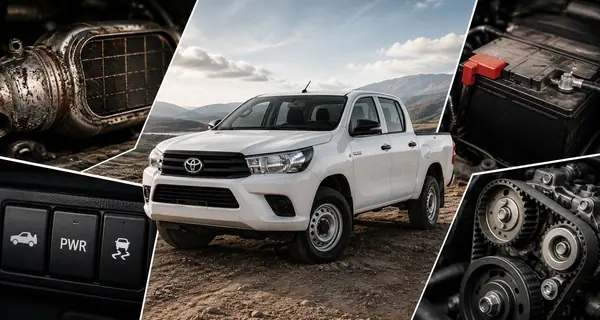
There is a tiny button located on the dash with a car icon and squiggly lines. Press it. Hold it down for a few seconds. An amber "VSC OFF" light illuminates brightly on the gauge cluster. You just completely disabled the digital safety net. Why would you ever do that? Because sometimes, the computer is incredibly stupid.
Let us talk about getting stuck in deep snow or thick, soupy mud. You slide off the unpaved road and bury the tires up to the axles. You hit the gas pedal to escape. The tires start to spin. Instantly, the VSC and TRC systems panic. The computer detects the spin and aggressively cuts the throttle plate. The engine bogs down. The brake calipers clamp hard against the rotors. You go absolutely nowhere. The car completely neuters itself. In deep mud or thick snow, you actually need aggressive, sustained wheel slip. You need the tires to spin violently. Spinning tires fling the heavy mud out of the deep tread blocks, allowing the raw rubber to dig down deep and find a hard surface to grab onto. By holding the button and turning VSC off, you kill the electronic intervention. You regain raw, mechanical control over the throttle body. The engine screams to the redline. The tires rip through the muck. You blast your way out of the snowbank.
Hardcore track drivers use it too. When you run a car incredibly hard on a closed racing circuit, you need slip angle. You heavily trail-brake into a sharp corner, getting the rear end of the chassis to rotate beautifully. VSC interprets that aggressive track driving as a highly dangerous skid. It will clamp the brakes, cut your power, and completely kill your lap time. Turning the system off entirely allows an experienced driver to physically manipulate the chassis dynamics using pure mechanical input through the steering wheel and throttle. But leave it on for the street. Overriding the massive computer system on public roads is a very fast way to wrap the chassis around a solid telephone pole.
What does BSM mean in Toyota?
Blind Spot Monitor. The name is completely self-explanatory, but the hardware running the show is seriously impressive. Changing lanes on a heavily crowded highway is a massive nightmare. Some guy driving a dark grey sedan sits hovering silently directly off your rear quarter panel. You check your side mirror. Nothing. You check your center rearview mirror. Nothing. You hit the blinker and start aggressively merging. Horns blare loudly. You almost side-swiped him into the concrete barrier.
BSM completely fixes this terrifying scenario. It uses highly advanced millimeter-wave radar technology. Engineers mount two tiny, powerful radar sensor modules directly behind the plastic rear bumper cover. One on the left corner, one on the right corner. They are completely hidden from view. These are not cheap optical cameras. Cameras get easily blinded by road dirt, heavy rain, and night darkness. Radar simply does not care about the weather conditions. The modules constantly blast high-frequency electromagnetic waves outward into the adjacent lanes. These invisible waves pass straight through the plastic bumper skin. They hit the solid metal chassis of the car hiding in your blind spot and bounce right back to the receiver.
The internal computer accurately measures the exact time it takes for the wave to return. It calculates the precise distance. Using the Doppler effect, it constantly calculates the closure speed of the approaching vehicle. If the system decides a heavy car is lurking dangerously in the zone, it illuminates a bright amber LED icon etched directly into the glass of your side mirror. If you foolishly ignore the icon and flick your turn signal anyway, the system gets angry. The icon starts flashing violently. A loud buzzer screams inside the cabin. It forcefully demands your attention. According to the National Highway Traffic Safety Administration, radar-based collision avoidance systems prevent hundreds of thousands of high-speed sideswipe accidents every single year. It is one of the few electronic nannies installed in modern cars that actually makes driving significantly less stressful.
So, if you are still wondering, what does BSM mean in Toyota? The definitive answer is Blind Spot Monitor, a safety system utilizing hidden rear radar sensors to detect vehicles in adjacent lanes and alert the driver before a lane change.
What is a Toyota hybrid car?
Forget the glossy marketing brochures. A hybrid vehicle is a staggering masterpiece of heavy-duty powertrain engineering. We are talking specifically about the Hybrid Synergy Drive (HSD). It is not just a standard gas engine bolted lazily to a weak electric motor. It is a highly complex, continuously variable mechanical dance of torque.
There is absolutely no traditional transmission. No slipping clutches. No heavy gears violently shifting. Instead, the entire propulsion system relies on a brilliant planetary gearset. It is called the Power Split Device. It mechanically links three critical things together: the gasoline internal combustion engine, the primary electric generator (MG1), and the massive electric drive motor (MG2). The gasoline engine operates very weirdly. It runs on the Atkinson cycle. It intentionally leaves the intake valves open a fraction of a second too long during the compression stroke. This mechanically pushes a tiny bit of the air back into the intake manifold. It drastically sacrifices raw low-end torque for insane thermal efficiency.
But you absolutely do not notice the missing torque from the driver's seat. Why? Because the heavy electric drive motor (MG2) hits the drivetrain with maximum, instant torque at exactly zero RPM. You press the gas pedal. The electric motor effortlessly launches the heavy chassis off the line in complete silence. As road speed builds, the computer smoothly fires up the gasoline engine. The planetary gearset flawlessly blends the mechanical twisting force of the gas engine with the electric motor. It is an incredibly smooth transition. When you aggressively hit the brakes, the system reverses. The electric drive motor becomes a heavy-duty electrical generator. It uses the heavy rolling kinetic energy of the car to physically spin the generator. This creates massive electrical resistance, powerfully slowing the car down without ever touching the actual brake pads to the steel rotors. That massive surge of electricity gets shoved directly back into the high-voltage battery pack. This violent regenerative braking is exactly why a hybrid can run the same set of factory brake pads for 100,000 miles without wearing out.
What is the best Toyota car?
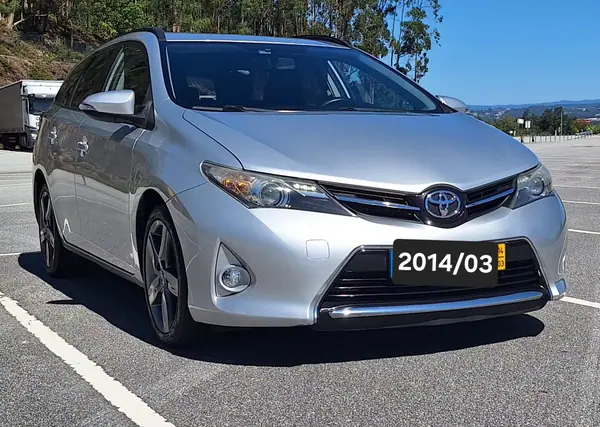
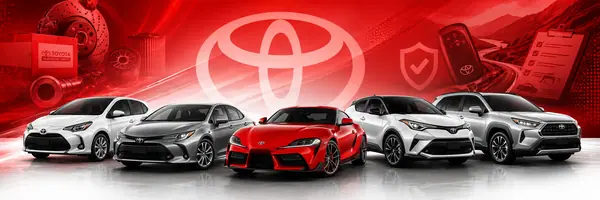
If you are hunting the crowded secondary market for carros usados, you want cold, hard facts. You want a piece of machinery that violently refuses to die. Depreciation curves are financially vicious. European luxury cars shed monetary value like dead skin the second the warranty expires. But look at the long-term market data. Look at a high-mileage used Toyota Corolla It holds its financial value significantly better than almost anything else with four wheels. Why? Because it is mechanically bulletproof. The naturally aspirated four-cylinder engines do not randomly blow head gaskets. The thick electrical harnesses do not randomly catch fire. You change the engine oil, replace the cheap paper air filters, and the stiff chassis will easily outlast your 30-year home mortgage.
Let us look closely at the crossover market. The bold Toyota C-HR offers wild, highly angular styling built on a compact, rigid platform. It uses the exact same hybrid powertrain logic as the iconic Prius. It is a hyper-efficient urban brawler perfect for tight city parking. But if you want the absolute undisputed king of the used SUV market, you look at the RAV4. The global sales numbers are completely staggering. The used resale values are offensively high. A well-maintained RAV4 will easily rack up 300,000 miles with basic driveway wrenching.
But what if you absolutely hate slow, practical cars? What if you want to burn expensive tires on the weekend? Then you hunt down the performance icons. A clean, completely unmodified Toyota Supra from the 90s is basically an appreciating financial asset sitting in your garage at this point. Even the incredibly aggressive modern GR variants are holding solid value because gearheads fully know the mechanical hardware is legit. When you search for used cars Toyota, completely ignore the shiny paint. Look at the maintenance service history. Crawl underneath and look at the undercarriage. These cars are specifically engineered to take severe daily abuse, but total fluid neglect will kill any highly tuned machine. According to the certified pre-owned vehicle inspection data, a clean service history report practically guarantees you are buying a machine engineered for extreme mechanical longevity. Buying one of these on the used market is definitely not a gamble. It is a solid long-term investment in heavy iron, forged aluminum, and proven software.
So, if you are still wondering, what is the best Toyota car? The definitive answer is the Corolla for unkillable reliability, the RAV4 for practical utility, or the Supra for raw performance.